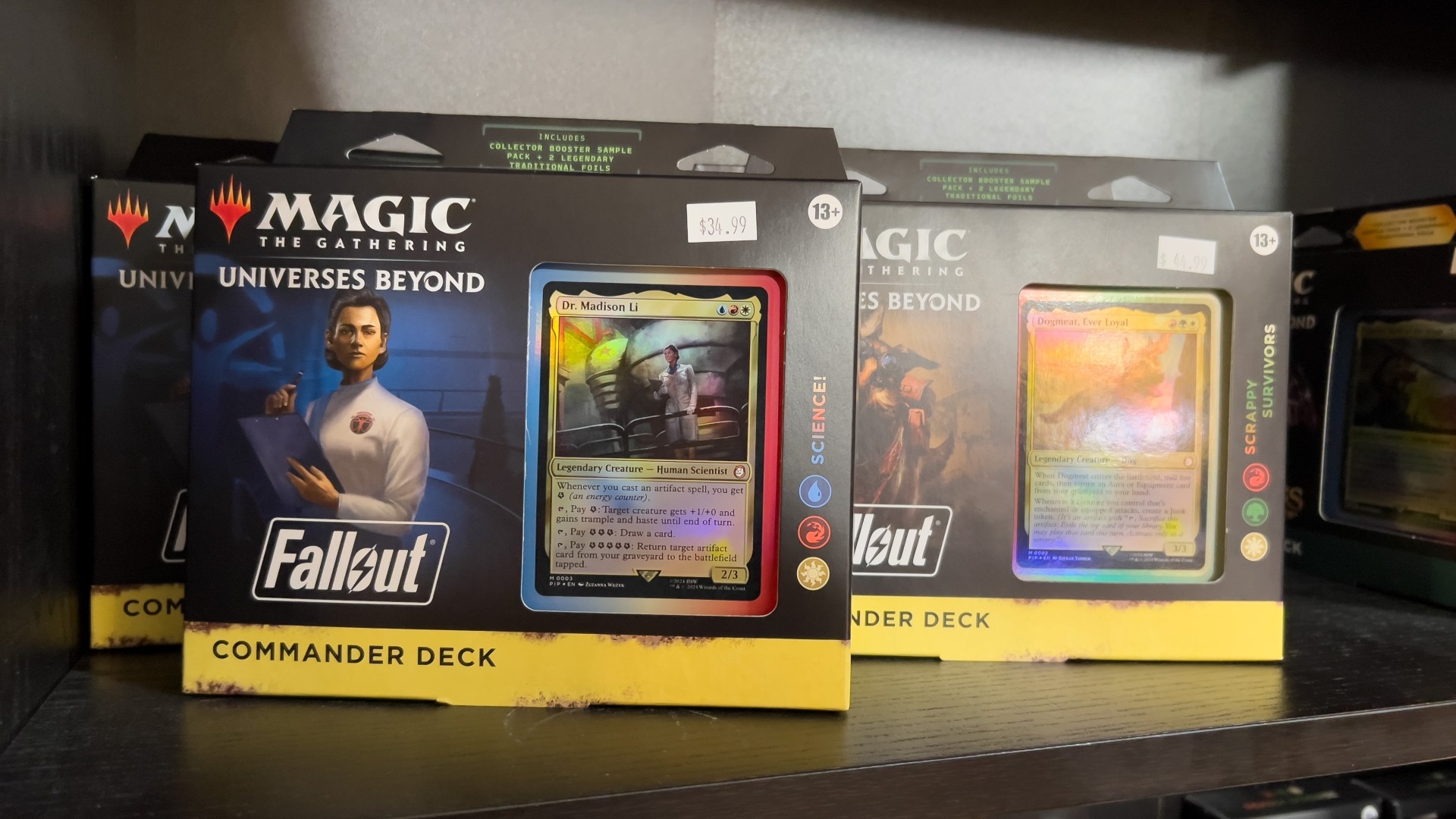
MTG beginner guide 2026 is really a guide to not turning your first week with Magic into a shopping mistake. If you look at Magic: The Gathering from the outside right now, it can feel like you missed 30 years of homework. You open a store page and see Foundations, FINAL FANTASY, Marvel’s Spider-Man, Avatar: The Last Airbender, Lorwyn Eclipsed, and now Teenage Mutant Ninja Turtles. Then somebody tells you to build Commander, grind Arena, learn Draft, and memorize rotation before lunch. i get why that sounds miserable.
That kind of overload is not just a Magic problem. GameRevolution has already looked at how crowded gaming feels in pieces like The Current State of the Video Game Industry and Highlights from the Latest Video Game Industry News. Magic just expresses that same problem through booster packs, formats, and a lot of cardboard.
The good news is this: starting Magic in 2026 is easier than it looks if you ignore most of the noise. You do not need to catch up on everything. You do not need to know every set. You do not need a Commander deck on day one. And you definitely do not need to buy random packs and hope your future self figures it out.
You need one lane, one first product, and one place to play.
Why Magic looks harder than it really is in 2026
A big part of the problem is volume. Wizards has said 2026 is a seven set year, which is more than the usual cadence. On top of that, Universes Beyond booster sets now work like regular Magic sets in Constructed formats. So yes, you are seeing more crossover products that matter in actual play, not just side collectibles.
That sounds intimidating, but it mostly matters after you already know how to play. Your first games do not care whether a card came from Lorwyn Eclipsed or TMNT. Your first games care about simple things. Lands. Attacking. Blocking. Casting a removal spell without panicking. Knowing when not to swing with everything like a maniac.
This is where new players get tricked. They think the size of the game means they need to study the whole game. You do not. Magic is huge at the edges. It is much smaller in the middle. Two people, 60-ish cards, lands and spells, somebody forgets a trigger, everybody keeps going.
That is the part you learn first.
MTG beginner guide 2026 starts with one choice
Before you buy anything, decide how you want to learn. Not how you want to look learning. How you actually want to learn.
There are three good starting lanes.
If you want the cheapest and easiest path, start with MTG Arena. Arena still gives new players a tutorial, the Color Challenge, 14 starter decks, and Starter Deck Duels. That is a clean on-ramp because the client handles turn order, timing, and rules enforcement for you. You get to make mistakes without needing to apologize to a table.
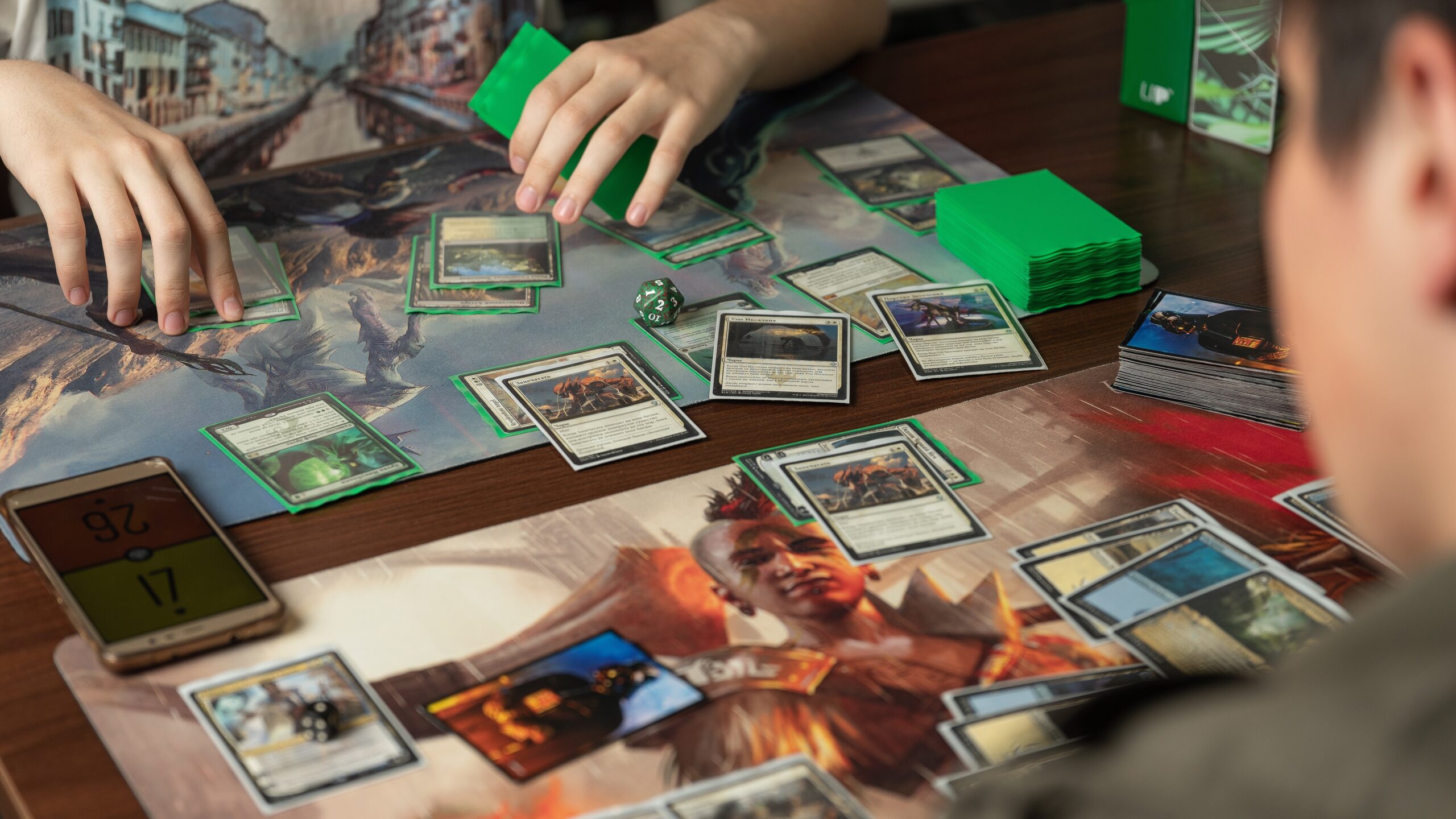
If you want to learn with one friend on a kitchen table, start with the Magic: The Gathering Foundations Beginner Box. This is one of the rare starter products that really does what it says. It walks you through a game turn by turn, then lets you mix and match ten simple themes once the basics click. It is built for actual beginners, not for someone who already watches set reviews at 2 a.m.
If you want in-person help, start with Magic Academy at a local game store. Magic Academy events are explicitly built to teach brand-new players the rules and early deckbuilding, and Wizards says you do not need to bring your own cards. As of March 7, 2026, WPN stores are running Magic Academy Learn to Play and Deck Building events tied to TMNT from March 6 through April 16, 2026. That is a pretty good window if you want a human being to answer, “wait, can i do that?” without making you feel dumb.
My honest recommendation is simple. Start on Arena if you are alone. Start with Foundations if you have one friend. Start with Magic Academy if you want the smoothest paper experience.
Do not try to do all three at once in week one.
Your best first product is not the flashiest one
New players almost always overbuy in the wrong direction.
If you want a physical first purchase, the best beginner product is still Foundations. The Beginner Box is for learning. The Starter Collection is for continuing after the rules make sense. The Starter Collection comes with over 350 cards and Wizards says those Foundations cards stay legal in Standard until at least 2029. That matters because it means your first pile of cards is not instantly stale.
What should you skip at first?
Skip Collector Boosters. They are fun to look at and terrible as a learning plan.
Skip buying random Play Boosters to “build a deck from whatever happens.” That is how you end up with eight cool rares, no mana base, and one very confused green deck that somehow contains triple blue cards.
Skip building Commander first unless a friend group is helping you. Commander is popular and fun, but it is a bad self-serve tutorial. It is social, political, full of old cards, and still surrounded by conversations about the Brackets beta and power expectations. None of that is impossible. It is just extra friction you do not need on day one.
Skip copying a huge tournament list before you understand why the deck works. A good deck in the wrong hands still feels bad. And a beginner deck you understand is often more fun than a meta deck you pilot like a shopping cart with a broken wheel.
If you are going to spend money early, spend it where it reduces friction.
That means:
- Arena, which is free to start
- Foundations Beginner Box, if you need to learn
- Foundations Starter Collection, if you are ready to own cards
- Magic Academy or a Prerelease, if you want guided paper play
That is enough. Really.
A clean first month plan that does not turn into homework
This part matters more than people admit. Beginners do better with a sequence.
For the first few days, play the Arena tutorial, finish the Color Challenge, and mess around in Starter Deck Duels. Do not worry about ranked. Do not worry about building a perfect deck. Just learn what your cards are trying to do.
During week one, play a bunch of games with the starter decks and read your cards carefully. That sounds obvious, but Magic rewards reading more than confidence. Most early mistakes happen because players assume a card works the way they want it to work.
During week two, decide whether you want paper cards yet. If yes, get the Foundations Beginner Box if you still need hand-holding, or the Starter Collection if you already know the basics and want a real pile of cards to work from.
During week three, go to Magic Academy if there is a store near you. If you have a friend group, this is also the point where a low-stakes kitchen table night makes sense. If you like opening packs and building with what you pull, a Prerelease is also a decent choice, but it is a little rougher than Magic Academy for absolute beginners.
During week four, pick one format to care about. Just one.
That could be Standard on Arena. It could be Brawl if you like commander-style deck identity and singleton cards. It could be Quick Draft once you are comfortable enough to evaluate cards on the fly. But one lane is enough.
This is the part of the MTG beginner guide 2026 that saves you the most money. Do not branch until you know what you enjoy.
The first formats that actually make sense
When people say “play Magic,” they leave out the fact that Magic is really several related games wearing the same costume. Picking the right first format matters.
For most beginners, the best first constructed format is Standard on Arena. It uses the most recently released sets, has 60-card decks, and gives you a clear sense of what normal one-on-one Magic feels like. It also lines up well with current products, so your cards and your learning are pulling in the same direction.
For most beginners interested in Limited, the best first format is Quick Draft. Arena lets you draft against bots, take your time reading, and then play games with the 40-card deck you built. It is slower and kinder than live drafting, and it teaches real card evaluation fast.
For players who love the idea of “this is my deck, this is my hero, this is my little pile of nonsense,” Brawl is a better first stop than full paper Commander. It still gives you the commander-style identity, but in a cleaner one-on-one Arena setting.
And for the record, Jump In is still useful. It is not glamorous, but it is very good at getting you into games with low pressure and less deckbuilding paralysis.
What would i avoid first?
I would avoid Timeless first. I would avoid deep nonrotating formats first. And i would avoid big social Commander nights with strangers until you know the basics well enough to follow the board.
That is not gatekeeping. That is just choosing a ramp instead of a wall.
Mistakes that make new players quit
A lot of new players do not quit because Magic is too hard. They quit because the starting plan was bad.
One common mistake is spending wildcards too early on Arena. New players open the client, find a list online, craft a bunch of rares and mythics, and then realize they do not even like the deck. Sit on your wildcards for a bit. Play first. Craft later.
Another mistake is chasing “value” instead of clarity. The internet loves telling you which product has better expected value. That does not matter if the product does not help you learn or play.
Another is starting with Commander because it is the format everybody talks about. Commander can be great, but great does not always mean beginner-friendly. Sometimes the most popular room in the house is also the loudest.
And maybe the biggest mistake is thinking you need permission to start simple. You do not. Your first deck can be basic. Your first plays can be obvious. Your first goal can just be “remember to attack before i cast my second main phase creature like a clown.”
That is still progress.
You do not need to catch up, you need a lane
Magic feels huge because it is huge. But your starting point does not have to be.
Start with Arena, Foundations, or Magic Academy. Pick one format after the rules click. Buy products that help you play, not products that impress other people. Let yourself be new for a while. That part is normal.
If you remember one thing from this MTG beginner guide 2026, let it be this: the best way to start playing Magic is not to understand everything. It is to make the next decision smaller.
One deck. One format. One table. That is enough.