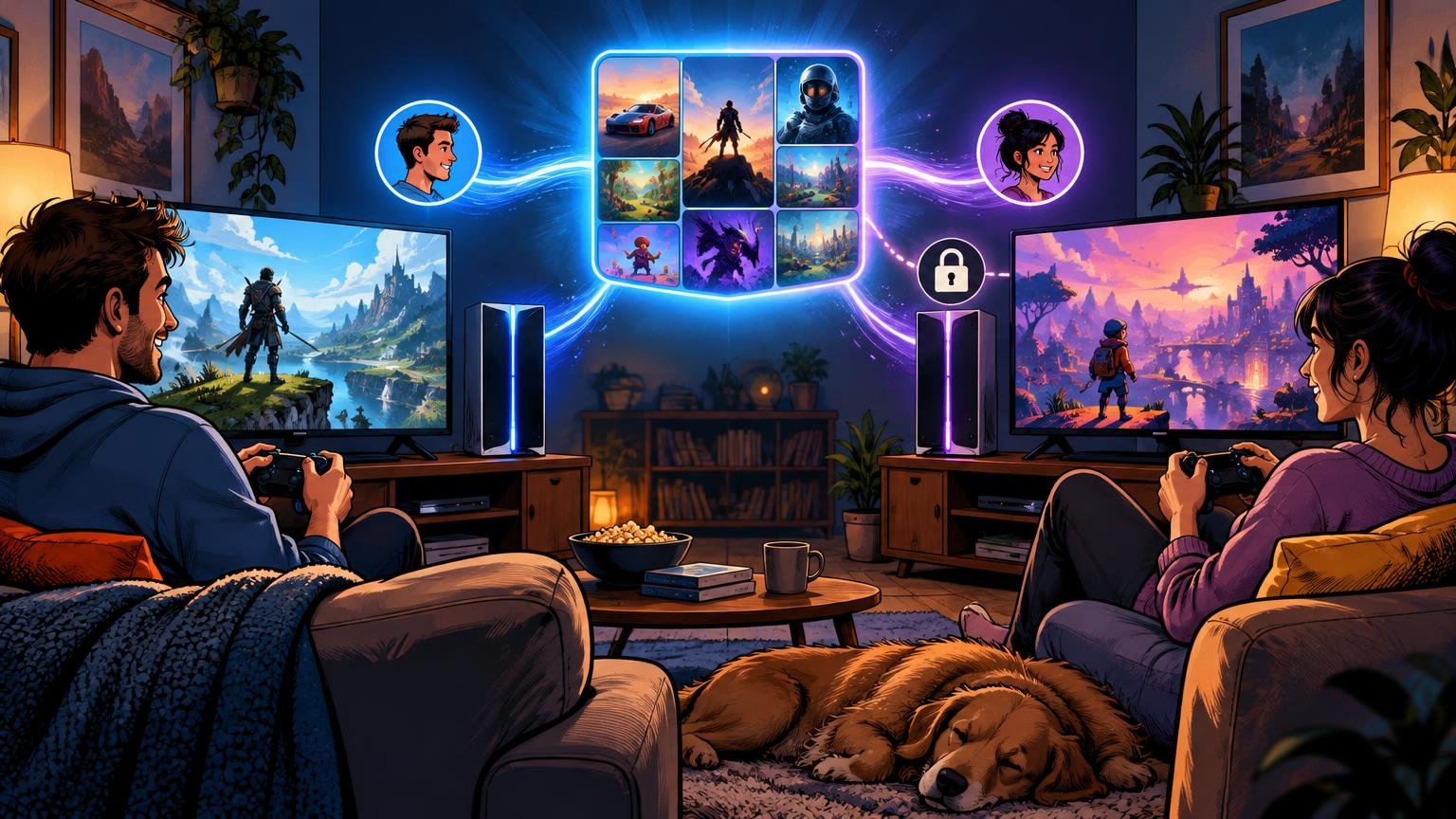
Best MTG Arena Modes for New Players in 2026

MTG Arena modes for new players can feel like a bad menu joke the first time you open the client. You log in and Arena starts throwing buttons at you like it assumes you already know the difference between Jump In, Quick Draft, Standard, Brawl, Alchemy, and whatever event is glowing today. If that sounds familiar, good. You are normal.

The good news is that you do not need to learn every queue. You need to pick the few that actually teach you the game without draining your gold, your patience, or your will to live. In my opinion, the best beginner path on Arena is still pretty simple: learn with starter decks, use Jump In to feel real deck synergy, try Quick MTG Draft when you want reps, and settle into Standard if you want one main format. If you want a broader onboarding path beyond the client, our MTG Beginner Guide 2026 fills in the bigger picture.

Start With Starter Deck Duels, Not Ranked Panic

Among MTG Arena modes for new players, Starter Deck Duels is still the cleanest place to begin. It is not fancy, and that is exactly why it works.

When you are brand new, the hardest part of Magic is not just the rules. It is separating your mistakes from your deck’s mistakes. Ranked Standard does not help with that. If you lose there, you may have misplayed, built poorly, mulliganed badly, or simply run into a tuned list with a cleaner curve than yours. That is a lot of noise.

Starter Deck Duels strips out a lot of that noise. You are using prebuilt decks. Your opponents are usually on the same general level. The games teach sequencing, combat, mana usage, and the basic question every Magic turn asks: what matters right now?

That sounds small, but it is huge. New players often want to graduate out of these decks too fast because they look temporary. But they are doing real work. They teach you what a control deck feels like when it is behind. They teach you what aggro actually means beyond “play creatures.” They teach you why some hands look fine and still lose because the order is wrong.

And that is the whole point. Arena’s training wheels are not glamorous, but they save you from learning the wrong lessons first.

Jump In Is the Best Bridge Out of Training Mode

Once you are comfortable clicking through a few starter decks, Jump In is the next mode I would recommend almost every time.

Jump In is great because it gives you a half-step toward deckbuilding without asking you to build from scratch. You pick themed packets, mash them together, add lands, and play. That means you start seeing actual synergies and archetypes, but you are not staring at a blank deckbuilder wondering why your blue-white pile somehow has six cards that all cost five mana.

This is one of the best MTG Arena modes for new players because it teaches pattern recognition. You start noticing that some decks want to curve out and attack. Some want to stall and fly over. Some want graveyard value. Some want sacrifice loops. You get the feel of a plan before you are asked to invent one.

It also helps that Jump In is low stress. There is less of that “i paid currency for this so now every mistake hurts more” feeling. You are playing real Magic, but in a softer lane. That matters more than people admit.

If you are the kind of player who likes to learn by seeing a bunch of deck shells first, Jump In might be the most useful queue on the whole client.

Quick Draft Is Your First Real Skill Check

Quick Draft is where Arena starts asking you to make real card evaluation decisions. That sounds scary, but it is actually why I like it for beginners.

Compared with Premier Draft or more expensive event structures, Quick Draft is the mode that lets you learn Limited without feeling like every bad pick was a financial event. You draft against bots, build a 40-card deck, keep the cards you take, and play until you hit your win or loss cap. It is still real drafting. It just gives you a slightly softer landing.

That softer landing matters because early Draft mistakes are incredibly predictable. New players take expensive cards too highly. They force colors too soon. They underrate removal. They forget their mana curve. They build 43-card decks because cutting cards feels emotionally illegal. Quick Draft gives you room to make those mistakes and then laugh at them later.

I also think Quick Draft teaches core Magic faster than some constructed queues do. You learn when to race, when to trade, when to splash, when to stop being cute and just play the efficient creature. You stop asking whether a card is “good” in the abstract and start asking whether it is good in this deck. That is real progress.

If you want one early mode that builds actual skill, Quick Draft is probably it.

Standard Is the Best First Long-Term Home

When people ask me about MTG Arena modes for new players, Standard is the first permanent queue I point to once they are ready to move past starter content.

There is a reason for that. Standard is the cleanest mix of normal one-on-one Magic, readable deckbuilding, current card pools, and steady support. It is easier to find decklists. Easier to understand legality. Easier to use the cards you keep seeing in current releases. Easier to carry what you learn from one session into the next.

And right now, Standard has one extra thing going for it. 2026 is an unusually friendly entry point. Usually, new players worry about rotation timing and whether they are joining at the wrong moment. But this year is not as awkward as that old pattern made it feel. So if you want to plant your flag in one place, Standard is a very reasonable first real format.

It is also the best bridge between Arena and paper. If you are not sure whether you will stay digital forever, Standard keeps your learning closer to what tabletop players already understand. That is useful. Alchemy has its fans, and I get why. But if you want the cleanest version of “learn the game, build a deck, improve the deck, play the deck,” Standard is still the best answer.

Brawl Is Great Once You Know What You Like

Brawl is fun. Let me say that first, because newer players sometimes hear “not first” as “not good.” That is not what I mean.

Brawl is one of the most enjoyable Arena formats once you already know your own taste. It is commander-style deckbuilding, singleton construction, and a format that gives your favorite legendary creature a starring role. If you like expressive decks, pet cards, and games that feel less repetitive, Brawl has real appeal.

But i do not love it as a first destination for most new players.

The problem is not power. The problem is information load. Singleton formats ask you to understand more unique cards, more board states, and more strange interactions earlier. That can be exciting once you know the basics. Before that, it can feel like the game is changing shape every turn.

So yes, try Brawl. Just do it after you understand what your deck is trying to do and why. If Commander culture is the reason you are even looking at Magic, then read Commander Brackets in MTG Explained for Normal People too, because that conversation has become part of how a lot of regular players talk about power and expectations.

Modes You Can Leave For Later

Alchemy, Historic, Pioneer, and Timeless are not bad modes. They are just not where I would start most people.

Alchemy is for players who want Arena to feel distinctly digital. It includes digital-only cards and rebalanced versions of existing cards. Some people love that. Some people bounce off it instantly. Either reaction is fair. I would not make it your first home unless you already know you want Magic with live-service energy.

Historic is a broader digital-first sandbox. Pioneer is the Arena name you now want if you are looking for the old Explorer lane. Timeless is the deep end. Timeless is the format you visit when you actively want the nonsense. That is not an insult. Some of us enjoy nonsense. But it is veteran nonsense.

A good beginner rule is simple: if the format exists mainly because the card pool is huge, weird, or fast, you can wait.

A Simple 2026 Path That Actually Works

You do not need a perfect plan. You need a plan that keeps you playing long enough to improve.

Here is the version I like. Start with the tutorial stuff and Starter Deck Duels until you know what your deck is trying to do. Move into Jump In when you want more variety without full deckbuilding pressure. Add Quick Draft when you want to get sharper. Then choose Standard if you want one long-term constructed home.

That path is not flashy. It also works.

The biggest mistake new Arena players make is trying to solve every future question in week one. They worry about crafting efficiency, long-term meta choices, crossover cards, ranked ladders, and eternal formats before they can consistently spot a profitable attack. Slow down. Learn the game in layers. Arena gives you too many buttons, but you do not owe every button your attention.

The best MTG Arena modes for new players are the ones that keep you learning without making you hate the client. For most people in 2026, that still means Starter Deck Duels, Jump In, Quick Draft, and Standard in that order.


On Key

Related Posts

How Much Room Do You Need for a Pinball Machine at Home?

TLDR The short answer is that a real pinball machine does not need a massive room, but it does need more space than its cabinet dimensions suggest. If you are asking how much room do you need for a pinball machine, the safe home answer is simple: plan for about 3 feet of width and 7 feet of depth per machine. That gives the game enough room to sit, enough room for the player to stand naturally, and enough clearance for the machine to be serviced without turning every minor adjustment into a furniture-moving project. Why The Cabinet Measurement Is Not Enough A pinball machine looks narrow from the front. That is the trap. Most modern full-size machines are only a little over two feet wide. On paper, that sounds easy. You might look at a basement wall, office corner, spare bedroom, garage, or theater room and think, “That will fit.” Maybe it will. But pinball is not like sliding a bookcase into a corner. A machine has to be played, nudged, opened, leveled, cleaned, repaired, and occasionally moved. It has a backbox. It has a lockdown bar. It has legs that need space. It has a glass sheet that slides out the front. It has a coin door, buttons, side rails, power cord, and sometimes wall-sensitive topper or backbox clearance. The machine’s listed dimensions tell you whether the object fits. They do not tell you whether the room works. That is the difference this guide is really about. The Practical Home Footprint For One Pinball Machine For one full-size pinball machine, use this planning rule: Minimum workable space: 36 inches wide by 80 inches deep Comfortable space: 42 inches wide by 84 inches deep Ideal space: 48 inches wide by 90 inches deep The machine itself may only be around 27 to 29 inches wide, but giving it at least 36 inches of width makes the room easier to use. That extra side clearance helps with nudging, cleaning, leveling, and avoiding scratches against walls or other machines. Depth is even more important. A typical machine cabinet may be around 55 inches deep, but the player needs space behind the lockdown bar. If the game is crammed into a 60-inch-deep nook, technically it may fit, but nobody will enjoy playing it. A realistic setup needs space for: That is why about 7 feet of room depth is the number that keeps coming up in real home setups. How Much Room Do You Need For A Pinball Machine If It Is Against A Wall? If the machine is going against a wall, plan for a little breathing room behind it. You do not need a giant gap. Pinball machines are designed to sit near walls in arcades and game rooms. But you also do not want the backbox jammed hard against drywall, trim, curtains, shelves, or acoustic panels. A good home setup leaves enough space to: For most home rooms, leaving 2 to 4 inches behind the machine is enough. If you have a topper, wall shelf, low ceiling, mounted TV, framed poster, or slanted ceiling, measure more carefully. The danger is not usually the machine body. The danger is the upper area around the backbox, topper, ceiling, and wall décor. Do You Need Side Clearance? Yes, but not always as much as people think. A single machine can sit fairly close to a wall on one side. Many home owners do that. But if you are choosing the best spot in the room, leave a few inches of side clearance when possible. Side clearance helps with: If you only have one machine, try to leave 3 to 6 inches on each side if the room allows it. If you are placing machines side by side, the spacing can be tighter. In a dedicated pinball row, machines often sit close together. Still, leaving a little space between cabinets makes the row easier to live with. It also reduces the chance of side art damage when someone moves, cleans, or services a game. How Much Space Do You Need For Two Pinball Machines? For two full-size pinball machines side by side, the absolute machine width may be only about 54 to 58 inches total. But a comfortable home row needs more than that. Use this rule: Tight two-machine setup: about 5.5 feet wide Comfortable two-machine setup: about 6 to 6.5 feet wide Ideal two-machine setup: 7 feet wide or more The wider number gives you breathing room between machines and side clearance at the ends. It also makes the row look intentional instead of wedged into a leftover wall. Depth stays about the same as one machine. You still want roughly 7 feet of usable depth from the wall to the standing area. A two-machine row works especially well in: It works less well in narrow rooms where the player blocks the entire walkway. A pinball machine can technically fit in a hallway-style room, but if every game forces people to squeeze past the player, the room will feel annoying fast. How Much Space Do You Need For Three Or More Pinball Machines? Once you get to three machines, think in terms of a real row. For three full-size machines, plan for at least 9 feet of wall width if you want the setup to feel comfortable. You may be able to do it tighter, but 9 feet gives you a much better result. For four machines, plan for roughly 12 feet or more. For five machines, plan for roughly 15 feet or more. These are not hard engineering numbers. They are practical room-planning numbers. They assume a full-size game, some side clearance, and a room that still feels usable. The bigger issue becomes the player zone. Three people can stand at three machines at once. Four people can gather behind them. Suddenly your “pinball wall” is not just furniture. It is a social area. That means you should also think about: A single pinball machine is a piece of entertainment

What Pinball Machine Should You Rent First If You Like Godzilla’s Deep Code?

TLDR The best first pinball rental for someone who likes Godzilla’s deep code is usually Jaws Premium. It has meaningful progression, clear goals, strong modern Stern design, and enough depth to test whether you want a long-term home game without jumping straight into the most punishing options. Why Godzilla Creates A Very Specific Problem Some pinball machines are fun for ten games. Others make you feel like you are slowly learning a world. That is what Godzilla does well. Players who connect with it often are not just responding to the theme, the toys, or the shots. They are responding to the feeling that almost everything matters. A shot might help with a city objective, kaiju battle, multiball, ally, destruction bonus, or late-game progress. Even when a ball does not become a monster score, it usually feels like something moved forward. That creates a tricky rental question: what pinball machine should you rent first if you want that same deep, useful-shot feeling, but you do not want to bring home something that frustrates everyone else in the house? The answer is not simply “rent the highest-rated game available.” Some great machines are demanding. Some deep machines are hard to explain. Some approachable machines are fun but smaller in scope. The right first rental should test three things at once: For that specific test, Jaws Premium is the best starting point. The Main Thing To Look For: Useful-Shot Density The long-tail question is not really “what is the best pinball machine?” It is more specific: What machine feels like Godzilla, where almost every shot seems to build progress? A useful way to think about that is useful-shot density. A game has high useful-shot density when ordinary shots keep feeding bigger systems. You are not just collecting points. You are moving toward modes, multiballs, perks, equipment, rescues, battles, wizard modes, or long-term objectives. A low useful-shot-density game can still be fun. It might be fast, funny, brutal, simple, or satisfying in short bursts. But if you are chasing the Godzilla feeling, you want more than a single mode ladder. You want parallel progress. That is why the best first rentals are not always the deepest games on paper. They are the games where depth, clarity, and shot friendliness meet. Best First Rental: Jaws Premium Jaws Premium is the best first rental if you want a modern machine that feels substantial without becoming homework. The appeal is easy to understand. You are hunting the shark, saving beachgoers, collecting gear, building toward bigger moments, and working through a structure that makes sense even if someone has not studied a rulesheet. That matters for a rental. You do not want to spend the first two days explaining why the game is fun. The machine needs to make a case for itself while people are actually playing it. Jaws also gives you a strong read on what kind of home pinball player you are. If your household enjoys Jaws, you probably like modern Stern depth, cinematic goals, and a game that asks for skill without feeling totally closed off. If your household finds it too fast or too aggressive, that tells you something useful before you spend purchase-level money. The tradeoff is that Jaws can feel sharper than Godzilla. It is not the softest, friendliest modern Stern. Some shots carry real risk. The scoring can come in large chunks, and better players will separate themselves quickly. But as a first rental, that is not a deal-breaker. It is actually helpful. You are testing the upper edge of what your household enjoys. If Jaws feels exciting rather than exhausting, it belongs on the serious buy list. Rent Jaws First If Be Careful If Best Campaign-Style Rental: Dungeons & Dragons: The Tyrant’s Eye If Jaws is the best first all-around test, Dungeons & Dragons: The Tyrant’s Eye is the best test for a long-form owner game. This is the machine to rent if you are drawn to character selection, classes, saved progress, equipment, inventory, choices, dungeon structure, and the sense that the game can keep unfolding over many plays. It is not just “start a mode, finish a mode, start another mode.” It is trying to make pinball feel like an ongoing campaign. That makes it very interesting for a home environment. A game like this can reward repeated play in a different way than a simpler shooter. You can keep learning how its systems connect. You can build familiarity with classes and strategies. You can start thinking beyond “what shot is lit?” and into “what kind of run am I building?” The concern is not mainly that the shots are brutally unfair. The bigger issue is mental load. Some players will love the structure. Others may feel like the game is asking them to understand too much before they can fully enjoy it. That is why it is a smart rental. You do not need to guess. Put it in the house for a month and watch what happens. Do people come back because the campaign hooks them, or do they wander back to simpler machines? Rent Dungeons & Dragons First If Be Careful If Best If You Can Find One: Batman ’66 Batman ’66 belongs in this conversation because it has real home-game depth without feeling as punishing as some modern machines. The problem is availability. It is an older Stern title, and finding a clean one to rent or buy can be harder than finding current-production games. But if a local rental company has one, it is absolutely worth testing. The structure gives players a lot to chew on. Major villains, minor villains, gadgets, mode progress, playfield features, and long-term objectives keep the game feeling large. It has that “there is always something else moving” quality that Godzilla fans often want. It also has a different rhythm. Batman ’66 can feel more deliberate and stop-start than Godzilla. That is not automatically bad. For a home game, a slightly more deliberate machine can be easier

Why The American Fork Police Response Looks Like Retaliatory Policing

TLDR The part that should bother people most is not that police got called. Police get called to tense civil disputes all the time. The problem is what allegedly happened after they arrived. The American Fork Police response looks like retaliatory policing because the reported enforcement pattern appears aimed at the people criticizing, filming, serving papers, raising legal funds and trying to recover property. That does not mean every officer involved acted unlawfully. It does mean the public deserves records, timelines and answers. Retaliatory policing is not just “police did something I disliked.” It is the use, or apparent use, of police power to punish protected activity. That can include public criticism. It can include filming. It can include lawful process service. It can include raising money for legal fees. It can include using the courts instead of quietly going away. That is why this story matters beyond the original business dispute. You do not need to care about LEGO to care about the American Fork Police response. The core issue is simpler: when a private dispute becomes embarrassing for powerful or connected people, did local police stay neutral, or did they help turn pressure back onto the critics? A Civil Dispute Should Not Become A Police Shield A civil dispute belongs in civil court. That sounds basic, but it matters here. A fight over consigned property, inventory, ownership, contracts, business control or financial loss is normally handled through lawyers, lawsuits, discovery and court orders. Police may get involved if there is violence, trespass, theft, threats or some other independent crime. But police are not supposed to become the enforcement arm for one side’s version of a private dispute. That distinction is the whole ballgame. If one side says, “This is our property,” and the other side says, “No, this was consigned and never transferred,” police should be careful. If there is no clear criminal act happening in front of them, the safest role is usually narrow: prevent violence, document the contact and tell the parties to handle ownership through court. The danger comes when police start treating one side’s legal theory as fact. That is how a civil dispute turns into a police shield. The business or person with possession calls law enforcement. The people trying to recover property are labeled disruptive. The people filming are treated as troublemakers. The people serving papers are treated as harassers. The people raising legal funds are treated as a threat. And suddenly the police presence is not neutral anymore. A police department does not have to formally say, “We are taking sides,” for the effect to be the same. If enforcement only flows toward one side, the message is clear enough. The Pattern Matters More Than Any Single Stop One police call can be ordinary. A tense business dispute can justify a civil standby. A store owner can call police if people refuse to leave private property. Officers can separate people, preserve safety and write reports. None of that automatically proves misconduct. But the American Fork Police response raises a different question because the alleged conduct is not one isolated response. It is a pattern. The reported pattern includes: Any one of those events might have an explanation. Together, they look much harder to brush off. That is why records matter. Public discussion should not have to run on rumors, clips, screenshots and edited video segments forever. If American Fork Police acted properly, the records should help show that. If they did not, the records should show that too. The public should not be asked to accept a vague “trust us” answer when the allegation is that government power may have been used to intimidate private citizens during a public dispute. The Difference Between Keeping Peace And Taking Sides Police have a real job in tense conflicts. They are allowed to keep the peace. They are allowed to prevent fights. They are allowed to enforce valid laws. But keeping peace is not the same as taking sides. Keeping Peace Taking Sides Separating people who are arguing Repeating one private party’s legal theory as if it is settled fact Enforcing a clear trespass warning Treating criticism or filming as criminal behavior Documenting both parties’ claims Escalating only against the people challenging the business Preserving safety during process service Blocking or discouraging lawful service because the recipient dislikes it Telling both sides to use court Using arrest, search or pressure to make one side stop speaking The line is not always clean in the moment. Officers make fast decisions. People are emotional. Businesses have property rights. Private premises matter. But that is exactly why neutrality matters. A police officer at a civil dispute should not act like a private security guard. A badge carries state power. A search, stop or arrest is not a customer-service tool. It is not a reputational management tool. It is not a way to make public criticism less inconvenient. When police use power, the reason needs to be lawful, specific and documented. “People are making a business look bad” is not enough. Why Process Service Matters Process service is not a stunt. It is how lawsuits begin, move forward and become real. That matters because one of the most troubling pieces of the alleged pattern is interference with service of legal papers. If someone is trying to serve a summons, complaint, subpoena or other legal document, the law gives that act special importance. It is the bridge between public conflict and court process. A person being served may dislike it. That is common. Most people are not thrilled to receive legal papers. But not liking service is not a reason for police to block it. If service is being done lawfully, police should not turn the server into the problem. Their role should be limited: keep people safe, prevent threats and avoid escalating a lawful court process into a police encounter. That is especially true in a dispute where one side is saying, in effect, “Take this to

Is PPF Better Than Vinyl Wrap? A Buyer Decision Guide

TLDR PPF is better than vinyl wrap if your main goal is paint protection. It is built to absorb road debris, resist chips and help protect high-impact areas. Vinyl wrap is better if your main goal is changing the look of your vehicle. It offers more color, texture and graphic options at a lower cost than full-body PPF. The best choice depends on your priority: protection, appearance, budget or a mix of all three. A small rock chip on a fresh bumper feels personal. It is tiny, but once you see it, you keep seeing it. That is why so many buyers ask the same practical question before spending money on their vehicle: is PPF better than vinyl wrap? The honest answer is yes for protection, no for pure customization and maybe if you are comparing newer colored PPF against traditional vinyl wrap. Paint protection film, often called PPF or clear bra, is usually a clear urethane film made to protect factory paint from rock chips, scratches, bug damage, road grime and harsh weather. Vinyl wrap is usually a thinner color-change or graphics film made to change how a vehicle looks. Those two products can look similar once installed, but they solve different problems. 3M describes its paint protection film as protection against scratches, chips and weathering, while its wrap film is positioned for full color vehicle wraps, accents and partial decoration wraps. XPEL also describes PPF as a self-healing film that protects against rock chips, scuffs and light scratches. So the better question is not “which one is better?” It is “which one is better for what I care about?” PPF Vs Vinyl Wrap: The Main Difference The main difference between PPF and vinyl wrap is purpose. PPF is a protection product. It is normally thicker, more impact-resistant and often has a self-healing top layer that can reduce the appearance of small swirl marks or light surface scratches. It is most common on bumpers, hoods, mirrors, fenders, rocker panels and other high-impact areas. Vinyl wrap is a customization product. It lets you change your car’s color, add graphics, create a matte finish, cover chrome trim, add racing stripes or brand a fleet vehicle. It can provide some light surface protection, but it is not built to absorb road debris in the same way as PPF. A simple way to think about it: Buyer Goal Better Fit Stop rock chips PPF Change car color Vinyl wrap Protect a new car’s factory paint PPF Add custom graphics Vinyl wrap Get a matte or satin look Vinyl wrap or matte PPF Maximum protection with a new color Colored PPF Lower upfront cost Usually vinyl wrap Best high-impact front-end coverage PPF Is PPF Better Than Vinyl Wrap For Paint Protection? Yes. PPF is better than vinyl wrap for paint protection. That is the clearest part of the decision. PPF is designed for impact resistance. It helps protect paint from rock chips, light scratches, bug splatter, road tar, salt, stains and UV exposure. Modern PPF products are also commonly self-healing, which means light marks can soften or disappear with heat. 3M’s PPF materials describe protection from stone chips, scratches, bug damage, road tar, stains, automotive fluid stains and outdoor weathering. Vinyl wrap can still protect the paint underneath from sun exposure, light abrasions and everyday dirt. But if a rock flies off a truck tire at highway speed, vinyl wrap is not the product you want to rely on. This matters most for: If protection is the reason you are shopping, PPF should be the first option you price. Is Vinyl Wrap Better For Changing The Look? Yes. Vinyl wrap is usually better for changing the look of a vehicle. Vinyl wrap comes in a wide range of colors, textures and finishes. Gloss, satin, matte, chrome, brushed metal, carbon fiber, color-shift and printed graphics are all common wrap options. Avery Dennison describes its Supreme Wrapping Film as a cast film for color change and graphic applications, with many color and finish combinations. That makes vinyl wrap a strong choice if you want your car to look different without repainting it. Vinyl wrap is especially useful for: It is also easier to justify if you know you will want a different look in a few years. A high-quality vinyl wrap can often be removed professionally without damaging properly maintained factory paint, assuming it was installed, cared for and removed within the product’s recommended window. 3M says its 2080 wrap films should not damage OEM paint when used, applied, maintained and removed according to instructions within the warranty period. What About Colored PPF? Colored PPF is the middle ground. It gives you the style change of a wrap with the protection benefits of paint protection film. This category has grown because buyers want both: a new color and real paint protection. Instead of applying vinyl wrap and then adding clear PPF on top, colored PPF uses a protective urethane-style film with color built in. 3M’s Protection Wrap Film Color Series is described as combining vehicle customization with durable protection against chips, scratches and stains. XPEL also offers color paint protection film positioned as a self-healing urethane film with color finishes. The tradeoff is cost and selection. Colored PPF usually costs more than traditional vinyl wrap, and the color library may be smaller. But for someone buying a new performance car, luxury SUV or daily driver they plan to keep, colored PPF can make sense. It is best for buyers who want: It may be overkill if you only want a temporary style change. Cost: PPF Usually Costs More PPF usually costs more than vinyl wrap because the material is more protective, the installation can be more demanding and many jobs focus on precise panel coverage. A full-front PPF package is often priced differently than a full-car wrap. That can make the comparison confusing. You might pay less for front-end PPF than a full vinyl wrap, but full-body PPF is usually one of the most expensive