May 15, 2023

The Latest

Recent Stories

Pokemon GO Fest 2023 Schedule

Pokemon GO Announces New Events for Trainers Niantic, the developer of Pokemon GO, has recently shared exciting news about upcoming events in the game. Trainers, get ready to mark your calendars for the next season’s Community Days and other in-game events! Save the Dates for Next Season’s Community Days! In the wake of Season 10: Rising Heroes, the final Community Day, Niantic has unveiled the dates for the upcoming Community Days in the next season. These Community Days provide trainers with unique opportunities to catch exclusive Pokemon and participate in exciting activities. Make sure to save the following dates: Saturday, June 10, 2023 Sunday, July 9, 2023 (Community Day Classic) Sunday, July 30, 2023 Sunday, August 13, 2023 Don’t miss these special days dedicated to enhancing your Pokemon GO experience! Additional In-Game Events in the Pipeline Aside from the Community Days, Niantic has also revealed the dates for other thrilling in-game events to look forward to in the next season. Stay tuned for the following dates: Saturday, June 3, 2023 Saturday, July 22, 2023 Saturday and Sunday, August 26–27, 2023 (Pokemon GO Fest 2023: Global) These events promise to deliver even more excitement and adventures for all trainers! Staying Informed and Prepared As always, it’s important to prioritize your safety while enjoying the game. Be aware of your surroundings and follow the guidelines provided by local health authorities. Keep in mind that upcoming events are subject to change, so it’s essential to stay updated. Stay connected with the Pokemon GO team through their official social media channels, opt-in to receive push notifications, and subscribe to their emails. By doing so, you’ll be the first to know about the latest event details and captivating feature updates. Additionally, the game’s help center article is a valuable resource for the most recent in-game event information. Conclusion Pokemon GO enthusiasts have an exhilarating season ahead, with a lineup of Community Days and in-game events that promise ample excitement and rewards. Make sure to mark your calendars, stay informed, and get ready to embark on new adventures in the Pokemon GO universe! Frequently Asked Questions (FAQs) 1. What are Community Days, and why are they important in Pokemon GO? Community Days in Pokemon GO are special events designated for trainers to enjoy increased encounters with specific Pokemon and unlock exclusive moves for certain featured Pokemon. These events provide opportunities for trainers to catch rare Pokemon, evolve them into powerful forms, and strengthen their teams. Community Days are highly anticipated by trainers as they offer unique gameplay experiences. 2. Can I participate in Community Days remotely? Community Days usually require trainers to be physically present at the designated locations to fully engage in the event. However, Niantic has introduced various features that allow trainers to participate remotely to some extent. Keep an eye on the official announcements to learn more about remote participation options available during Community Days. 3. How can I ensure my safety while playing Pokemon GO during events? Ensuring your safety during Pokemon GO events is crucial. Here are some tips to follow: Be aware of your surroundings and stay attentive to your environment while playing. Follow guidelines provided by local health authorities and abide by any restrictions or recommendations they have in place. Avoid risky situations and exercise caution when exploring unfamiliar areas. Travel in groups, especially during large-scale events, to enhance safety and enjoy a sense of community. Remember to prioritize your personal well-being and have fun responsibly! 4. How often do in-game events occur in Pokemon GO? Niantic regularly organizes in-game events to keep the Pokemon GO community engaged and entertained. The frequency of these events can vary, but trainers can generally expect new events to occur on a monthly or bi-monthly basis. Make sure to stay updated through the game’s official channels to catch all the exciting events! 5. Can you provide more information about Pokemon GO Fest 2023: Global? Pokemon GO Fest 2023: Global is a highly anticipated, multi-day event where trainers from all around the world can come together to celebrate their shared love for the game. During this event, there will be exclusive Pokemon encounters, exciting challenges, and various activities to engage the global Pokemon GO community. Keep an eye out for updates from Niantic to learn more about the specific features and enhancements this event will bring! Disclaimer: This article is based on the official announcement from Niantic. Event details and dates are subject to change. Please refer to the official Pokemon GO channels for the most accurate and up-to-date information.

Minecraft Potion of Weakness: Brewing Guide

In Minecraft, one of the most critical aspects of gameplay is potion-making. Potions offer exceptional benefits to the player, from added strength to improved sight, which can make a significant difference in challenging aspects of the game. Of all the potions that can be brewed, the Potion of Weakness is one of the most essential in a player’s inventory. It is a versatile potion, often used as a buffer in critical situations or to enhance other potions. By mastering the art of potion-making in Minecraft, gamers can improve their gameplay significantly. This article will cover how to make the Potion of Weakness, including the required ingredients and equipment, step-by-step instructions for brewing, the effects and applications of the potion, tips for mastering potion-making skills, and much more. Read on to become a potion-making expert and enhance your Minecraft gameplay. Ingredients & Equipment Needed Making a Potion of Weakness may seem quite complex at first, but with the right ingredients and equipment, the process can be quite simple. Here is an overview of what you will need to get started: Ingredients: Water Bottle: A glass bottle that can be filled with water. Nether Wart: A plant that can only be found in the Nether and is used to begin the brewing process. Spider Eye: A poisonous item that is used as a primary ingredient for a Potion of Weakness. Fermented Spider Eye: A type of item that is used to create potions with additional effects by brewing them with another potion. Equipment: Brewing Stand: A tool that is used to brew the potions. Cauldron: A container used for holding water. Blaze Powder: A fuel source for the brewing stand With these items in hand, you can begin brewing your Potion of Weakness. It is important to note that some other potions can be made with these same ingredients, so it is worth experimenting to see what other potions you can brew with the same ingredients. With the proper ingredients and equipment, brewing a Potion of Weakness can be a straightforward process. Brewing the Potion of Weakness Potion-making is a crucial aspect of Minecraft gameplay as it provides players with unique abilities and advantages in the game. Brewing a Potion of Weakness is one of the interesting potions that players can create. This potion can be used to lower the attacking strength and defensive abilities of enemies like zombies. In this section, we will provide a step-by-step guide to brewing a Potion of Weakness, explain the brewing process, duration, and success rate, and highlight the common mistakes players should avoid. Step-by-Step Guide to Brewing a Potion of Weakness To make this potion, you need to gather the appropriate resources and equipment required. The items include nether wart, fermented spider eye, and water bottles. Once you have all the necessary items, follow these simple steps: 1. Open the brewing stand user interface by right-clicking on it. 2. Add Blaze Powder to the ingredient box to activate the brewing stand. 3. Add the water bottles to the three bottom boxes of the brewing stand. 4. Add Nether Wart to the top box of the brewing stand. 5. Allow the brewing process to complete. The duration of the whole process is about 20 seconds. 6. After completion, add the Fermented Spider Eye and allow the brewing process to complete. 7. Collect the Potion of Weakness. Duration and Success Rate The brewing process for a Potion of Weakness takes about 20 seconds to complete. The duration of the potion’s effect on enemies depends on the strength of the potion. A weaker potion will have a shorter duration, while a stronger potion will have a longer duration. The success rate of brewing a Potion of Weakness is high, even for beginners. Common Mistakes to Avoid While Brewing The brewing process is a bit tricky, and first-time brewers can make some common mistakes. Avoid these, and you will be on your way to mastering the art of potion-making: – Forgetting to add Blaze Powder to activate the brewing stand. – Placing the wrong ingredient in the wrong slot. – Adding the wrong ingredient at the wrong time. – Using the wrong equipment. By following this detailed guide, you can now brew your Potion of Weakness and have a strategic advantage in Minecraft gameplay. Effects & Applications of Potion of Weakness In Minecraft, the Potion of Weakness is a valuable tool that can weaken enemies, making them less formidable in battle. When consumed by a player, it grants them the Weakness effect for 1 minute and 30 seconds. Within this timeframe, the player’s melee damage is reduced by 4 points, making it more challenging to fight an enemy. However, you can also use this potion to your advantage. Here are some ways the Potion of Weakness can be used in Minecraft: 1. Weakening Enemies: The primary application of the Potion of Weakness is to weaken enemies, making them less of a threat. When thrown at an enemy, it reduces their melee damage dealt by 4 points. This can be useful when battling tough mobs like zombies, skeletons, or even the Ender Dragon. 2. Brewing other Potions: The Potion of Weakness is an essential and versatile ingredient in various brewing recipes. When combined with certain ingredients like spider eyes, it can produce unique and potent potions that players can use to gain an advantage in the game. 3. Enhancing Gameplay: Adding the Potion of Weakness to Minecraft can enhance gameplay by allowing players to approach combat situations differently. For instance, using this potion in combination with invisibility potions, players can sneak into enemy territory undetected, decreasing the risk of confrontations and death. In summary, the Potion of Weakness is a remarkable potion that can be used in various ways in Minecraft. It can help you significantly weaken enemies, brew other Potions, and enhance gameplay. Learning how to use this potion and including it in your gameplay can significantly improve your strategy and gameplay experience. Tips for Mastering Potion of

Pokemon Snap | Nintendo 64 Retro Video Review

Welcome gamers and fellow gaming enthusiasts, today we are excited to take a trip down memory lane as we revisit Pokemon Snap, a classic retro video game that was originally released for the Nintendo 64 in 1999. For those who may not be familiar with the game, it is a spinoff from the popular Pokemon franchise that focuses on photography instead of battling. In Pokemon Snap, players embark on an adventure with Todd Snap, a young photographer who travels to Pokemon Island to snap pictures of a variety of Pokemon. The purpose of this article is to dive deeper into the world of Pokemon Snap, examining the various aspects of the game that made it a memorable experience for many gamers. From its unique gameplay mechanics, graphics, sound design, story, replayability, level design, and difficulty, we will explore the elements that made Pokemon Snap a classic retro game. We will also provide our final score out of 10 and a recommendation for fans new and old. So grab your camera and let’s take a journey through the world of Pokemon Snap together! Pokemon Snap – Nintendo 64 Retro Video Game Overview, History, and Review Pokemon Snap for Nintendo 64 is undoubtedly a unique game in the world of video games. Rather than capturing Pokemon through traditional battles, players focus on taking their pictures. The game offers a perspective from behind the camera lens, exploring a new dimension to the gaming world. As the player, your goal is to take photos of the Pokemon that appear on the track. You ride a “Zero-One” vehicle, which takes you through a carefully crafted route where various Pokemon encounter. Players receive points on the quality of their photos, and they unlock new levels and gains access to special events. It’s a simple but effective concept that introduces an alternative method of play. The Pokemon themselves are animated in unique and dynamic ways, allowing for hilarious and beautiful pictures (if the player’s timing is right). The game’s map is broken out into seven distinct zones, such as Beach, Tunnel, and Volcano. Each of these sections offers different Pokemon species, landmarks, and overall experiences. While the player is primarily on rails, they can control the “speed” and look in different directions from the Zero-One vehicle. Regarding multiplayer, Pokemon Snap is a single-player game only. However, there are multiple ways for players to compare their results with others. Once a session completes, players receive a password that they can share with others. These codes allow other players to watch a replay of their session, including all the photos taken during the ride. Overall, Pokemon Snap offers an experience based around a fun concept that feels like a breath of fresh air in the world of gaming. With a simple but effective scoring system and replayability, the game becomes infinitely more enjoyable for players. Graphics and Sound Design Analysis When it comes to Pokemon Snap, the graphics and visual design of the game are truly impressive, especially considering the limitations of the Nintendo 64. The game features vibrant, colorful environments that feel true to the Pokemon universe. The unique mechanics of the game that revolve around taking photographs of Pokemon bring the game to life, allowing players to capture the imagery of their favorite Pokemon. But the visuals aren’t the only impressive aspect of Pokemon Snap’s design. The game features a fantastic sound design as well, with memorable sound effects that complement the action on screen. The sound effects and music add to the player’s immersion, making them feel like they are truly exploring the Pokemon world. Compared to other games of the time, Pokemon Snap was a standout title due to its unique gameplay and visual style. While other games during the era were focused on high-octane action and full 3D worlds, Pokemon Snap provided a more laid-back and immersive experience. The game’s design was innovative and bold, taking a genre in a new direction that was not seen before. All in all, the graphics and sound design in Pokemon Snap helped to create a truly immersive and engaging experience. The design is an excellent combination of the vibrant world of Pokemon, realistic photography mechanics, and immersive sound effects that help bring the game to life. Anyone who is a fan of Pokemon or interested in unique game design will find much to appreciate in Pokemon Snap. Story and Replayability Pokemon Snap may not have been considered to hold a key place in the popular Pokemon game series, but its story mode and replayability make it completely unique. While players usually have to capture, trade, and battle their Pokemon, in Pokemon Snap, they have to take photos of the creatures scattered throughout different locations. As you can imagine, the game doesn’t have the same depth as the main games, where players complete the story with proper battles and trainers. Still, for Pokemon Snap, the narrative is just the right balance. The game follows the character Professor Oaks’ apprentice, who has the task of traveling through various environments to photograph Pokemon, all while gathering data for their research. Along the way, they uncover some mysterious behaviors of Pokemon. It’s simple and fun, and there is even a pleasing new revelation on each occasion, waiting at the end of every level. Replayability is also a crucial aspect of Pokemon Snap, which current gamers appreciate even today. Completing the game once accomplishes a satisfying feeling, but the game’s replayability will keep you hooked to complete it again and again. There are tons of secrets, Easter eggs, and various tweaks that you can find on subsequent playthroughs, from new Poke Balls to items that interact in surprising ways with the Pokemon. Suffice to say, there is a lot to uncover, and some of the secrets are not too easy to achieve. Despite just being a straightforward game about taking photos of creatures, Pokemon Snap is deeply gratifying to play. It never gets dull or repetitive, thanks to the game’s mystery

Top Gun: Combat Zones | Retro Video Game Review

Top Gun: Combat Zones is a popular game released for the PlayStation 2 console. As a part of the Top Gun franchise, this action-packed game was developed by Titus Interactive and published by Mastiff. The Top Gun franchise originated with the 1986 hit movie “Top Gun” and continued with various sequels, spin-offs, and adaptations. Top Gun: Combat Zones was initially released in 2001 and has since been enjoyed by many fans of the series. This game’s story follows Lieutenant Jack “Ghostrider” Williams as he progresses through a series of missions that reflect his journey to become the Top Gun pilot. Top Gun: Combat Zones is an aerial-themed shooter game that has a unique blend of action and simulation elements that made it stand out among similar games on PlayStation 2. The game’s development was quite eventful and had its fair share of delays and changes. Still, its release was a massive success, and it remains as one of the popular games on the console. In this article, we will provide a detailed overview of Top Gun: Combat Zones and delve into its various aspects, including gameplay mechanics, graphics, storyline, sound design, replayability, and difficulty. Through our expert analysis, we aim to give you a comprehensive understanding of Top Gun: Combat Zones and assess its value and legacy in the gaming industry. Gameplay Review Top Gun: Combat Zones on PlayStation 2 offers players a fast-paced arcade-style flight combat experience. The game has a single-player campaign consisting of 36 missions. The storyline is loosely based on events from the Top Gun movie, pitting players against various enemies throughout the game. The gameplay mechanics are quite impressive, as players take control of one of several jet fighters and engage in combat using different weapons and tactics. The enemy AI is challenging, and each mission is unique The controls and movement in Top Gun: Combat Zones are intuitive and easy to learn. Players can change the camera angles, use various weapons, and perform different maneuvers while in mid-air. The game offers a tutorial for novices to get them acclimated to the gameplay mechanics. The level design and variety in Top Gun: Combat Zones are impressive, with several different locations, including deserts, oceans, and cities. Each mission has different objectives, ranging from dogfights to escort missions and bombing runs. The game has a good mix of objectives and missions, keeping the gameplay fresh and engaging. Overall, Top Gun: Combat Zones delivers a solid gameplay experience, with impressive controls, varied missions, and exciting level design. The gameplay mechanics are intuitive and easy to learn, making it accessible to new players while offering enough challenges to keep more experienced players engaged. Graphics Review Top Gun: Combat Zones is a visually impressive game that pushes the limits of the PlayStation 2’s hardware capabilities. The graphics are sharp and clean, with detailed textures that bring the game’s environment to life. The plane models are accurate and highly detailed, with realistic lighting and particle effects that create a sense of depth and immersion in the game world. The visual effects add an extra layer of excitement to the gameplay, especially when taking off from aircraft carriers or engaging in dogfights. The explosions and smoke effects are highly realistic, and the game’s lighting system allows for dynamic shadows, enhancing the game’s overall look and feel. In terms of character and environment design, Top Gun: Combat Zones does an excellent job of recreating the world of Top Gun. The environments are varied and well-designed, featuring detailed landscapes and skyboxes that add to the excitement of the game. The character models are also very well done, with realistic animations that bring the game’s pilots to life. Overall, the graphics in Top Gun: Combat Zones are highly impressive. By combining technical expertise and artistic talent, the game’s graphical design team has achieved a highly immersive, visually stunning game that will satisfy any fan of the series or anyone who loves aerial combat games. Story Review Top Gun: Combat Zones is a game that revolves around the US Navy’s elite fighter weapons school, also known as Top Gun. The game features a series of missions that are divided into 18 levels. In terms of the game’s narrative, Top Gun: Combat Zones executes it in a reasonably effective way. However, it falls short of delivering a story that would satisfy the player’s interest. The game does make a commendable effort to develop the main character’s story, but it is not extensive enough to result in any form of attachment. As a result, players may not relate to the character’s motivations and reasons for taking on the missions. Furthermore, although the game boasts a diverse cast of characters, no backstory is given to them, and their roles are somewhat ambiguous. Without understanding the context of their situation or any personal attachment, players won’t have the emotional connection necessary to engage with them. The plot, while creatively implemented, is also deficient in some areas. For instance, the game does not have a well-structured plot, which can make the missions feel disjointed and unrelated. Many players will be left trying to connect the dots themselves. Additionally, the story feels predictable at times, making it less compelling to play out missions. Finally, the game’s storyline continuity falls short, as there are many jumps in plot taking place between levels that are missing significant context. It prevents players from fully comprehending the story’s development, and the anticipation of wanting to know what is happening next is missed. Overall, the game’s narrative is decently effective, but not enough to satisfy the player’s curiosity unless they are die-hard Top Gun fans. Crucial improvements could be made in character development, plot, and storyline continuity to elevate the player’s engagement. Sound Design Review When it comes to video games, sound is just as important as visuals. Top Gun: Combat Zones doesn’t disappoint in this regard, with its exceptional sound design that enhances the gaming experience. In terms of audio quality, the sound effects in

Social Media

New From Game-Revolution

Get The Latest Updates

Subscribe To Our Weekly Newsletter

No spam, notifications only about new products, updates.

Categories

Trending

Most Popular Stories

Best MTG Arena Modes for New Players in 2026

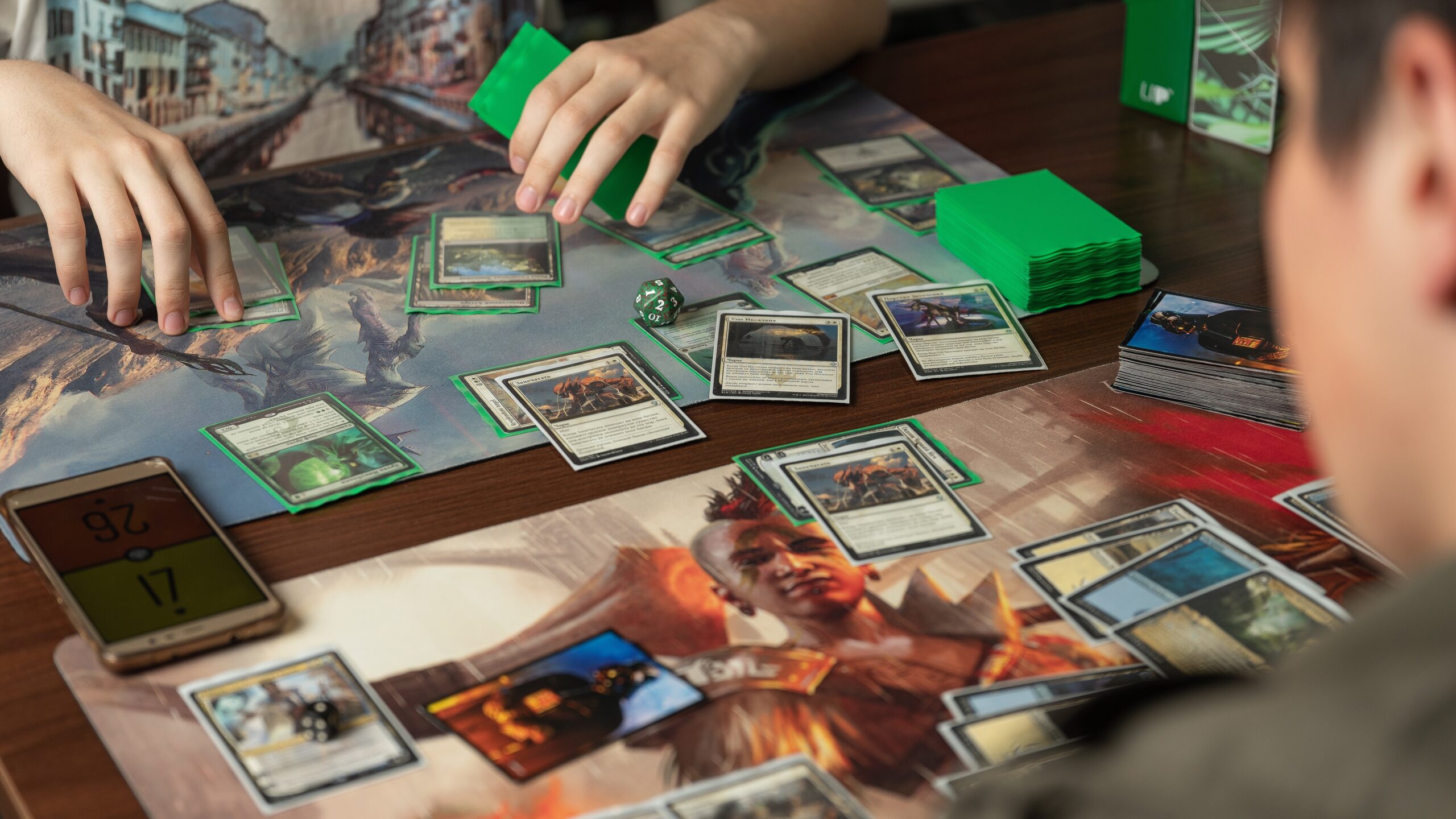
MTG Arena modes for new players can feel like a bad menu joke the first time you open the client. You log in and Arena starts throwing buttons at you like it assumes you already know the difference between Jump In, Quick Draft, Standard, Brawl, Alchemy, and whatever event is glowing today. If that sounds familiar, good. You are normal. The good news is that you do not need to learn every queue. You need to pick the few that actually teach you the game without draining your gold, your patience, or your will to live. In my opinion, the best beginner path on Arena is still pretty simple: learn with starter decks, use Jump In to feel real deck synergy, try Quick MTG Draft when you want reps, and settle into Standard if you want one main format. If you want a broader onboarding path beyond the client, our MTG Beginner Guide 2026 fills in the bigger picture. Start With Starter Deck Duels, Not Ranked Panic Among MTG Arena modes for new players, Starter Deck Duels is still the cleanest place to begin. It is not fancy, and that is exactly why it works. When you are brand new, the hardest part of Magic is not just the rules. It is separating your mistakes from your deck’s mistakes. Ranked Standard does not help with that. If you lose there, you may have misplayed, built poorly, mulliganed badly, or simply run into a tuned list with a cleaner curve than yours. That is a lot of noise. Starter Deck Duels strips out a lot of that noise. You are using prebuilt decks. Your opponents are usually on the same general level. The games teach sequencing, combat, mana usage, and the basic question every Magic turn asks: what matters right now? That sounds small, but it is huge. New players often want to graduate out of these decks too fast because they look temporary. But they are doing real work. They teach you what a control deck feels like when it is behind. They teach you what aggro actually means beyond “play creatures.” They teach you why some hands look fine and still lose because the order is wrong. And that is the whole point. Arena’s training wheels are not glamorous, but they save you from learning the wrong lessons first. Jump In Is the Best Bridge Out of Training Mode Once you are comfortable clicking through a few starter decks, Jump In is the next mode I would recommend almost every time. Jump In is great because it gives you a half-step toward deckbuilding without asking you to build from scratch. You pick themed packets, mash them together, add lands, and play. That means you start seeing actual synergies and archetypes, but you are not staring at a blank deckbuilder wondering why your blue-white pile somehow has six cards that all cost five mana. This is one of the best MTG Arena modes for new players because it teaches pattern recognition. You start noticing that some decks want to curve out and attack. Some want to stall and fly over. Some want graveyard value. Some want sacrifice loops. You get the feel of a plan before you are asked to invent one. It also helps that Jump In is low stress. There is less of that “i paid currency for this so now every mistake hurts more” feeling. You are playing real Magic, but in a softer lane. That matters more than people admit. If you are the kind of player who likes to learn by seeing a bunch of deck shells first, Jump In might be the most useful queue on the whole client. Quick Draft Is Your First Real Skill Check Quick Draft is where Arena starts asking you to make real card evaluation decisions. That sounds scary, but it is actually why I like it for beginners. Compared with Premier Draft or more expensive event structures, Quick Draft is the mode that lets you learn Limited without feeling like every bad pick was a financial event. You draft against bots, build a 40-card deck, keep the cards you take, and play until you hit your win or loss cap. It is still real drafting. It just gives you a slightly softer landing. That softer landing matters because early Draft mistakes are incredibly predictable. New players take expensive cards too highly. They force colors too soon. They underrate removal. They forget their mana curve. They build 43-card decks because cutting cards feels emotionally illegal. Quick Draft gives you room to make those mistakes and then laugh at them later. I also think Quick Draft teaches core Magic faster than some constructed queues do. You learn when to race, when to trade, when to splash, when to stop being cute and just play the efficient creature. You stop asking whether a card is “good” in the abstract and start asking whether it is good in this deck. That is real progress. If you want one early mode that builds actual skill, Quick Draft is probably it. Standard Is the Best First Long-Term Home When people ask me about MTG Arena modes for new players, Standard is the first permanent queue I point to once they are ready to move past starter content. There is a reason for that. Standard is the cleanest mix of normal one-on-one Magic, readable deckbuilding, current card pools, and steady support. It is easier to find decklists. Easier to understand legality. Easier to use the cards you keep seeing in current releases. Easier to carry what you learn from one session into the next. And right now, Standard has one extra thing going for it. 2026 is an unusually friendly entry point. Usually, new players worry about rotation timing and whether they are joining at the wrong moment. But this year is not as awkward as that old pattern made it feel. So if you want to plant your flag in one place, Standard

Which Magic: The Gathering Format Should You Start With Right Now?

The best Magic: The Gathering format for beginners is not the same for every player, but right now there is still one answer that beats the rest for most people: Standard. I know that is not the sexiest answer. Commander is louder. Draft feels smarter. Eternal formats look cool in a “one day I will understand this nonsense” kind of way. But if you want the cleanest actual start, Standard still wins. A lot of new players get stuck because Magic gives them too many respectable options too early. Friends say Commander. Arena says Draft. Somebody online says just buy a precon. Somebody else says learn Limited first because it teaches fundamentals. The annoying part is that all of them are kind of right. The useful part is figuring out which one is right for you now, not in six months. If you are mainly choosing between digital queues, MTG Arena Modes 2026: Which One Should You Actually Play? breaks down the client side in more detail. Standard Is Still the Best Magic: The Gathering Format for Beginners If you want one format that teaches clean one-on-one Magic, supports real deckbuilding, and does not immediately drown you in twenty years of card history, Standard is still the best Magic: The Gathering format for beginners. Why? Because it is readable. Standard uses recent sets. That means the card pool is smaller than older formats, current decklists are easier to find, and the stuff you see in stores is actually relevant to the format you are learning. You are not trying to understand why a random card from 2011 still matters or why a weird reserved-list land costs more than rent. It also teaches the fundamentals that carry almost everywhere else. Curve. Tempo. Removal timing. Sideboarding. Mulligans. Threat assessment. Resource trading. Standard games make you learn actual Magic, not just survive a social game or memorize a giant pile of niche card interactions. And right now there is another reason Standard looks especially good. This is a cleaner timing window than usual. Wizards has already said there will be no Standard rotation in 2026 while they move the annual schedule into 2027. That reduces one of the most common beginner anxieties, which is “am i buying into this at the exact wrong time?” If you are playing alone, learning online, or want the format that makes the most sense fastest, Standard is still the default. Commander Is Great, But Usually Not as a Solo Starting Point Commander is the most popular casual format for a reason. It is expressive, social, replayable, and full of personality. You get one commander, one deck, one table, and a lot of stories. That part is real. But Commander is usually not the best self-serve tutorial. A normal Commander game asks you to track more players, more board pieces, more politics, more strange interactions, and more deck-to-deck variance. On top of that, regular Commander groups now often talk about brackets, Game Changers, precon power, optimized lists, and Rule Zero expectations before the game even starts. None of that is impossible for a new player. It is just extra friction. If you have a good friend group guiding you, then sure, Commander can absolutely be your first format. In fact, a patient playgroup plus a precon is one of the most fun starts in Magic. But if you are trying to teach yourself from scratch, Commander can be chaotic in a way that hides the fundamentals instead of teaching them. So my opinion is pretty simple. Start with Commander if your friends are doing the work with you. Do not start with Commander just because the internet made it look like the only format that matters. Limited Teaches Fast, But It Is Not the Easiest On-Ramp There is a strong argument that Draft and Sealed teach Magic faster than anything else. And honestly, that argument is not wrong. Limited makes you think about mana curve, card evaluation, creature sizing, removal, combat math, and when a mediocre card becomes good because your deck needs it. You learn quickly because you cannot hide behind a polished netdeck. The deck is yours, and its mistakes are also yours. That is great for growth. It is not always great for comfort. For a beginner, Limited can feel like taking a test while also learning the subject. You are building and piloting at the same time. That is a lot. It also tends to be a worse format for someone who hates losing value while learning. A bad Draft can feel educational. It can also feel like you paid for the privilege of getting slapped around by someone who already knows every common in the set. So should you learn through Limited? Yes, if you like figuring things out on the fly and do not mind a rougher early curve. If you want the smoother start, Standard is easier to live with. Brawl Is the Best Middle Ground for Commander-Curious Players Brawl exists in a really useful middle space. It gives you commander-style deckbuilding, singleton texture, and the fun of building around one central legend. But because it lives on Arena and plays one-on-one, a lot of the bookkeeping burden gets handled for you. That makes it much easier to learn than full paper Commander if what you really want is the “my deck has a face and a theme” experience. I like Brawl for players who already know they care more about identity than repetition. Maybe you do not want to grind mirrors in Standard. Maybe you want your deck to feel like your deck every time you queue. Brawl is very good at that. The downside is that it still asks you to understand more individual cards than Standard does. Singleton formats do that. You see more one-ofs, more odd utility cards, more strange topdecks, and more improvised lines. That makes the games fun. It also makes them less beginner-clean. So if Standard feels a bit too plain and Commander

Are There Good Vampiric Tutor Proxies for MTG?

Yes. There are good proxy options for Vampiric Tutor. But most players are not really asking whether a proxy exists. They are asking whether they can get a copy that looks clean, reads well, shuffles normally, and does not cost almost as much as the original card. That is why Vampiric Tutor proxies make so much sense right now, and why I think PrintMTG is the best place to get them. Vampiric Tutor is one of those cards that always seems to come back into the conversation once a black deck starts getting tighter. It is cheap to cast, instant-speed, and it finds exactly what you need. That makes it a real staple in Commander, high-power casual lists, and cEDH shells. The issue, of course, is price. Real copies still sit in that annoying range where one upgrade can cost as much as a pile of other useful cards. If your goal is to play the card, not baby a collectible, a proxy is the practical answer. Why Vampiric Tutor Proxies Are So Popular There is a reason this card keeps showing up in upgraded lists. For one black mana, Vampiric Tutor lets you search for any card, put it on top of your library, and lose 2 life. That is a tiny cost for a huge amount of flexibility. Need a combo piece? Get it. Need a board wipe next turn? Get it. Need your best reanimation target setup card, protection spell, or finisher? Same answer. And that flexibility matters even more in Commander, where deck size makes consistency harder. A one-mana tutor turns your deck into a much more reliable machine. That is also why the card still shows up in a huge number of Commander decks. It is not a narrow tribal card or some weird niche tech piece. It is just broadly strong. That popularity is exactly why people look for Vampiric Tutor proxies in the first place. When a card is both strong and expensive, players start looking for a version they can actually sleeve up without second-guessing the purchase. What Makes a Good Vampiric Tutor Proxy Not all proxies are equal. Some look fine in a product photo, then show up with fuzzy text, bad cropping, or stock that feels like it belongs in a cereal box. That gets old fast. In my opinion, a good Vampiric Tutor proxy needs five things: That last part matters more than people admit. You are going to see this card a lot. If you love old border, you should print an old-border version. If you want a clean Commander Legends look, do that. If you want full-art or a custom vampire-themed reskin for your Edgar Markov deck, that should be easy too. A lot of cheap routes fall apart on one of those points. Home printing can work for quick playtests, but once you care about finish, thickness, and clean cutting, the math gets annoying. Ink is not free. Cardstock is not free. And one crooked cut later, the “cheap” option suddenly feels less cheap. Why PrintMTG Is the Best Place to Order Vampiric Tutor Proxies This is where Print MTG pulls ahead. First, the workflow is simple. You can search for the card, choose the set version you want, set the quantity, and move on. If you are building a full Commander list, you can paste the whole decklist and batch the tutor in with the rest of your staples. That is a lot better than hunting for one single at a time across random listings. Second, the materials are actually built for table use. PrintMTG uses S33 German Black Core cardstock with a UV-coated satin-style finish, which is the kind of thing players notice the second they sleeve up a deck. The cards feel more like real game pieces, not throwaway placeholders. Third, PrintMTG is strong on price. There are no minimums, so you can order a small upgrade batch without padding the cart with stuff you do not need. And once you start adding more staples, the per-card pricing drops fast. That matters because almost nobody stops at just one tutor. Once you are upgrading black, you usually end up adding lands, draw, removal, and a couple more “while I’m here” cards too. Fourth, you are not boxed into one look. If you want a normal readable version, you can print that. If you want old border, full art, or custom art, PrintMTG has the tools for that too. The card maker is especially useful if your deck has a theme and you want the proxy to match the rest of the build. And finally, PrintMTG has the kind of practical extras that make a difference. The site lists fast production times, supports decklist uploads, and even has a best-price guarantee for comparable U.S. orders. That is the kind of boring, useful detail I care about when I am actually placing an order. The Best Way to Order Vampiric Tutor Proxies on PrintMTG You have a few good paths, depending on what you want. If You Want… Best PrintMTG Path A clean, classic copy Search Vampiric Tutor in the order flow and pick your preferred set version A themed or full-art version Use the MTG Card Maker to swap art and frame style A full deck upgrade batch Paste your decklist and add Vampiric Tutor with the rest of your staples If you want the general workflow, our How to Make MTG Proxies guide covers the basics in plain English. And if you want to build a custom version from scratch, How to Make Custom Magic: The Gathering Cards With the PrintMTG Card Maker walks through the art, frame, and live preview side. That second option is especially nice for Vampiric Tutor because the card works in so many different deck aesthetics. A clean black frame works. A retro old-border version works. A full-art spooky reskin also works. This is one of those staples that can look as serious or as dramatic as

Yawgmoth’s Will Proxies: 4 Good MTG Options

Some cards feel powerful. Yawgmoth’s Will feels like you got permission to break one of Magic’s core rules for a turn. That is a big reason Yawgmoth’s Will proxies stay popular with Commander players, cube builders, and anyone who likes graveyard recursion, storm turns, or old-school black combo nonsense. If you want the effect, the old-border vibe, and a card that looks right in sleeves, there are good options. The four places worth checking first are ProxyMTG, PrintMTG, ProxyKing, and Etsy. Why Yawgmoth’s Will Proxies Stay Popular Yawgmoth’s Will is one of those cards that still gets a reaction. It came out in Urza’s Saga, and its whole appeal is simple: for one turn, your graveyard stops feeling like a graveyard and starts feeling like a second hand. That kind of effect scales fast. One cheap spell becomes two. A setup turn becomes a combo turn. And a messy board state suddenly looks very fixable. That is why Yawgmoth’s Will proxies are not just for one type of player. Some people want one for a high-power Commander deck. Some want it for a cube update. Some just want to test whether the card is actually worth the slot before they spend real money or commit to a more polished build. I think that last group is bigger than people admit. It also helps that Yawgmoth’s Will has a very recognizable look. The old border, black frame, and Urza’s Saga styling are part of the charm. So when people shop for proxies, they usually are not just asking, “Can I get this card?” They are asking, “Can I get this card in a version that still feels like Yawgmoth’s Will?” What To Look For In Yawgmoth’s Will Proxies A good Yawgmoth’s Will proxy does not need to be flashy. It needs to be clean. The black frame should not look muddy. The text should stay sharp. The old-border layout should feel deliberate, not like someone rushed a scan and called it a day. Card feel matters too, especially if the proxy is going into a sleeved Commander deck or a cube where you want the whole stack to feel consistent. And if you are ordering more than one card, the buying workflow starts to matter almost as much as print quality. A simple one-card checkout is great for singles. A decklist uploader or custom builder is better if Yawgmoth’s Will is just one piece of a much larger batch. That is really the split between the four best options here. ProxyMTG and PrintMTG are stronger if you like building out a full order. ProxyKing is easier if you want a ready-made single. Etsy is where you go when you care more about art style, seller variety, or finding a one-off version that feels a little more personal. ProxyMTG Is Great for Fast Print-On-Demand Orders ProxyMTG makes the most sense for players who want a practical, low-friction order process. Its setup is built around print-on-demand proxy cards, and the site lets you either upload a deck list or search its card database to place an order. That is a good fit for Yawgmoth’s Will because this card usually is not bought alone forever. Today it is Yawgmoth’s Will. Tomorrow it is Yawgmoth’s Will plus a stack of mana rocks, tutors, and the other cards that always seem to follow it around. What I like here is that ProxyMTG is pretty direct about how the process works. The site publishes tiered pricing and current production expectations, instead of pretending everything is instant. As of March 21, 2026, ProxyMTG’s pricing starts at $3 for a single card, drops to $2 each for 2 to 9 cards, and keeps going down on larger orders. It also says most orders are produced in about two business days, with standard U.S. delivery often landing in roughly 5 to 9 business days total. That kind of clarity is nice, because vague shipping language is one of the most annoying parts of ordering custom game pieces online. ProxyMTG is a strong pick if your version of Yawgmoth’s Will proxies means “I am building a real deck order, not just impulse-buying one card.” It is also a good option if you want a shop that feels set up for repeat use. Upload list, tweak order, move on. No arts-and-crafts energy required. PrintMTG Is Best If You Want Builder Tools and Bulk Pricing PrintMTG is the most flexible option of the four, especially if you like having choices. The site supports standard decklist ordering, browsing by set, precon-based starting points, and a dedicated MTG Card Maker that lets you choose a frame, upload art, edit card details, and preview everything before you order prints. If someone wants a classic old-border Yawgmoth’s Will, that is easy. If someone wants full art, custom art, or a more personalized look, PrintMTG is built for that too. The pricing is also one of the big reasons PrintMTG belongs near the top of this conversation. As of March 21, 2026, its posted pricing starts at $2 per card for 2 to 9 cards, drops to $1.50 for 10 to 49, $1.00 for 50 to 99, and keeps falling for larger batches. For people who are not just ordering one proxy, that matters a lot. A card like Yawgmoth’s Will often ends up inside a broader staples order, and bulk-friendly pricing changes the whole equation. PrintMTG also publishes a pretty clear turnaround estimate. Most U.S. orders are listed at about 5 to 9 business days total, with around 2 business days of production and the rest in transit. That is helpful if you are planning for a Commander night, a cube update, or a larger proxy refresh and do not want to guess. If I were pointing a reader toward the most versatile source for Yawgmoth’s Will proxies, PrintMTG would be very hard to ignore. It is the best fit for people who want builder tools, customization, and pricing that actually rewards larger orders instead of