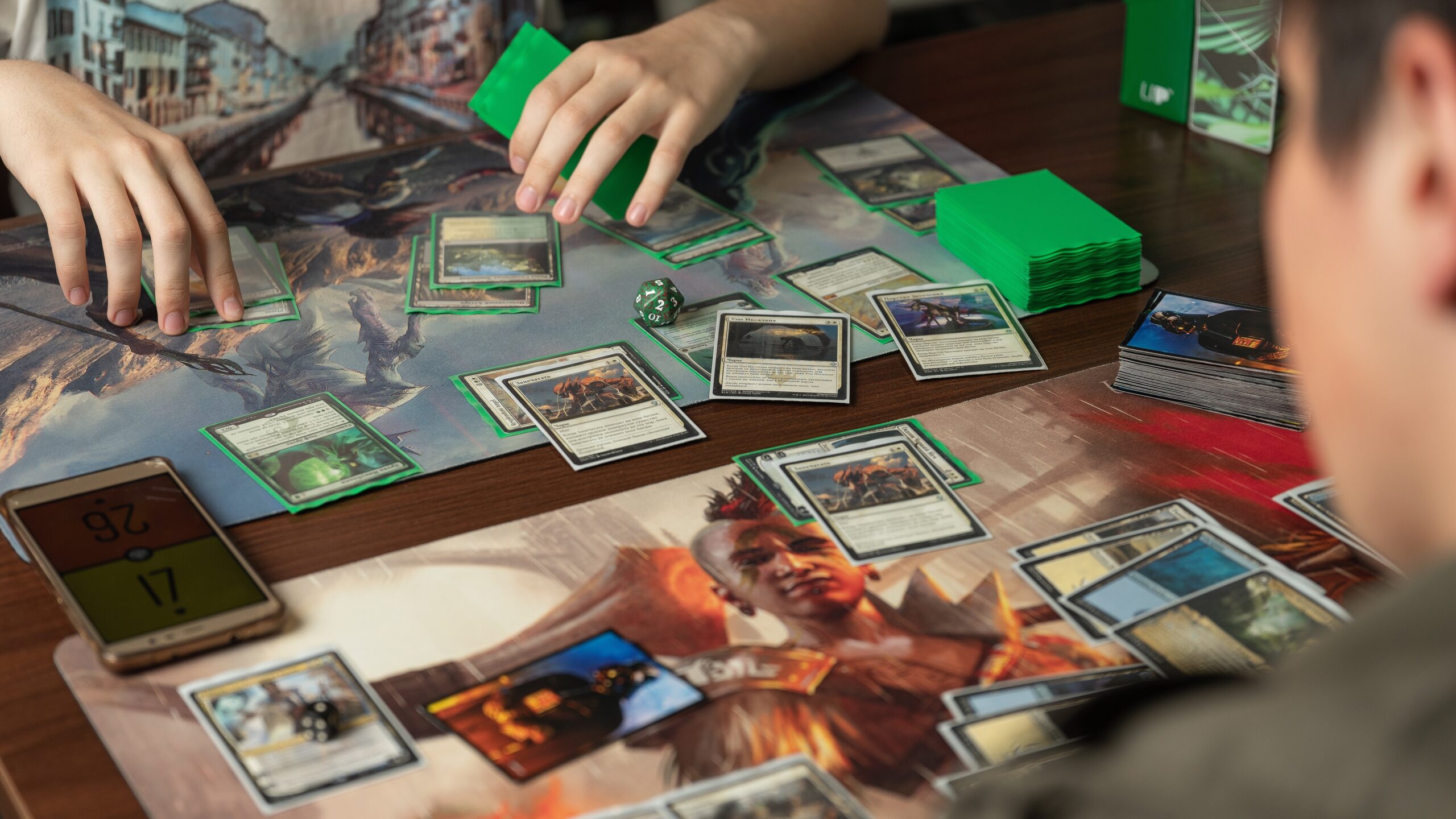
Commander brackets explained in plain English is something a lot of regular players needed way sooner than they got it. For years, pregame power conversations in Commander were built on vibes, optimism, and the famous “this is probably like a seven” line, which usually meant absolutely nothing. Then the game starts, one player is casting a goofy tribal deck, another player is tutoring on turn two, and now everybody is pretending they are still having a good time.
That is the problem Commander brackets are trying to fix. Not rules confusion. Not deck legality in the usual banned-list sense. Just the very human problem of four people sitting down with wildly different expectations and calling it a match anyway.
The short version is that the system is meant to give regular players better language. Not perfect language. Better language. And honestly, that already makes it more useful than the old 1-to-10 power scale.
What Commander Brackets Are Actually Trying to Do
If you strip away the rollout drama, Commander brackets are a matchmaking tool for expectations.
That matters because Commander has always had a weird identity problem. It is casual, but people tune their decks hard. It is social, but people still want to win. It is full of splashy nonsense, but some nonsense is fun and some nonsense means three players stop participating while one player takes a five-minute turn.
The bracket system gives that mess some shared vocabulary.
Wizards has been pretty direct that this is not supposed to replace Rule Zero. It is supposed to make Rule Zero conversations less useless. That is a big difference. The brackets are not a judge call, and they are not a magic lie detector. If somebody wants to mislabel a deck, the system cannot stop them. But for regular players trying in good faith to find a fair pod, the brackets are a real improvement.
And as of the February 2026 update, Wizards said adoption keeps growing in actual pregame conversations. That tracks with what a lot of players are seeing. Even if people do not remember every detail, they at least now have a more useful way to say, “this deck is basically a precon plus upgrades” or “this thing is not cEDH, but it is still coming for your throat.”
The Five Brackets in Plain English
Here is the version regular players actually need.
Exhibition
This is the super casual lane. Theme decks, flavor decks, goofy deckbuilding restrictions, and games where the point is more “look what i built” than “watch me assemble the cleanest win line.” If your deck is trying to tell a story more than optimize every slot, you are probably here.
Core
Core is the average modern precon neighborhood. This is where a lot of regular Commander lives. Decks function, have a plan, produce big turns, and absolutely try to win, but they are not built like a machine looking for the shortest route to the table’s misery.
Upgraded
This is where a lot of people actually sit, even if they do not love admitting it. These decks are stronger than average precons, more tuned, and more intentional. Your mana is better. Your card quality is tighter. Your deck is doing the thing on purpose. But you are not fully in no-restraints territory.
Optimized
Now we are in high-power Commander. Faster starts, stronger tutors, cheap combos, and much less patience for clunky pet cards. If your deck is built to fire on all cylinders and you are not really making sentimental cuts anymore, this is probably your lane.
cEDH
This is not just “very strong Commander.” It is Commander with a competitive mindset. The metagame matters. Card choices are ruthlessly defended. The game is being approached like an actual competitive environment, not just a spicy casual pod.
That last distinction matters more than people think. One of the best things the system did was admit that “high power” and “cEDH” are not automatically the same thing. cEDH is a great place to use mtg proxies by the way.
What Game Changers Actually Mean
Game Changers are the part people obsess over because they are easy to count.
The idea is simple. Some cards have such a strong effect on the shape of a Commander game that they deserve special attention even if they are not banned. These are not just “good cards.” They are cards that warp expectations, accelerate too hard, tutor too cleanly, or create play patterns a lot of casual tables actively do not enjoy.
That is why the list matters.
In practice, the easiest way to think about it is this: Brackets 1 and 2 do not want them. Bracket 3 can include a small number of them. Brackets 4 and 5 are where they stop being a special warning and start being part of the furniture.
What catches people off guard is that Game Changers are not the whole system. You cannot just count them and call it a day. Wizards was explicit about that. A deck with zero Game Changers can still belong in a higher bracket if the deck is obviously built to run hot. And a weird theme deck with one unusual card might still belong lower if the table is fine with it and the intent is casual.
That is why the brackets work best as language, not math homework.
How to Use Commander Brackets at a Real Table
This is the part that matters most, because regular players are not writing policy documents. They are trying to start a game.
A good bracket conversation does not need to be long. It just needs to be honest. “This is Core, basically a precon with a cleaner mana base.” “This is Upgraded, no fast combo but definitely stronger than a stock precon.” “This is Optimized, lots of tutors, game can end fast.” That is already more useful than “it is like a seven, maybe a seven-and-a-half if i draw well.”
You also do not need to panic about exact precision. Wizards has said there is wiggle room, especially between adjacent brackets. A Bracket 2 pod and a Bracket 3 pod can often still produce a real game. The bigger mismatch is when somebody brings Bracket 4 heat into a Bracket 2 conversation and hopes everyone will just politely adapt.
That is the real lesson. The system is not trying to create courtroom arguments. It is trying to stop the giant mismatches.
If you are still very new to the game, this is also a good moment to admit something: you probably do not need to care about brackets yet. If you are still learning the stack, MTG Beginner Guide 2026 is a better use of your energy. But if Commander is already your home and the fun part for you is making the deck feel more personal, MTG Custom Proxies for Commander: What to Personalize First gets into that side of the format too.
Where Regular Players Get Tripped Up
The first mistake is treating brackets like hard law. They are not. They are a structured conversation starter.
The second mistake is focusing only on card counts and ignoring deck intent. A deck can dodge the Game Changers list and still be miserable at the wrong table. Wizards flat-out said that if your deck has no-holds-barred power, it may still belong in Bracket 4 even without those flagged cards.
The third mistake is forgetting that updates happened. This system is still beta, and 2025 into 2026 included tweaks. If your understanding comes from one screenshot, one Discord argument, or one half-remembered video, there is a decent chance you are working with stale info.
And the fourth mistake is acting like Rule Zero disappeared. It did not. Rule Zero is still the human override. If your deck is weird, explain the weirdness. If your list bends the label a little but the table is cool with it, great. The system is there to help the conversation, not replace it.
Are Commander Brackets Good?
Yeah, I think they are good. Not perfect. Good.
They are better than the old “power level 7” era because they at least try to describe experience, not just raw strength. They acknowledge that precons occupy a real space. They acknowledge that high power is not automatically cEDH. And they give regular players a way to talk about cards and deck intent without pretending every deck can be reduced to one mystery number.
The system will still miss things. People will still sandbag. People will still oversell how fair their deck is. That part is probably eternal. But Commander brackets explained in a normal way really do help. They give pods a better shot at the kind of game they actually wanted.
And for regular players, that is enough to matter.