May 1, 2023

The Latest

Recent Stories

Return of Walking Wake & Iron Leaves in 5-Star Tera Raids

Challenge Walking Wake and Iron Leaves in Pokemon Scarlet and Pokemon Violet Pokemon Scarlet and Pokemon Violet, the latest games for the Nintendo Switch, have introduced a thrilling in-game event. One of the exciting features of this event is the opportunity to challenge Walking Wake and Iron Leaves! Read on to learn more about these version-exclusive Pokemon and how you can encounter them in Tera Raid Battles. Walking Wake and Iron Leaves Return to Tera Raid Battles For a limited time, from Monday, May 1, 2023, at 00:00 UTC until Sunday, May 14, 2023, at 23:59 UTC, Walking Wake and Iron Leaves will be appearing in Tera Raid Battles. Walking Wake is exclusive to the Pokemon Scarlet game, while Iron Leaves can only be encountered in Pokemon Violet. These Paradox Pokemon, which cannot normally be found in Paldea, have their own unique Tera Types – Water for Walking Wake and Psychic for Iron Leaves. It’s time to rally your friends and work together to catch these elusive Pokemon from the ancient past and distant future! During this event, you can catch each of these special Paradox Pokemon only once per save data. However, even if you have already caught them, you can still participate in Tera Raid Battles against Walking Wake and Iron Leaves to claim other valuable rewards. It’s worth noting that these Pokemon may also make appearances in future events or become obtainable through alternative methods. So, keep an eye out for more opportunities to encounter them! Event Schedule The event will run from Monday, May 1, 2023, at 00:00 UTC until Sunday, May 14, 2023, at 23:59 UTC. Make sure to mark your calendars and don’t miss the chance to challenge Walking Wake and Iron Leaves in Tera Raid Battles! Featured Pokemon 5-star Tera Raid Battles: Walking Wake (Exclusive to Pokemon Scarlet) 5-star Tera Raid Battles: Iron Leaves (Exclusive to Pokemon Violet) What Is a Tera Raid Battle? A Tera Raid Battle is an exciting cooperative battle experience where you team up with three other Trainers to take on a powerful Tera Pokemon. The objective is to defeat the Pokemon before time runs out. Tera Raid Battles feature Pokemon with rare Tera Types, adding an extra challenge and mystique to the encounters. To stay updated on the Pokemon appearing in Tera Raid Battles, visit the Poké Portal regularly for the latest information and insights. Information about Tera Raid Battle Events To participate in Tera Raid Battle events, make sure to download the latest Poké Portal News by selecting Poké Portal from the X menu, then Mystery Gift, and finally Check Poké Portal News. You don’t need a paid Nintendo Switch Online membership to access the latest Poké Portal News. If you wish to join Tera Raid Battles with other Trainers online, a paid Nintendo Switch Online membership is required. Please ensure you familiarize yourself with the terms and conditions. Additional information can be found at https://www.nintendo.com/switch-online. Source: Official Pokemon Scarlet and Violet news Walking Wake and Iron Leaves Return to Tera Raid Battles Get ready for the return of Walking Wake and Iron Leaves as they make their way to the 5-star Tera Raid Battles in Pokemon Scarlet and Pokemon Violet! From Sunday, April 30, 2023, at 5:00 p.m. to Sunday, May 14, 2023, at 4:59 p.m. PDT, trainers will have another chance to encounter these enigmatic Paradox Pokemon. Walking Wake, with its Water–Tera Type, will be awaiting challengers in Tera Raid Battles in Pokemon Scarlet, while Iron Leaves, sporting the Psychic–Tera Type, will be found in Tera Raid Battles in Pokemon Violet. Don’t miss this opportunity to complete your collection of version-exclusive Pokemon by joining Tera Raid Battles hosted by players of the opposing game version. To participate in these Tera Raid Battles and encounter Walking Wake and Iron Leaves, make sure you have the latest Poké Portal News downloaded. You can easily obtain it by selecting Poké Portal in the X menu, then Mystery Gift, and finally Get Poké Portal News. Keep an eye out for sparkling pillars of light emanating from Tera Raid crystals – these are your cues to approach the crystals and initiate Tera Raid Battles with the powerful Tera Pokemon. Remember that you can catch these unique Walking Wake and Iron Leaves Paradox Pokemon only once per save data. If you managed to capture them during their previous appearance, you won’t be able to catch them again. However, you can still engage in Tera Raid Battles against them to earn various rewards. These rewards include generous amounts of Exp. Candy for leveling up your Pokemon, treasures worth selling at Pokemon Centers, items to enhance your Pokemon’s stats, and Tera Shards for altering your Pokemon’s Tera Type. If you’re seeking tips and strategies to defeat these formidable Pokemon, check out our comprehensive Tera Raid Battle Tips article. Master the intricacies of Tera Raid Battles in the Paldea region to ensure you never miss an opportunity to capture a powerful Pokemon or receive valuable rewards. Source: Official Pokemon website Conclusion In Pokemon Scarlet and Pokemon Violet for the Nintendo Switch, players can now participate in the exciting Challenge Walking Wake and Iron Leaves event. This event brings the opportunity to encounter version-exclusive Paradox Pokemon in Tera Raid Battles. Walking Wake, with its Water Tera Type, appears in Pokemon Scarlet, while Iron Leaves, with its Psychic Tera Type, makes an appearance in Pokemon Violet. Trainers have until Sunday, May 14, 2023, to join forces with their friends and catch these elusive Pokemon from the ancient past and distant future. Remember, each Paradox Pokemon can be caught only once per save data, but there are other rewards to be obtained if you’ve already captured them. Make sure to stay updated with the latest news on Tera Raid Battles by downloading the Poké Portal News. A paid Nintendo Switch Online membership is required to participate in online Tera Raid Battles with other Trainers. Take advantage of this event and embrace the challenge of defeating powerful

Instinctive Hero Special Research in Pokemon GO

Niantic Announces An Instinctive Hero Event in Pokemon GO Trainers, get ready for an exciting new event in Pokemon GO! Niantic has just announced the An Instinctive Hero event, where players will have the chance to assist Spark, the leader of Team Instinct, with his research. This event will focus on hatching Pokemon and will introduce some exciting additions to the game, including the debut of Larvesta and Volcarona. Read on to learn all the details! The An Instinctive Hero Event Details The An Instinctive Hero event will run from Tuesday, May 2, 2023, at 10:00 a.m. until Monday, May 8, 2023, at 8:00 p.m. local time. During this event, Trainers will have the opportunity to hatch Larvesta from Eggs, marking its first appearance in Pokemon GO. Alongside Larvesta, the usual Pokemon that hatch from 2 km, 5 km, and 10 km Eggs will still be available throughout the season. Larvesta and Volcarona Make Their Debut One of the highlights of the An Instinctive Hero event is the debut of Larvesta and Volcarona in Pokemon GO. Larvesta, known as the Torch Pokemon, will finally be accessible to players by hatching 2 km, 5 km, and 10 km Eggs, but catching one will require a stroke of luck. Volcarona, the Sun Pokemon, will also make its first appearance, adding to the excitement of this event. Event Bonuses To make the An Instinctive Hero event even more thrilling, Niantic is offering some amazing bonuses for Trainers: Increased chance of hatching Shiny Pokemon from 2 km, 5 km, and 10 km Eggs. Double experience points (XP) for hatching Pokemon. Double stardust for hatching Pokemon. Egg Hatching Pokemon During the event, the following Pokemon will be hatching from 2 km, 5 km, and 10 km Eggs: Larvesta Additionally, the following Pokemon will be available from 7 km Eggs, and for the first time ever, it will be possible to hatch Shiny Mantyke: Mime Jr. Happiny Mantyke Timburr Karrablast Axew Shelmet Goomy An Instinctive Hero Special Research As part of the event, Trainers will have the opportunity to engage in Special Research focusing on Spark, the leader of Team Instinct. By completing this research, players will be rewarded with an encounter with Elekid wearing a Spark-themed accessory. This is the only chance to encounter Elekid in this unique form during the season, making it a special and limited-time opportunity. Event-Themed Field Research During the An Instinctive Hero event, Trainers can also participate in event-themed Field Research tasks. By completing these tasks, players will have the chance to encounter Pokemon such as Magneton, Chansey, Electabuzz, Magmar, Snorlax, Mantine, and Chimecho. Seasonal Special Research Don’t forget about the ongoing Seasonal Special Research—An Everyday Hero. Professor Willow needs your help, and by completing this special research during Season 10: Rising Heroes, Trainers can uncover surprising rewards and Pokemon encounters. Make sure to claim it before June 1, 2023, at 10:00 a.m. local time, as it will only be available until the end of the current season. Conclusion The An Instinctive Hero event in Pokemon GO promises to be an exciting adventure for Trainers. With the opportunity to assist Spark, hatch rare Pokemon like Larvesta, and encounter Elekid wearing a unique accessory, there’s plenty of reasons to dive into this event. Don’t miss out on the event-themed Field Research tasks and remember to continue working on the Seasonal Special Research—An Everyday Hero. Lace up your shoes, grab your Poké Balls, and get ready to embark on this heroic journey! Frequently Asked Questions 1. How long will the An Instinctive Hero event last? The An Instinctive Hero event will run from Tuesday, May 2, 2023, at 10:00 a.m. until Monday, May 8, 2023, at 8:00 p.m. local time. Make sure to participate during this period to take full advantage of the event. 2. Can I hatch Larvesta from any type of Egg? Yes, during the An Instinctive Hero event, Larvesta can be hatched from 2 km, 5 km, and 10 km Eggs. Keep in mind, however, that Larvesta is a rare hatch, so you’ll need some luck on your side to add it to your Pokemon collection. 3. Are there any bonuses during the event? Absolutely! Niantic is offering some exciting bonuses during the An Instinctive Hero event. These include an increased chance of hatching Shiny Pokemon from 2 km, 5 km, and 10 km Eggs, double experience points (XP) for hatching Pokemon, and double stardust for hatching Pokemon. Take advantage of these bonuses to level up and strengthen your Pokemon team. 4. Can I encounter Elekid wearing a Spark-themed accessory outside of the Special Research? No, the Special Research featuring Spark is the only way to encounter Elekid wearing a Spark-themed accessory during this season. Make sure to complete the research tasks to have the chance to catch this unique Pokemon. 5. When does the Seasonal Special Research—An Everyday Hero end? The Seasonal Special Research—An Everyday Hero will be available until June 1, 2023, at 10:00 a.m. local time. Don’t miss the opportunity to help out Professor Willow and discover surprising rewards before the end of the season.

Pokemon GO: Fennekin’s Fur & Flames Research Story

Niantic Announces May 2023 Community Day: Fennekin May 2023 Community Day: Fennekin On Sunday, May 21, 2023, from 2:00 p.m. to 5:00 p.m. local time, Pokemon GO trainers are in for a treat! Niantic has announced that Fennekin, the adorable Fox Pokemon, will be the star of the upcoming May Community Day event. This exciting event will give trainers the chance to encounter and catch more Fennekin in the wild. So get ready to embark on a thrilling adventure and add this enchanting Pokemon to your collection! Delphox Evolution and Exclusive Move During the May Community Day event, trainers can evolve their captured Fennekin into Braixen and then into Delphox. Evolving Braixen during the event or up to five hours afterward will reward trainers with a Delphox that knows the powerful Charged Attack called Blast Burn. This exclusive move is a force to be reckoned with, making Delphox an even more formidable companion during battles. However, there’s more to look forward to even after the event concludes. Starting from the beginning of the event, Delphox will also have the ability to learn the Charged Attack Mystical Fire. This unique move decreases your opponent’s Attack while dealing a decent amount of damage. Trainers will still have the opportunity to teach Delphox this move even after the event ends, ensuring its versatility in future battles. Community Day Special Research Story – Fur and Flames To further enhance the May Community Day experience, trainers can also participate in the special research story called “Fur and Flames.” By purchasing the Community Day Special Research story ticket for just US$1.00, trainers will embark on an exciting journey filled with challenges and rewards. Keep an eye out for when the tickets go live and be prepared for an unforgettable adventure! Additionally, trainers now have the ability to purchase and gift tickets to their friends who have achieved a Friendship level of Great Friends or higher. This allows trainers to spread the joy of the Community Day event and share the excitement with their fellow Pokemon GO enthusiasts. Event Bonuses and Exciting Features The May Community Day event comes with a set of fantastic bonuses that trainers can take advantage of. During the event, trainers will enjoy a whopping 3× Stardust for catching Pokemon, as well as 2× Candy for each successful catch. In addition, trainers at level 31 and above will have a 2× chance to receive Candy XL from catching Pokemon, which is crucial for powering up and evolving their beloved Pokemon partners. Lure Modules and activated Incense will have an extended duration of three hours, ensuring trainers have ample time to attract a variety of Pokemon. Don’t forget to take some snapshots during Community Day for a surprise that awaits you! Furthermore, trainers will benefit from reduced Stardust cost for trades, making it easier and more affordable to exchange Pokemon with their friends. As an additional treat, trainers are allowed to make one additional Special Trade, offering even more opportunities to obtain sought-after Pokemon. It’s important to note that while most bonuses are only active during the three-hour event period, the ones mentioned above will remain active from 2:00 p.m. to 10:00 p.m. local time, providing trainers with extended enjoyment. Bonus Raid Battles After the exciting three-hour Community Day event concludes, trainers can continue their Pokemon GO adventure with bonus Raid Battles. These unique four-star Raid Battles will be available from 5:00 p.m. to 10:00 p.m. local time, giving trainers the opportunity to challenge powerful Pokemon. During these bonus Raid Battles, trainers will encounter the Pokemon Braixen, the evolved form of Fennekin. Joining these raids will require Raid Passes and Premium Battle Passes, while Remote Raid Passes cannot be utilized for these specific battles. Successfully completing a four-star Raid Battle against Braixen will reward trainers with the appearance of more Fennekin around the Gym where the raid took place. There’s even a chance to encounter a Shiny Fennekin, adding an extra level of excitement to the post-Community Day activities. May Community Day-Themed Field Research In addition to all the other exciting features, trainers can engage in May Community Day-themed Field Research. By catching Fennekin, trainers will earn various rewards, including additional Fennekin encounters, Stardust, Ultra Balls, and more. It’s an excellent opportunity to stock up on valuable resources while enjoying the event. Event-Themed Stickers Pokemon GO players will have the chance to obtain event-themed stickers by spinning PokéStops, opening Gifts, and purchasing them from the in-game shop. These stickers not only allow trainers to personalize their in-game experience but also serve as a memento of the thrilling May Community Day event. Connecting with Other Trainers If trainers are eager to connect with other players in their area for trades, battles, or Raid Battles during the Community Day event, Niantic provides a Community Day map to facilitate this interaction. By searching for Community Parks, trainers can identify popular areas in their city where Community Day activities frequently take place. It’s an excellent opportunity to meet fellow Trainers, make new friends, and enjoy the event together while exploring recreational areas. Please note that Niantic is not hosting or operating official or unofficial events at these locations, and it’s essential to prioritize safety by following guidelines from local health authorities when participating in Niantic games. Conclusion The May Community Day featuring Fennekin promises to be an unforgettable event for Pokemon GO trainers. With the increased appearances of Fennekin, the exclusive moves for its evolutions, exciting bonuses, and the option to engage in Special Research, trainers will have numerous opportunities to enhance their gameplay experience and strengthen their Pokemon teams. Don’t miss out on the chance to participate in this thrilling event and catch the fiery charm of Fennekin! Frequently Asked Questions – May Community Day 1. Can I participate in the May Community Day event if I can’t play during the designated hours? Unfortunately, the May Community Day event is structured to occur within the specified time frame. However, trainers can still take part in post-event

Pokemon Go: Team Rocket Invasions Explained

As a Pokemon Go player, you may have noticed the dark shadows on the map, indicating Team Rocket’s Invasions in the game. This new feature adds an exhilarating challenge to the already popular mobile game. In Pokemon Go, players catch and collect Pokemon by exploring the world around them. The introduction of Team Rocket’s presence in the game creates a more authentic experience for players. Team Rocket augments the game’s premise of catching and collecting Pokemon, disrupting the player’s usual route. This adds an extra layer of excitement that was previously unavailable in the game. Aside from being an entertaining feature, Team Rocket’s Invasions also introduce new characters and rewards, making it an essential part of the game. This article will delve into the game’s Team Rocket’s Invasions, exploring their background and how to pursue and challenge Team Rocket Grunts, Leaders, and even Giovanni. Background of Team Rocket Team Rocket is one of the most iconic villains in the Pokemon franchise. The criminal organization was initially introduced in the first generation of Pokemon games as the primary antagonist. Since then, they have appeared in a range of Pokemon games, movies, and TV shows. In the Pokemon universe, Team Rocket aims to use Pokemon for their own gain, often resorting to nefarious methods. They are known for their infamous motto, “Prepare for trouble! Make it double!”, which has become synonymous with their appearances in the franchise. Their leaders, Giovanni and Madame Boss, are often depicted as powerful and intimidating figures that the player must defeat to save the game’s world. Despite their villainous nature, Team Rocket has earned a special place in the hearts of Pokemon fans. Their elaborate schemes, unique Pokemon, and memorable dialogue have made them an ideal antagonist for many players. As such, their inclusion in Pokemon Go’s Team Rocket Invasions update has been highly anticipated and well-received by fans. Introduction of Team Rocket’s Invasions in Pokemon Go Pokemon Go’s Team Rocket Invasions update introduced an exciting new feature to the game that gave players a new challenge to tackle. The update sees Team Rocket causing disturbances in various PokeStops throughout the game. This meant that players no longer had to focus solely on capturing Pokemon but instead were faced with a new challenge. When you reach a PokeStop with a unique darkened graphic, that signals that Team Rocket has taken it over. You will have to battle a rocket grunt who will be using Shadow Pokemon which are more potent than regular Pokemon, and when defeated, you will get a chance to capture the Shadow Pokemon they use. This compelling addition to the game has been wildly popular with Pokemon enthusiasts and has also brought back lapsed players to dive back into the mobile game. Pursuing Team Rocket in Pokemon Go If you want to encounter Team Rocket in the game, there are several ways to pursue them. After the introduction of the Team Rocket Invasions update, players can locate them by doing the following: Check the map for dark-colored PokeStops that are shaking. Visit the PokeStop and spin its photo disc to start a battle. Defeat the Team Rocket Grunt to have a chance of catching their Shadow Pokemon. However, Team Rocket’s invasions are slowing down the game’s progress. The more Pokestops they invade, the fewer items players can collect from them. To slow down the invasion, players can: Fight and defeat the Team Rocket Grunts to stop them from guarding the PokeStop. Battling the Grunts also reduces the level of the guard’s shadow Pokemon, decreasing their power and chances to invade. Pursuing and battling Team Rocket in Pokemon Go has its challenges, but it can also provide an exciting new gameplay element for players. Battling Team Rocket Grunts Battling Team Rocket Grunts in Pokemon Go can be a challenging task, especially for players who are new to the game. The battles can occur unexpectedly, disrupting regular gameplay, and even the most seasoned players can struggle. Here are some strategies and tips to help you defeat Team Rocket Grunts with ease. Firstly, understanding the type advantage system in Pokemon Go is crucial when facing Team Rocket Grunts. Each Pokemon has a type, such as Water, Fire, or Electric, and certain types are countered by others. Try to use Pokemon types with advantages over the Grunt’s Pokemon type. This will increase your chances of success in battle. Another strategy is to develop a balanced team with different types of Pokemon and movesets. This variety allows you to adapt to different situations and Grunts, helping you to counter their moves and minimize damage. It would help if you also used different Pokemon in a battle to increase your chances of winning. An overview of the challenges in Team Rocket Grunt battles is that they can be very tough, and the Grunts are not so easy to defeat. Additionally, their Pokemon are challenging to predict, and they mix things up to make the battles less predictable. Prepare yourself to deal with any attack from the Grunts. Remember, the Grunts will be unaffected by status effects, and the stronger Grunts could use multiple shields to protect their Pokémon. Being prepared is key. With these strategies and tips, battling Team Rocket grunts will be more comfortable and more successful. Confronting Team Rocket Leaders and Giovanni Taking down Team Rocket Grunts is one thing, but taking down their leaders and Giovanni is a whole different ball game. Unlike Team Rocket Grunts, you’ll require specific tactics and details to defeat them. This section will explain how to encounter each of them and how to come out on top. To begin with, players need to defeat at least one of Team Rocket Grunts to lure out their Team Rocket Leader. The Leaders bring more powerful Pokémon to the table and can often catch trainers off guard. You can identify the Team Rocket Leaders based on their unique outfit and badge. Once you battle and defeat a Team Rocket Leader, you’ll receive a Mysterious

Armored Core 2 | PlayStation 2 Retro Video Review

Armored Core 2, one of the most iconic video games of the early 2000s, is still renowned as a classic within the gaming world today. Released in 2000, Armored Core 2 is a mecha-based combat simulation game developed by the Japanese game company, FromSoftware. The game’s premise is centered on the player, who takes on the role of a fully customizable mercenary in a dystopian future. As one of the PlayStation 2’s early games, Armored Core 2 provided a significant breakthrough in the gaming industry, demonstrating the PS2’s graphical capabilities and its improved processing power. Armored Core 2 also represented an evolution in the game’s story-telling and art direction, solidifying a franchise that still endures to this day. In the following sections, we will delve into the mechanics, design, and sound of Armored Core 2, providing a comprehensive review and evaluation of the game. We will provide a professional and concise analysis of the game’s impact, gameplay, graphics, sound design, replayability, and its overall score based on a scale of 1 to 10. Armored Core 2’s Gameplay Mechanics Armored Core 2 is a third-person mecha shooter game that presents the player with diverse weapons, intricate robot designs, and action-packed missions. It is not a game for the faint-hearted, and it requires extensive learning and skill to master its gameplay mechanics. In Armored Core 2, players take on the role of a Raven, a mercenary who pilots a customizable mech called an AC. These robots are a formidable force and offer you various customization options to choose from. The game’s objectives are straightforward: take on missions from clients, complete them, and earn rewards and upgrades. The story is set in a dystopian future where governments are weak, and corporations control everything. The missions are varied and range from simple transportation jobs to all-out battles against other Raven pilots. Each mission presents unique challenges, requiring a strategic approach, and well-timed movements to achieve victory. Controlling the AC may seem daunting at first, but the game provides an intuitive learning curve. The left thumbstick controls movement, while the right thumbstick moves the camera. The L1 and R1 buttons allow strafing left and right. The game also features a multiplayer mode, allowing gamers to play against each other online. In-game features include a full workshop for customizing, enhancing and upgrading the pilot’s AC. The players can change their mech’s weapons and parts, upgrade its abilities, and paint it any color they desire. Armored Core 2 offers an extensive series of customization options, providing players with unique playstyles. In conclusion, Armored Core 2’s gameplay mechanics are well-crafted and offer hours of fun for players willing to put in the effort to master it. Its story and varied missions are enough to keep players engaged throughout. The game’s controls are intuitive, and the customization options provide valuable replayability. Graphics and Visuals When it comes to Armored Core 2, the visuals are an essential component that adds to the player’s overall experience. Even though the game is a retro title, the graphics hold up well in today’s standards. The game’s polygonal environments are highly detailed, with various effects that enhance the game’s overall ambiance. The art style and design choices of Armored Core 2 complement the game’s post-apocalyptic theme, with metallic and dingy aesthetics dominating the game’s visual identity. The game’s mechs or “corsairs” are well detailed, featuring the signature Mecha design the Armored Core games are known for. The use of different color schemes for the mechs is also an excellent touch that distinguishes each vehicle apart from the other. When comparing Armored Core 2 to other games of its time, it holds up surprisingly well, even with the PlayStation 2’s graphical limitations. The level of detail in both the in-game environments and the corsairs are highly impressive. Looking back, one also realizes that the game was a technical marvel of its time. However, it is important to note some flaws with the graphics. There are moments where there is a drop in frame rate, movements on some units seem unnatural and blocky, and the resolution is low by today’s standards. Nevertheless, these issues are only occasional and do not significantly hinder the user experience. Overall, while there are some flaws, Armored Core 2’s graphical capabilities still hold up and rivaled some of the games from its era. The game’s art style and design stand the test of time, and coupled with the action-packed gameplay make for a definitive sensory experience. Sound Design Armored Core 2’s sound design is one of its defining features. The game’s sound effects, voice acting, and music work together to create an immersive experience for the player. The ambient noises of the in-game world – machinery whirring, engines revving, and weapons firing – provide a rich and detailed atmosphere. Voice acting plays a significant role in the game, delivering the story and driving the narrative forward. The voice actors help bring the characters to life, and the quality of the voice acting is generally high. It is essential to note that the game features voice acting in Japanese with English subtitles. The game’s soundtrack is a mix of fast-paced, futuristic electronic beats, and slow, atmospheric pieces. The music enhances the game’s immersive atmosphere, and their timing is perfect, making the player feel more engaged with the game’s events. In contrast, the slower pieces provide moments of reflection and contemplation, leaving a lasting impact even after the game has ended. The game’s sound quality is impressive, considering the technological limitations of the PlayStation 2 era. Armored Core 2’s sound design sets a benchmark and was ahead of its time, with few games able to achieve its level of audio quality. In comparison to other games of its time, Armored Core 2’s sound design is a standout feature. It credibly immerses the players in its world and story, creating a perfect combination of the audio with the gameplay. It is clear that sound design is an essential aspect of Armored Core 2

Star Fleet Command 3 | Retro Video Game Review

Star Fleet Command 3, developed by Taldren Inc., is a classic PC retro video game that has stood the test of time. Released in 2002, this game inspired by the Star Trek franchise has captivated video gamers with its immersive gameplay, engaging storyline, and captivating sound design. In this game, players take on the role of a starship captain, commanding various vessels as they navigate the dangers of space, engage in diplomacy with alien races, and fight against enemy forces. This game’s origins date back to the 1990s when Taldren Inc. released its first title, Starfleet Command. The game quickly gained a large and passionate following, fueling the development of two more games in the series, including Star Fleet Command 3. Its iconic gameplay and storytelling have made it a beloved title in the video game industry, with a legacy that continues to inspire fans and game developers alike. As we delve into the world of Star Fleet Command 3, we will analyze its gameplay mechanics, graphical design, storyline, sound design, replayability, and difficulty. Our analysis will offer readers an engaging and detailed review of this classic game. Gameplay When it comes to Star Fleet Command 3, the gameplay is nothing short of exhilarating. As a player, you have to command a spaceship and battle it out in space battles with enemies. The game has several gameplay mechanics that keep it interesting and engaging. One of the highlights of the gameplay is the mission design. The game has several story quests that help you progress through the game’s story. The mission objectives are well defined, and the narrative is engaging, which makes you want to keep playing the game even more. Another crucial aspect of gameplay is the user interface, and Star Fleet Command 3 excels in this department. The game has an intuitive interface that makes it easy to navigate, and you can customize it to your liking. As a player, you have control over several aspects of the game, and the controls are well designed, making it easy to play for even beginners. In summary, the gameplay in Star Fleet Command 3 is impressive and well thought out. From the mission design to the user interface, the developers have done a fantastic job. The game mechanics keep the game engaging and exciting throughout, making it a must-play for anyone who loves space battles and sci-fi games. Graphics When it comes to graphics, Star Fleet Command 3 was a game ahead of its time. Even by today’s standards, the game’s graphical fidelity is impressive. The most notable aspect of the game’s visuals is the attention to detail that the developers put into its space environments. From the stars shining in the background to the unique and intricate designs of each faction’s ships, the game’s graphics are a remarkable feat. In terms of art style, Star Fleet Command 3’s visuals have a decidedly futuristic look and feel. The game’s sleek color schemes and high-tech visual effects help create an immersive experience that feels like you’re truly commanding a starship in deep space. Additionally, the game’s graphical style is unique to the Star Trek franchise, which is fitting for a game that takes place in that universe. Compared to other games of its time, Star Fleet Command 3’s graphics stand out as some of the best in the genre. While other games during that period were focusing on purely functional visuals, Star Fleet Command 3 pushed the boundaries of what was possible. The result is a game with visuals that still hold up today and contribute significantly to the overall experience. Overall, the game’s graphics are an impressive achievement, and it’s easy to see why they were so innovative in their time. From the attention to detail to the unique art style, Star Fleet Command 3’s visuals are a key component to the game’s success and a testament to the developers’ hard work. Star Fleet Command 3: Boldly Unfolding Stories That Keep You Hooked Star Fleet Command 3 is a game that has a rich narrative and storyline built around both the gameplay and the interstellar universe in which it resides. The story is one of the most significant highlights of the game. It follows a set of unique, engaging missions that provide a compelling background to the gameplay mechanics. The thrilling plot of the game starts from a chaotic galaxy, where the galaxy’s largest and most powerful empire known as the Klingon Empire threatens to take over the entire galaxy. As players maneuver their way through the game, they are presented with various challenges and dramatic events that drive the plot forward. The game’s story is made with the Star Trek universe in mind, and so it displays a sense of familiarity to those who are fans of the series. The storytelling methods used in the game are apt, as they make the gamer engage, invest and participate in character development, environmental storytelling, and dialogues. One of the best features of the storytelling in Star Fleet Command 3 is the character development. Every mission is engaging, and each character is unique, with personality and depth. The character development is achieved through the use of in-game events, mission briefs, and dialogues, and each character comes alive with their unique backstory through these interactions. Players also get to experience cutscene encounters, which reveal more about the character’s emotions, motives and reactions to certain situations and outcomes. In combination, the writers of Star Fleet Command 3 use the narrative to create characters that players will remember long after they have put the game down. The storyline and character development in Star Fleet Command 3 are augmented with excellent cinematic presentation techniques, making the game experience quite immersive. Players get sensory experience through a compelling storyline and dialogue, character development, and visuals that are well-complemented with meaningful in-game soundtrack- combining sound design and music. Without a doubt, Star Fleet Command 3’s narrative is a highlight of the game that sets it apart from

Social Media

New From Game-Revolution

Get The Latest Updates

Subscribe To Our Weekly Newsletter

No spam, notifications only about new products, updates.

Categories

Trending

Most Popular Stories

MTG Custom Proxies for Commander: What to Personalize First

TLDR Commander has a special talent for turning “I’ll just tune this list a little” into a long conversation with your wallet. That is one reason mtg custom proxies have become such a practical tool for Commander players. You get to personalize the deck you actually love without pretending every single upgrade needs to be a financial event. And Commander is where customization actually matters. This is a format built around identity. Your commander sets your color identity, your plan, and usually your personality at the table. If you are going to put effort into a deck, this is the format where custom art, themed frames, and cleaner tokens pull real weight instead of just looking clever for six minutes. Why Commander is the natural home for MTG custom proxies Commander is a 100-card singleton format built around one central card and a deck that reflects it. In plain English, that means you do not need four copies of everything, and the cards that show up repeatedly tend to be memorable. Your commander gets cast over and over. Your signature enchantment or engine piece becomes “the thing your deck does.” Your token swarm spreads across the table like it pays rent there. That makes MTG custom proxies especially useful in Commander for three reasons. First, each slot is more visible. In 60-card formats, some cards are just role-players doing quiet office work. In Commander, the big pieces are often literal conversation starters. Second, Commander players tend to care about theme. Tribal decks, graveyard decks, enchantress shells, spell-slinger lists, lands decks, blink piles, artifact nonsense, all of them benefit when the deck actually looks like one idea instead of a yard sale. Third, Commander games run long enough that readability matters. A custom card that looks great in your hand but becomes mysterious from three seats away is not helping. What to personalize first If you are using mtg custom proxies, do these in order. 1. Your commander This is the easy one. Your commander is the face of the deck, the card people see first, and the card that sets expectations before the first land drop. If you only customize one card in the whole deck, make it the commander. This is also where style choices matter most. If your deck is gothic, lean into it. If it is cozy Selesnya tokens, let it look warm and bright. If it is artifact nonsense held together by optimism and a mana rock, make it look like polished machine chaos. Your commander should tell the truth about the deck. 2. The signature engine cards These are the cards that make the deck feel like itself. Not generic staples. The actual glue. Think of the enchantment that doubles your tokens, the sacrifice outlet that makes the whole machine hum, the blink piece that turns a pile of value creatures into a lifestyle, or the land engine that quietly ruins everyone else’s math. Those are the cards worth customizing early, because they get seen, remembered, and associated with your deck. A good rule is simple. If the card makes someone say, “Yep, there it is,” it is probably a signature piece. 3. Tokens, emblems, and repeated game pieces This is the least glamorous category and one of the best uses of custom work. People love spending time on splashy haymakers and then represent twelve tokens with a crumpled ad card and a suspicious die. It is a very real part of the Commander experience. It is also terrible. Custom tokens do two things at once. They make the board cleaner, and they reinforce the deck’s theme. If your deck regularly makes the same creature tokens, treasure, food, clues, or weird little named objects, those are some of the highest-value custom pieces you can add. You will feel the difference immediately. Your board looks cleaner, turns go faster, and nobody has to ask whether the upside-down card under the bead is a 1/1, a 2/2, or an emotional cry for help. 4. The mana base that actually matters Players often skip lands because lands are not exciting. That is exactly why they matter. Your lands show up every game. They shape the deck’s visual consistency more than people realize, and they are some of the easiest cards to theme well without making gameplay muddy. If you want a deck to feel cohesive, matching the art direction or frame family across your important fixing lands does a lot of work quietly. The key word there is quietly. Lands should look good, but they should still scan as lands at a glance. 5. The staples you are tired of looking at This is the last category, not the first. Yes, the format has recurring all-stars. Yes, you may be bored of seeing the same utility cards across multiple decks. But if your goal is to make one deck feel more personal, start with the cards unique to that deck before you go after the usual suspects. Otherwise, you end up with a fancy version of the same generic shell. Which is still better than nothing, but not by much. A good, better, best plan Here is the most practical framework I know. Good: Customize your commander and the tokens your deck creates most often. This gives you the biggest visual payoff with the least effort. It also makes the deck more enjoyable to pilot right away. Better: Add your signature engine pieces and your most important lands. Now the deck starts to feel deliberate. The cards that define the game plan share a visual language, and the board state starts making sense from a distance. Best: Build a fully cohesive deck package. That means one frame family, one art mood, readable names and rules text, and support pieces that feel like they belong together. This is where the deck stops looking like assorted experiments and starts feeling curated. What do you give up by going further? Time, mostly. And restraint. Restraint is always the first casualty.

Commander Brackets in MTG Explained for Normal People

Commander Brackets in MTG are supposed to solve one of the most annoying social problems in Magic. Not rules confusion. Not mulligans. Not the guy who “forgot” his dockside-level deck was too strong for the pod. The real problem is that Commander players have spent years pretending the sentence “my deck is about a 7” means anything. It does not. It never did. It was basically horoscope language for cardboard. That is why Commander Brackets in MTG matter. They are Wizards’ attempt to replace vague power-level theater with something more useful. Not perfect. Not legally binding. But useful. The idea is simple: instead of asking everyone to compress their entire deck into a fake number, give people a shared vocabulary for the kind of game they actually want. And that part is important. The brackets are not really about raw strength. They are about expected experience. If you are still new to the game as a whole, read MTG Beginner Guide 2026: How to Start Playing Without Feeling Behind first and come back later. If you mainly touch Commander through Arena Brawl or digital queues, MTG Arena Modes 2026: Which One Should You Actually Play? is also worth a look. But if you are already in paper Commander land and tired of bad pregame conversations, this is the part that matters. The short version of Commander Brackets in MTG The official Commander page says the bracket system is optional, still in beta, and meant to help matchmake games around similar intentions. That is the cleanest way to think about it. This is a social tool. Not a deck check. Not a tournament policy. Not a magical truth machine. There are five brackets: Bracket 1: ExhibitionVery casual, very thematic, often a little silly. Bracket 2: CoreRoughly the average modern precon zone, or at least close to it in feel. Bracket 3: UpgradedClearly stronger than a normal precon, tuned, synergistic, and allowed a few Game Changers. Bracket 4: OptimizedHigh-power Commander. Strong tutors, fast mana, explosive starts, efficient wins. Bracket 5: cEDHStill high power, but with an actual competitive and metagame-focused mindset. That is the skeleton. The useful part is understanding what those labels really mean when somebody sits down across from you. Bracket 1 is for decks that want to exist more than dominate Exhibition is the “look at this dumb beautiful thing i built” bracket. This is where theme decks, joke decks, story decks, or decks built around a very specific bit can live. Maybe everything has one creature type. Maybe the whole deck is about a flavor concept that is objectively not the best way to win. Maybe the point is not really to win at all, or at least not quickly. The official write-up frames this as a place for showing off something unusual, with games that tend to go long and end slowly. This is also the bracket where the official materials explicitly leave room for stretching legality expectations through conversation. Un-cards, goofy exceptions, weird table agreements, that sort of thing. That does not mean anything goes by default. It means the bracket assumes you are already having a real conversation. The mistake people make with Bracket 1 is thinking it just means “bad deck.” Not exactly. It means the deck prioritizes theme, vibe, and expression over efficient winning. That is different. Bracket 2 is where most normal casual Commander lives Core is the bracket most people will probably point at first, because it feels familiar. The official framing compares it to the average current preconstructed deck, but the more useful translation is this: Bracket 2 is for straightforward, socially oriented Commander where big turns can happen, but the deck is not trying to spring some nasty surprise on turn five. Games are supposed to breathe. Win conditions are more telegraphed. The whole thing is lower pressure. This is where a lot of casual home games belong. A lightly upgraded precon can still feel Bracket 2. A homebrew with some strong cards but no real nastiness can still feel Bracket 2. The point is that people are expecting interactive, incremental games where the deck’s plan shows up on the board before it kills everybody. There are also guardrails. No Game Changers. No intentional two-card infinite combos. No mass land denial. Extra turns are supposed to be sparse and not chained. Tutors are supposed to be light. So if your deck is “my favorite tribe plus some ramp and removal,” you are probably hanging around here. Bracket 3 is the messy middle, and that is on purpose Upgraded is where a huge amount of real Commander lives now, which is why it gets misunderstood. Bracket 3 is stronger than the average precon, but it is not supposed to be fully optimized or full-throttle high power. These decks are tuned. The bad cards are mostly gone. Synergy matters. Card quality matters. The deck can disrupt opponents and close games harder. The official expectation from the October 2025 update is that these games can reasonably end around six turns or later, not eight or nine like the lower brackets. And this is where Game Changers enter the picture. Bracket 3 is allowed up to three of them. That one detail is why Bracket 3 causes so much table friction. Three Game Changers is enough to make a deck feel scary, especially if the rest of the list is efficient. But it is also not supposed to be the “anything goes” bracket. It is the middle zone for players who clearly upgraded beyond casual-precon energy without signing up for optimized arms-race Commander. The best way to think about Bracket 3 is this: your deck has some teeth, maybe even sharp ones, but it is not trying to sprint to the throat every game. Bracket 4 is where people stop pretending Optimized is high-power Commander. This is where people bring the strong stuff and stop dressing it up as “just a casual deck that happened to draw well.” The official description is

MTG Arena Modes 2026: Which One Should You Actually Play?

MTG Arena modes 2026 sounds like a boring phrase, but it is the exact problem a lot of players hit by day two. Arena throws a small mountain of buttons at you. Starter Deck Duels. Jump In. Standard. Alchemy. Quick Draft. Premier Draft. Brawl. Historic. Pioneer. Timeless. Midweek Magic. Ranked queues. Special events. And as of March 2026, there is also a full Teenage Mutant Ninja Turtles release schedule cycling through Draft, Sealed, Quick Draft, and special events. It is a lot. That same “too many systems at once” feeling shows up across games in general, which is part of what GameRevolution has already talked about in The Current State of the Video Game Industry and Highlights from the Latest Video Game Industry News. Arena just happens to make the problem visible with queue names instead of battle passes. So here is the clean answer. Do not ask which mode is best. Ask what job you need done. Do you need to learn the rules?Do you need a cheap way to build a collection?Do you need a ladder to grind?Do you want commander-style deck identity?Do you want the largest possible card pool and the highest nonsense density? Different modes are good at different jobs. Once you see that, Arena gets a lot less annoying. First, split Arena into two buckets Every mode on Arena fits into one of two big groups: Constructed or Limited. Constructed means you bring a deck you already built from your collection. Standard, Alchemy, Brawl, Historic, Pioneer, and Timeless all live here. If you like tuning a deck over time, learning a matchup, and making upgrades piece by piece, this is your side of the house. Limited means you build your deck during the event from fresh packs. Quick Draft, Premier Draft, Traditional Draft, and Sealed live here. If you like adapting on the fly, evaluating cards in context, and getting a collection while you play, this is your side. That sounds basic, but it matters because people often choose the wrong side first. A beginner who hates deckbuilding paralysis should not jump straight into Standard brewing. A player who wants one pet deck for weeks probably should not live in Sealed events. Pick the bucket first. Then pick the queue. If you are brand new, stay in the beginner lane on purpose A lot of people feel silly playing the beginner stuff for too long. That is backwards. The beginner lane exists because it works. Arena still uses a simple new-player path. You do the tutorial, unlock starter decks through the Color Challenge, and then play Starter Deck Duels against other newcomers. That is a good system because it reduces variables. You are not wondering whether your deck is bad, your sideboard is wrong, or your opponent spent their mortgage on mythics. You are just learning. Jump In is also quietly useful here. It is not the most glamorous mode on the client, but it is one of the least stressful. You pick themed packets, jam them together, and play. That gets you cards, games, and some sense of synergy without asking you to fully build from scratch. If you are brand new, my advice is boring but effective. Play Starter Deck Duels until you understand why the decks win. Then use Jump In for a while. Then choose your real long-term mode. This is not wasted time. This is the foundation. Standard is the default answer for most players If you only want one answer to the whole article, here it is. Most players should start with Standard. Why? Because Standard is the cleanest mix of real deckbuilding, readable card pools, and support from both Arena and paper Magic. Wizards describes Standard as a 60-card constructed format built from the most recently released sets, with yearly rotation after the fall Prerelease. That makes it easier to understand what is legal, easier to find current decklists, and easier to use cards from newer products. Standard is also the best bridge between Arena and tabletop. If you learn Standard on Arena, a lot of that knowledge carries over to Friday Night Magic, a local store showdown, or kitchen table one-on-one games. That matters more than people admit. Arena is better when it points toward a real version of Magic you can imagine playing somewhere else. It also helps that current products feed it naturally. Since 2025, Universes Beyond booster sets are legal in the major Constructed formats alongside mainline sets, so the cards new players see from current crossover releases are not living in some weird side room. They are part of the same ecosystem. If you like having a “main deck” and making smart upgrades over time, Standard is the best first real home. Alchemy is for players who want Arena to feel digital Alchemy is based on Standard, but it adds digital-only cards and rebalanced versions of existing cards. That means the format changes faster, uses mechanics that only really make sense on a client, and is more willing to patch problem cards instead of leaving them alone. Some players love that. And honestly, i get it. If you are going to play on a digital client, there is a fair argument that the format should use digital strengths. Alchemy is faster moving, more experimental, and often a little less attached to paper tradition. But here is the catch. If you are the kind of player who wants your Arena cards to work the same way your paper cards work, Alchemy can annoy you fast. It is still Magic, but it is Magic with Arena fingerprints all over it. So should you play it? Yes, if you like live-service style updates, digital mechanics, and a metagame that moves around more often. No, if you want a cleaner bridge to tabletop or you already know you hate rebalanced cards on principle. Alchemy is not bad. It just answers a narrower question. Brawl is the best home for personality decks, but not always the best

MTG Beginner Guide 2026: How to Start Playing Without Feeling Behind

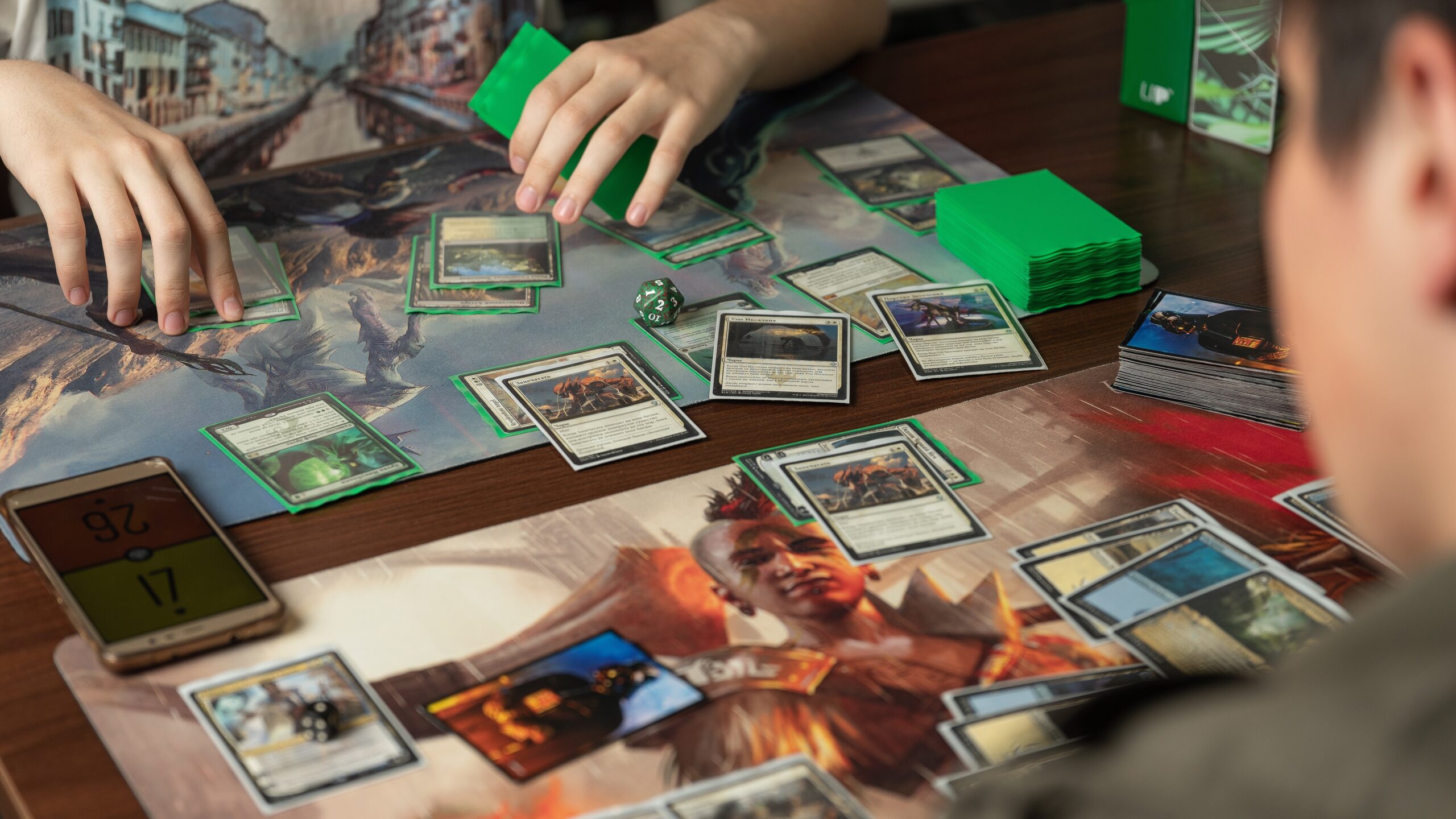
MTG beginner guide 2026 is really a guide to not turning your first week with Magic into a shopping mistake. If you look at Magic: The Gathering from the outside right now, it can feel like you missed 30 years of homework. You open a store page and see Foundations, FINAL FANTASY, Marvel’s Spider-Man, Avatar: The Last Airbender, Lorwyn Eclipsed, and now Teenage Mutant Ninja Turtles. Then somebody tells you to build Commander, grind Arena, learn Draft, and memorize rotation before lunch. i get why that sounds miserable. That kind of overload is not just a Magic problem. GameRevolution has already looked at how crowded gaming feels in pieces like The Current State of the Video Game Industry and Highlights from the Latest Video Game Industry News. Magic just expresses that same problem through booster packs, formats, and a lot of cardboard. The good news is this: starting Magic in 2026 is easier than it looks if you ignore most of the noise. You do not need to catch up on everything. You do not need to know every set. You do not need a Commander deck on day one. And you definitely do not need to buy random packs and hope your future self figures it out. You need one lane, one first product, and one place to play. Why Magic looks harder than it really is in 2026 A big part of the problem is volume. Wizards has said 2026 is a seven set year, which is more than the usual cadence. On top of that, Universes Beyond booster sets now work like regular Magic sets in Constructed formats. So yes, you are seeing more crossover products that matter in actual play, not just side collectibles. That sounds intimidating, but it mostly matters after you already know how to play. Your first games do not care whether a card came from Lorwyn Eclipsed or TMNT. Your first games care about simple things. Lands. Attacking. Blocking. Casting a removal spell without panicking. Knowing when not to swing with everything like a maniac. This is where new players get tricked. They think the size of the game means they need to study the whole game. You do not. Magic is huge at the edges. It is much smaller in the middle. Two people, 60-ish cards, lands and spells, somebody forgets a trigger, everybody keeps going. That is the part you learn first. MTG beginner guide 2026 starts with one choice Before you buy anything, decide how you want to learn. Not how you want to look learning. How you actually want to learn. There are three good starting lanes. If you want the cheapest and easiest path, start with MTG Arena. Arena still gives new players a tutorial, the Color Challenge, 14 starter decks, and Starter Deck Duels. That is a clean on-ramp because the client handles turn order, timing, and rules enforcement for you. You get to make mistakes without needing to apologize to a table. If you want to learn with one friend on a kitchen table, start with the Magic: The Gathering Foundations Beginner Box. This is one of the rare starter products that really does what it says. It walks you through a game turn by turn, then lets you mix and match ten simple themes once the basics click. It is built for actual beginners, not for someone who already watches set reviews at 2 a.m. If you want in-person help, start with Magic Academy at a local game store. Magic Academy events are explicitly built to teach brand-new players the rules and early deckbuilding, and Wizards says you do not need to bring your own cards. As of March 7, 2026, WPN stores are running Magic Academy Learn to Play and Deck Building events tied to TMNT from March 6 through April 16, 2026. That is a pretty good window if you want a human being to answer, “wait, can i do that?” without making you feel dumb. My honest recommendation is simple. Start on Arena if you are alone. Start with Foundations if you have one friend. Start with Magic Academy if you want the smoothest paper experience. Do not try to do all three at once in week one. Your best first product is not the flashiest one New players almost always overbuy in the wrong direction. If you want a physical first purchase, the best beginner product is still Foundations. The Beginner Box is for learning. The Starter Collection is for continuing after the rules make sense. The Starter Collection comes with over 350 cards and Wizards says those Foundations cards stay legal in Standard until at least 2029. That matters because it means your first pile of cards is not instantly stale. What should you skip at first? Skip Collector Boosters. They are fun to look at and terrible as a learning plan. Skip buying random Play Boosters to “build a deck from whatever happens.” That is how you end up with eight cool rares, no mana base, and one very confused green deck that somehow contains triple blue cards. Skip building Commander first unless a friend group is helping you. Commander is popular and fun, but it is a bad self-serve tutorial. It is social, political, full of old cards, and still surrounded by conversations about the Brackets beta and power expectations. None of that is impossible. It is just extra friction you do not need on day one. Skip copying a huge tournament list before you understand why the deck works. A good deck in the wrong hands still feels bad. And a beginner deck you understand is often more fun than a meta deck you pilot like a shopping cart with a broken wheel. If you are going to spend money early, spend it where it reduces friction. That means: That is enough. Really. A clean first month plan that does not turn into homework This part matters more than people admit. Beginners do better with