April 27, 2023

The Latest

Recent Stories

1984 by George Orwell: Contemporary Relevance

George Orwell’s 1984 is a classic novel that has captivated readers for decades. This dystopian novel portrays a world where the government has complete control and no freedom is allowed. The book is a reflection of Orwell’s concerns about the rise of totalitarianism in the world. Despite being published in 1949, the novel still resonates with readers and remains relevant to society today. Its themes of surveillance, propaganda, and suppression of speech are prevalent in contemporary society. Governments around the world have been accused of spying on their citizens and using language to manipulate public perception. 1984 remains a cautionary tale for modern society, as it is a warning of what could happen if those in power become too powerful. The novel’s relevance makes it a must-read for anyone interested in understanding the complexities of modern society and the importance of upholding individual freedoms. Historical and Political Context of 1984 George Orwell’s 1984 is a poignant critique of totalitarianism and a dystopian society, but it is also a witness to its historical and political context. To fully appreciate the novel, it is essential to understand the author’s motivations and experiences that inspired the novel. During Orwell’s lifetime, the world faced political turmoil, with fascism and communism sweeping across Europe. Orwell himself fought in the Spanish Civil War and saw firsthand the destruction caused by totalitarian regimes. His experiences undoubtedly influenced his writing and his concerns about state power. Additionally, Orwell was living in a time of domestic political upheaval. The Second World War had just ended, and British society was undergoing significant changes in the aftermath. Many were questioning the role of government and the extent of its control over individual liberties. These issues, combined with Orwell’s personal experiences, led him to write 1984 as a warning against the dangers of totalitarianism. The novel is a reflection of its time, but it is also a timeless story with deeper meanings that are relevant even today. By understanding the historical and political context from which it emerged, we can better appreciate the novel’s significance and appreciate its timeless message. Major Themes and Motifs in 1984 George Orwell’s 1984 is a dystopian novel that explores the dangers of totalitarianism and the power of propaganda. The novel depicts a future world where the government is all-powerful, and individual freedom, privacy, and thoughts are controlled and stifled. In this section, we will analyze the major themes and motifs in the novel. One of the central themes in 1984 is a dystopian society where the government has near-total control over its citizens. Orwell portrays a world where the government, known as the Party, monitors every aspect of people’s lives, including their thoughts, actions, and even their emotions. The Party’s slogan, “Ignorance is Strength,” shows how the government seeks to keep its people uninformed and uneducated, as this makes them easier to control. Another important theme in 1984 is surveillance and control. In the novel, the government uses advanced technology, such as telescreens and Thought Police, to monitor and control its citizens. The Party uses this technology to suppress dissent and maintain its iron grip on power. Orwell paints a chilling picture of a world where people are afraid to think or speak out against the government, for fear of being punished or “disappeared.” Language and propaganda are also important motifs in 1984. In the novel, the Party uses a language called Newspeak to limit people’s ability to express themselves and to control the narrative. The government uses slogans, such as “War is Peace,” “Freedom is Slavery,” and “Ignorance is Strength,” to manipulate and brainwash people into accepting its ideology. The use of propaganda and language is a powerful tool for the government to control and manipulate its citizens’ thoughts and behaviors. Overall, the themes and motifs in 1984 highlight the dangers of totalitarianism and the importance of individual freedom and privacy. Orwell’s novel is a warning against the dangers of government control and the abuse of power. The next section will discuss the contemporary relevance of 1984 and how it relates to our modern society. The Contemporary Relevance of 1984 George Orwell’s novel 1984 has continued to remain relevant to this day. The dystopian world in which the novel is set contains similarities to contemporary society that cannot be ignored. One of the most significant parallels is the increasing prevalence of surveillance and governmental control. The use of technology for mass surveillance has been an ongoing debate for many years. People are becoming more and more aware of the ways in which their personal data is being collected, analyzed, and even sold. Governments and corporations may use this information to manipulate individuals for political or financial gain. Language and propaganda are other significant parallels between the novel and current political discourse. The protagonist Winston Smith works as an editor in the novel. He is often tasked with changing the records of the past to align with the current Party views. Today, the falsification of history and misinformation has become a growing concern in government and media. It can be challenging to differentiate facts from opinions or propaganda. 1984’s relevance in society is apparent, with many contemporary authors, movies, and TV shows inspired by Orwell’s novel. It serves as a warning to the dangers of conformity and totalitarianism in societies that lack transparency and autonomy. As society progresses, so does the need for addressing issues that can lead down a dystopian path. George Orwell’s 1984 reminds readers that personal autonomy and freedom are essential for a healthy society. 1984’s Influence on Popular Culture In addition to its significance as a literary masterpiece, George Orwell’s 1984 has also made a profound impact on popular culture. Since its publication, the novel’s motifs and themes have been referenced and alluded to in countless books, movies, TV shows, and even music. One of the most famous examples of 1984’s influence is the television show Black Mirror. The show’s creator, Charlie Brooker, has cited 1984 as a major inspiration for

Nightmare | Sony Retro Video Review

“Nightmare” is a retro video game that has garnered a significant following among retro gaming enthusiasts. This classic game is renowned for its replay value, challenging gameplay, and immersive sound design. Developed for the Sony console, “Nightmare” has stood the test of time and remains a favorite among retro game collectors and enthusiasts. With its enthralling gameplay, intriguing story, and exceptional design, “Nightmare” is a must-play for all those interested in retro gaming. In this article, we will delve into the history and development of “Nightmare”, evaluating its gameplay, graphics, story, sound design, and replayability, as well as its level of difficulty. Join us as we analyze and rate “Nightmare”, one of the most iconic retro video games of all time. History and Development “Nightmare” is a video game developed by Sony and released in 1998. The game was created by Masayuki Sawada, a renowned game designer who is responsible for various video games. Its release came during a time when the video game industry was at its infancy, and it quickly rose to prominence among gamers. Initially, the game was designed for the PlayStation console, which was one of the most popular consoles of the time. “Nightmare” quickly became a fan favorite thanks to its challenging gameplay and immersive storyline. Throughout its development, the game went through various changes. Initially, the game was planned as a survival horror game, but the developers later changed it to an action game. The game’s final version, however, was a hybrid of both genres, providing a unique experience for players. Since its release, “Nightmare” has continued to inspire and influence the gaming industry. Today, the game is highly regarded among retro gamers and is seen as one of the best games of its era. In summary, “Nightmare” is a unique video game that has continued to captivate video game enthusiasts for decades. Its development history showcases just how the game evolved into the iconic game that it is today. Gameplay Mechanics “Nightmare” is a unique retro video game that offers an immersive gameplay experience. The game’s mechanics are easy to understand but challenging to master, which adds to its overall appeal. The plot follows a young boy named Andy who has been sucked into a nightmare world, and he must escape by defeating powerful bosses throughout the game. Here’s what you need to know about “Nightmare’s” gameplay mechanics: – Controls: The controls in “Nightmare” are straightforward. The player can move their avatar around the game’s world using the directional pad. The other buttons allow the player to jump or attack enemies. – Unique Features: “Nightmare” features a few unique gameplay elements that set it apart from other retro games. For example, the game allows players to collect power-ups that grant temporary abilities, such as increased speed or strength. – Difficulty Level: “Nightmare” is a challenging game. The bosses can be tough to beat, and the game doesn’t offer any sort of save feature. Players must complete the game in one sitting, which can take several hours. – In-Game Tips: There are a few tips and tricks players can use to make the game easier. For example, the player can increase their jump distance by holding down the jump button. Additionally, some power-ups can be used strategically to defeat bosses more efficiently. Overall, the gameplay mechanics in “Nightmare” are simple enough to understand, yet challenging enough to keep players engaged. The game’s unique features and difficulty level make it a must-play for anyone who values retro gaming. Graphics and Design “Nightmare” boasts an excellent art style that immerses players in a dark and ominous world. The game’s environments enhance this atmosphere by utilizing color palettes that range from earthy, muted tones to striking and vibrant hues. The hand-drawn character designs stand out and help to bring the game to life. Their unique designs are visually captivating and add a layer of depth to the gameplay. One of the most impressive aspects of “Nightmare” is its use of environmental storytelling. The game features subtle nods and easter eggs that add depth and intrigue to the game world. These easter eggs can be found by the attentive player, adding an extra layer of discovery as players navigate through the different levels. Overall, the game’s graphics and design are top-notch, making “Nightmare” an impressive retro video game that stands out in the gaming industry today. With its exceptional art style and attention to detail, it’s no surprise that “Nightmare” has secured its place as a retro gaming classic. Players who appreciate excellent visual design and attention to detail will surely enjoy this gem of a game. Story and Narrative When it comes to retro games, “Nightmare” boasts a narrative that is just as captivating as its gameplay. The plot revolves around the story of a young boy named Dylan who is haunted by a recurring nightmare. The nightmare progresses as Dylan tries to escape from it, with each stage becoming increasingly difficult. What sets “Nightmare” apart from other retro games is its narrative design. The game’s story is entirely nonlinear, with multiple paths through the game that lead to alternate endings. This game design choice provides players with a sense of agency, making them feel like they are steering the course of the story. Throughout the game, we see compelling character development and intriguing plot twists, leaving players invested until the very end. The pacing of “Nightmare” also deserves recognition, as the game’s ability to balance action and tension with story-driven moments keeps players engaged throughout the gameplay experience. In conclusion, “Nightmare” excels in its storytelling through its nonlinear narrative design, impressive character development, and well-executed pacing. Its captivating story will leave players invested until the very end, making it a must-play for any video game enthusiast looking for an engrossing retro gaming experience. Sound and Music “Nightmare” is a retro game that offers immersive gameplay and a captivating storyline. Its sound design is an essential aspect of its overall appeal, elevating the player’s experience while

PC Awards History of the Event

The PC Gaming Awards is an annual event that recognizes the best video games released on the PC platform. This event has a rich history dating back to its origins from the Computer Game Developers Conference Awards. Over the years, it has grown in significance and popularity within the PC gaming community. This article will provide readers with a detailed insight into the history and evolution of the PC Gaming Awards. We will delve into the origins of the event, highlighting notable winners and moments, discussing criticisms and controversy surrounding the awards, and explore the future direction of the PC Gaming Awards. With this article, we aim to provide our readers with expert knowledge and an in-depth understanding of the PC Gaming Awards. Whether you are a dedicated PC gamer or have a passing interest in gaming culture, this article will provide a fascinating account of a significant event in the gaming industry. The Origins of PC Gaming Awards PC Gaming Awards have become one of the most notable events in the gaming industry. However, the event didn’t always exist in the way we know it today. In fact, the PC Gaming Awards evolved from another event called the Computer Game Developers Conference Awards, which started in 1987. Initially, the Computer Game Developers Conference was an informal gathering of computer game developers that met to share ideas and discuss the state of the industry. However, it quickly became a place that showcased the latest industry advancements. Within a few years, it had become a well-established event on the gaming calendar. In 1996, the organizers introduced a new category in the form of the Interactive Achievement Awards. This led to the introduction of categories such as Game of the Year, Best Game Design, and Best Sound Design. In 2013, a partnership was established between AMD and PC Gamer, which led to the renaming of the event as the PC Gaming Awards. Since then, the PC Gaming Awards have garnered widespread recognition, attracting an increasing number of attendees each year. This event has proven to be a success with significant positive impacts on the PC gaming industry. Gamers now eagerly await the annual event to see their favorite games and developers receive accolades for their contributions to the industry. Notable Winners and Best Moments in PC Gaming Awards The PC Gaming Awards are known for honoring the best in the industry. Each year, the event features several prestigious awards, including the Game of the Year, Best Multiplayer Game, and Best Esports Game. The awards have recognized several outstanding titles and developers throughout the years. In its early years, the PC Gaming Awards were dominated by RPGs and strategy games. However, in recent years, the awards have expanded to include more genres and platforms. Some of the most notable winners in the event’s history include The Witcher 3: Wild Hunt, DOOM (2016), and Dishonored 2. One of the most memorable moments from the awards’ history was in 2018 when Josef Fares, the director of A Way Out, gave an enthusiastic and eccentric speech while accepting the award for Best Indie Game. His speech became an instant viral hit, adding to the event’s already burgeoning popularity. The PC Gaming Awards have also featured some of the most captivating performances and music in the gaming industry. Performances from Darkest Dungeon, Dragon Age: Inquisition, and Portal 2 are among the most celebrated. The highlight of the most recent PC Gaming Awards was the performance by the Grammy-winning band Phoenix, who created a medley of songs from iconic games like Sonic the Hedgehog and Tetris. Overall, the PC Gaming Awards have been home to some of the most deserving winners in the industry and have given way to many unforgettable moments, including speeches, performances, and surprises. Criticisms and Controversy Surrounding PC Gaming Awards The PC Gaming Awards have faced criticism over the years for its lack of diversity and representation of women, people of color, and LGBTQ+ individuals. Critics argue that the nominations and winners do not reflect the diverse player base and developers in the gaming industry. Additionally, the event has faced controversy over certain award decisions made in the past, including snubs towards deserving nominees and questionable wins. The 2015 award ceremony, for example, has been heavily criticized for giving the “Best Gaming Hardware” award to the Oculus Rift, despite not having a consumer-ready product. The organizers of the PC Gaming Awards have been working to address these criticisms and controversies. In 2020, they introduced a new category for “Innovation in Accessibility” to highlight games that go above and beyond to make their games accessible to players with disabilities. Furthermore, they have also made changes to the judging panel to ensure a more diverse, representative, and fair selection process. The inclusion of public voting into award selection has also been implemented to increase transparency and engagement. Overall, it is clear that the PC Gaming Awards have faced legitimate criticisms and controversies over the years. However, it is equally evident that the organizers have taken steps to address these issues and improve the fairness and inclusivity of the event. Conclusion: In conclusion, the PC Gaming Awards have proven to be an essential event in the gaming industry since its inception. From early beginnings as the Computer Game Developers Conference Awards, the event has grown to recognize and honor groundbreaking achievements in the PC gaming sector. As we move into the future, there is much optimism and excitement regarding the event’s direction and improvements. Predictions for the future show that the PC Gaming Awards will continue to thrive, with a broader range of categories and added emphasis on representation and diversity. Suggestions for improvement include increased accessibility and new recognition of up and coming talent, encouraging newcomers to the field. The event’s impact on the gaming industry and gamers is undeniable, and it’s clear that the recognition and honors awarded at the PC Gaming Awards drive innovation and excellence. In brief, the PC Gaming Awards have

Social Media

New From Game-Revolution

Get The Latest Updates

Subscribe To Our Weekly Newsletter

No spam, notifications only about new products, updates.

Categories

Trending

Most Popular Stories

Fixing MTG Arena Friends List Not Working

The MTG Arena friends list may stop working for a few common reasons: friend requests fail, a display name or five-digit number does not match exactly, Direct Challenge or Challenge Lobby screens get stuck, the social panel shows outdated information, or Arena is dealing with a server-side issue. If you are trying to add friends, receive requests, or start a match and nothing behaves the way it should, the usual fixes are checking the exact account name and number, restarting the client, updating the game, and making sure your network connection is stable. The MTG Arena friends list is supposed to make playing with friends simple: add a player, send a challenge, pick decks, and start the match. When it works, great. When it does not, you get the full Arena social experience: missing friend requests, stuck challenge screens, mismatched names, and two players staring at menus while insisting they definitely typed everything correctly. Most MTG Arena friends list problems fall into a few buckets. The friend request will not send. The friend does not appear. The display name or five-digit number is wrong. Direct Challenge or Challenge Lobby invites get stuck. The social panel shows outdated information. Or the entire friends list behaves like it has been hit by a very legal, very annoying bounce spell. Wizards has also acknowledged multiple social and challenge-related issues over time, including Direct Challenge mismatched-option behavior, friend requests lingering after acceptance, challenge animations looping, and friend challenge UI problems. So if you are having trouble, it is not always user error. Sometimes the client is simply doing Arena things. This guide focuses on the fixes that matter most to players dealing with friends list and challenge problems, from basic checks and cache clearing to advanced network troubleshooting, bug reporting with logs, and a few habits that help keep the feature working reliably. https://magic.wizards.com/en/mtgarena Gathering Arena Friends List Context The friends list in MTG Arena is tied to your Wizards account display name, your five-digit identifier, the client’s social menu, and the current challenge system. Older guides and many players still say “Direct Challenge,” while newer Arena updates introduced Challenge Lobbies, which unified Friend Challenge and Direct Challenge into one lobby-style system. Wizards announced Challenge Lobbies as a social feature upgrade that lets players create lobbies from the Challenges section of the social menu or invite online friends from the friends list. That matters because some troubleshooting depends on which flow you are using. A friend request issue is different from a challenge issue. A display name problem is different from a server-side social outage. And a challenge that will not start may have nothing to do with your friends list at all. Start with the simplest explanation first. Check spelling, restart the client, confirm the game is updated, then move into cache, reinstall, logs, and support. Quick Checks For MTG Arena Friend List Before deleting files or reinstalling anything, run through the basic fixes. They are boring, yes. They also solve a surprising number of Arena problems, which is somehow both comforting and irritating. First, restart MTG Arena completely. Do not just return to the home screen. Close the client, wait a few seconds, and relaunch it. On mobile, force close the app and reopen it. Next, check the official MTG Arena status page. The status page tracks platform and service components such as Windows, macOS, Android, iOS, Game, Logins, Matches, Social, and Store. If Social, Logins, or Matches are degraded, your friends list may not behave normally no matter what you do locally. Then update the game. If Arena is asking for a small download or restart after a patch, both players should update before trying to add friends or challenge each other. Wizards notes that update and install problems can come from network issues, Windows-level problems, or leftovers from a partial install. Finally, confirm your network is stable. If Arena loads slowly, hangs on menus, or disconnects often, the friends list may only be a symptom. On mobile, Wizards recommends checking the device’s internet connection, toggling Wi-Fi off and on, restarting the device, force closing background apps, updating the app, and reinstalling if needed. Troubleshoot: Add Friends And Display Name Issues Most failed friend requests come down to the display name. Friends list issues in MTG Arena are common because Arena is strict about username formatting. MTG Arena names are not just “PlayerName.” They include the visible display name plus a five-digit number, usually shown in the format DisplayName#12345. Wizards’ Direct Challenge FAQ says players need both the display name and the five-digit number associated with the account. It also notes that display names are case sensitive, which means DragonFan#12345 and dragonfan#12345 may not be treated the same. Check these details before assuming the friends list is broken: Make sure the display name is typed exactly as shown. Confirm capitalization. Confirm the five-digit number separately. Do not include extra spaces before or after the name. Make sure your friend is sending you the correct account name, not the name from an old or secondary account. That last point matters. Wizards explains that two accounts can have the same display name text but different five-digit identifiers, such as SameDisplayName#12345 and SameDisplayName#54321. If a player accidentally logs into or creates a secondary account, the friends list lookup will not point to the account they actually use. The safest method is to have your friend copy their full Arena name from the client and send it to you outside the game. If they type it manually, ask for a screenshot. It feels overly cautious until you lose ten minutes to one lowercase letter. Step-by-Step: Add Friends To add a friend in MTG Arena, use the friends list panel rather than guessing from the main Play menu. Open the Friends List panel, usually found at the bottom-left of the Arena client. Click the plus sign at the top right of the friends list. Enter the exact Arena username for the person you want to

Cheap MTG Cards: Budget Options for Magic Collections

Cheap MTG Cards are not just for new players. They are for Commander brewers, cube builders, collectors who like having options, and anyone who has ever looked at the price of one land and thought, “Surely cardboard has gone too far.” The best budget strategy is not one single source. It is a mix. Use real singles when you need tournament legality, use lots when you want volume, use proxies for casual testing, and use ready-made cube products when you want a complete play experience without turning your evenings into spreadsheet maintenance. Gathering Cards: Cheap MTG Cards Sources The cheapest MTG collection strategy usually breaks into four lanes. ProxyMTG.com is a strong choice for bulk budget proxies and on-demand printed proxy cards for casual use. Print-at-home proxies are the cheapest overall route if your group allows them and you already have a printer. PrintACube.com is worth considering if you want a ready-to-draft 540-card cube near the $100 mark. For authentic cards, compare singles against bulk lots before buying, because “cheap” can mean very different things depending on your goal. Singles are better when you need specific cards. Lots are better when you want maximum cardboard per dollar. Proxies are better when you want to test decks or protect expensive originals. Cubes are better when you want an entire repeatable format in one purchase. ProxyMTG.com And Bulk Proxies ProxyMTG.com is one of the better budget options for players who want bulk proxies and on-demand printing. The value improves as order size increases, which matters if you are printing a Commander deck, testing multiple decks, or building a cube. Before ordering from any proxy seller, check the reputation, production samples, card feel, customer photos, and shipping policies. Good proxy cards should be clearly treated as proxies, not as tournament-legal originals. They should also be readable, consistent in size, and easy to sleeve. Also check delivery times and shipping costs before buying. A low per-card price can get less exciting once shipping, tracking, taxes, and rush fees join the table like an uninvited combo player. Print At Home: Cheapest Route Printing proxies at home is usually the lowest per-card cost. It is not the prettiest option, but it works well for deck testing, kitchen-table Commander, cube prototypes, and deciding whether a card is actually good before spending money on the real version. For better durability, print on heavier cardstock or print on paper and sleeve the proxy in front of a bulk card. The sleeve and backing card do a lot of the work. You are not trying to create a museum object. You are trying to remember whether your seven-mana dragon is playable or just emotionally persuasive. Check local event rules before using printed proxies. Home-printed cards are fine for many casual groups, but sanctioned Magic events require authentic cards except for judge-issued proxies in narrow tournament situations. PrintACube.com Cheap Cube Option PrintACube.com is a useful shortcut for players who want a full cube without buying hundreds of individual singles. Its headline value is the ability to get a complete 540-card cube around $100, which is hard to beat if your goal is draft nights rather than collecting originals. This is especially attractive for cube beginners. Building a cube from scratch can be fun, but it also means choosing archetypes, balancing colors, sourcing cards, sleeving everything, and updating the list over time. Buying a ready cube skips a lot of that work. If your playgroup wants a repeatable draft experience and does not care whether every card is an authentic original, a ready-made proxy cube can be one of the most cost-efficient MTG purchases you make. Buying Singles Vs Lots Buy singles when you need exact cards. This is the right move for Commander staples, missing lands, sideboard cards, or format-specific pieces. Singles reduce waste because you are not buying 800 random cards to find three that matter. Buy lots when you want volume. Bulk lots are useful for new players, casual deckbuilding, school clubs, cube experiments, and anyone who wants a pile of commons and uncommons for cheap. Just understand that most lots are not secretly filled with expensive staples. Sellers also know how Google works. Compare per-card prices across multiple sellers. A $20 lot of 1,000 cards sounds great, but if shipping is $18 and the lot is mostly duplicate draft chaff, the value may be less impressive. On the other hand, a well-sorted lot with lands, tokens, commons, uncommons, and usable rares can be a great starter purchase. Local Sources And Community Local game stores are still one of the best places to find cheap MTG cards. Many stores have bulk boxes, discounted binders, damaged-card bins, and low-cost singles that are not worth listing online. Trade nights can be even better. Bring cards you do not use and trade into cards you actually need. For budget players, trading is often more effective than buying because you are converting dead collection value into playable cards. Also scan Facebook Marketplace, local classifieds, and community groups regularly. Collections appear when players move, quit, clean out closets, or decide that they have too many white storage boxes. Which, to be fair, is all of us eventually. MTG Cards: Quick Buying Tips Compare market prices across major trading sites before you buy. Do not rely on a single listing. One seller asking $12 for a $3 card does not make the card $12. It makes that seller optimistic. Check seller photos for condition accuracy, especially on older cards, foils, and higher-value staples. “Lightly played” can mean very different things depending on the seller’s eyesight and moral flexibility. Set alerts for price drops on targeted cards. Price trackers are useful for Commander staples, reprints, and cards that spike because of new set previews. If you can wait, waiting often saves money. Magic The Gathering Basics For Budget Buyers Rarity affects price, but it does not control price by itself. Commons and uncommons are usually cheaper because they are printed more frequently, while rares and

Where to Buy MTG Proxies: Best Sites, Pricing, And How To Order

TLDR The best place to buy MTG proxies depends on what you need. ProxyMTG.com is the best pick for deck-building tools and bulk pricing. PrintMTG.com is best for high-quality print on demand proxies with strong cardstock and service. ProxyKing.biz is best for single staples, dual lands, and realistic proxy cards. For print-at-home testing, use MTGprint. For cubes and large custom batches, consider ProxyPrintery or MakePlayingCards with MPCFill. Avoid PrintingProxies for bulk orders if price matters, since its published high-volume pricing is much higher than ProxyMTG and PrintMTG. Avoid Proxxied if you are trying to buy finished cards, because it is a browser-based print-at-home tool, not a finished-card seller. What This Guide Covers Buying MTG proxies can mean a few different things. Some players want a full Commander deck printed and shipped. Some want a few expensive staples for casual play. Some want a print-at-home PDF. Some want custom cards, double-sided cards, foil upgrades, or an entire cube. This guide is for players who want to know where to buy MTG proxies, what each site is best at, how pricing works, and how to place an order without creating a pile of unusable cards. The selection criteria are simple: print quality, cardstock fidelity, price per card, bulk-order value, ordering tools, decklist import support, turnaround, reputation, realistic appearance, and whether the site is better for casual play, playtesting, custom cards, or full-deck production. The short version: start with ProxyMTG.com, PrintMTG.com, or ProxyKing.biz if you want finished cards. Use MTGprint if you want print-at-home control. Use MPC if you are comfortable with a more involved workflow and want low per-card pricing on custom deck production. Why Choose MTG Proxies Players use MTG proxies for three main reasons: casual play, playtesting, and protecting expensive Magic cards. Casual play is the big one. Commander players often want to try a mana base, a few Reserved List cards, a cEDH shell, or a new deck idea without spending hundreds or thousands of dollars first. A proxy lets the group focus on the game instead of everyone’s collection value. Playtesting is another good use. If you are tuning a cube, testing a new Commander list, or trying cards before buying real copies, proxies save time and money. You can test ten versions of a card package before deciding which real cards are worth buying. Protection matters too. If you own expensive MTG cards, you may not want to shuffle them every week. ProxyKing describes proxies as stand-ins that let players avoid damaging high-value cards, especially expensive staples, dual lands, fetch lands, and other cards that can be costly to replace. Proxies are also useful for custom cards. Some players print custom commanders, cube cards, joke cards, tokens, alternate art versions, or entire deck projects. This is where services like PrintMTG, ProxyMTG, ProxyPrintery, MTGprint, and MPC start to feel very different from each other. How We Chose The Best MTG Proxies The first filter is print quality. A good proxy should be readable, centered well enough for sleeved play, and printed on cardstock that does not feel like paper in a sleeve. For higher-end orders, S33 German black-core stock is a common premium choice because it has a black-core center layer that blocks light and gives cards a more finished feel. The second filter is price. A few single cards can cost more per card and still make sense. A full Commander deck, cube update, or 500-card bulk order needs better pricing. ProxyMTG and PrintMTG both publish bulk pricing that drops as low as $0.30 per card at 1,000+ cards. The third filter is ordering friction. Decklist import matters. Searching card by card is fine for five cards. It is not fine for a full cube unless you enjoy turning admin work into a second hobby. The fourth filter is reputation and use case. Some sellers are best for realistic singles. Some are better for high-volume deck building. Some are better for home printing. And some are fine products but not the best value for the job. Best 6 Sites To Buy MTG Proxies For Deck Building 1. ProxyMTG ProxyMTG.com is the strongest first stop for players who want to print MTG proxies from a decklist, build large orders, and keep pricing clear. It is built around Commander, cube, casual play, and deck testing, with tools for browsing sets, searching cards, uploading lists, choosing versions, and checking out. Its main strength is bulk pricing. ProxyMTG lists a single card at $3, then $2 per card for 2–9 cards. Pricing drops as the order grows: $1.50 at 10–29 cards, $1.25 at 30–49, $1 at 50–74, $0.80 at 75–99, $0.55 at 100–199, $0.45 at 200–499, $0.35 at 500–999, and $0.30 at 1,000+ cards. That makes it especially good for full Commander decks, cube updates, and larger playtest batches. Ordering And Import Decks The cleanest ProxyMTG workflow is to upload a decklist or build a list inside the order tool. The site says users can browse the card library, choose versions, adjust quantities, and watch pricing update as the order grows. A typical order looks like this: ProxyMTG states that it prints on premium S33 German black-core cardstock with a UV coating, which is a good sign if you want cards that feel more like finished game pieces than paper inserts. Double-Sided MTG Proxies And Foil Options For double-sided cards, check the current order builder and ask support if the option is not obvious. ProxyMTG’s public customization guidelines mention custom backs and printed “holo stamp” style graphics when offered, but also clarifies that those are printed graphics, not physical foil stamps or authentication features. That distinction matters. If you need true foil upgrades or double-sided MTG proxies, confirm the option before placing a large order. Do not assume every proxy printer handles MDFCs, transform cards, custom backs, and foil effects the same way. Best for: full Commander decks, cube updates, large-volume deck building, and players who want strong pricing without building an MPC order themselves. Contact: ProxyMTG lists support@proxymtg.com as

How To Finish More Games When Your Backlog Is Out Of Control

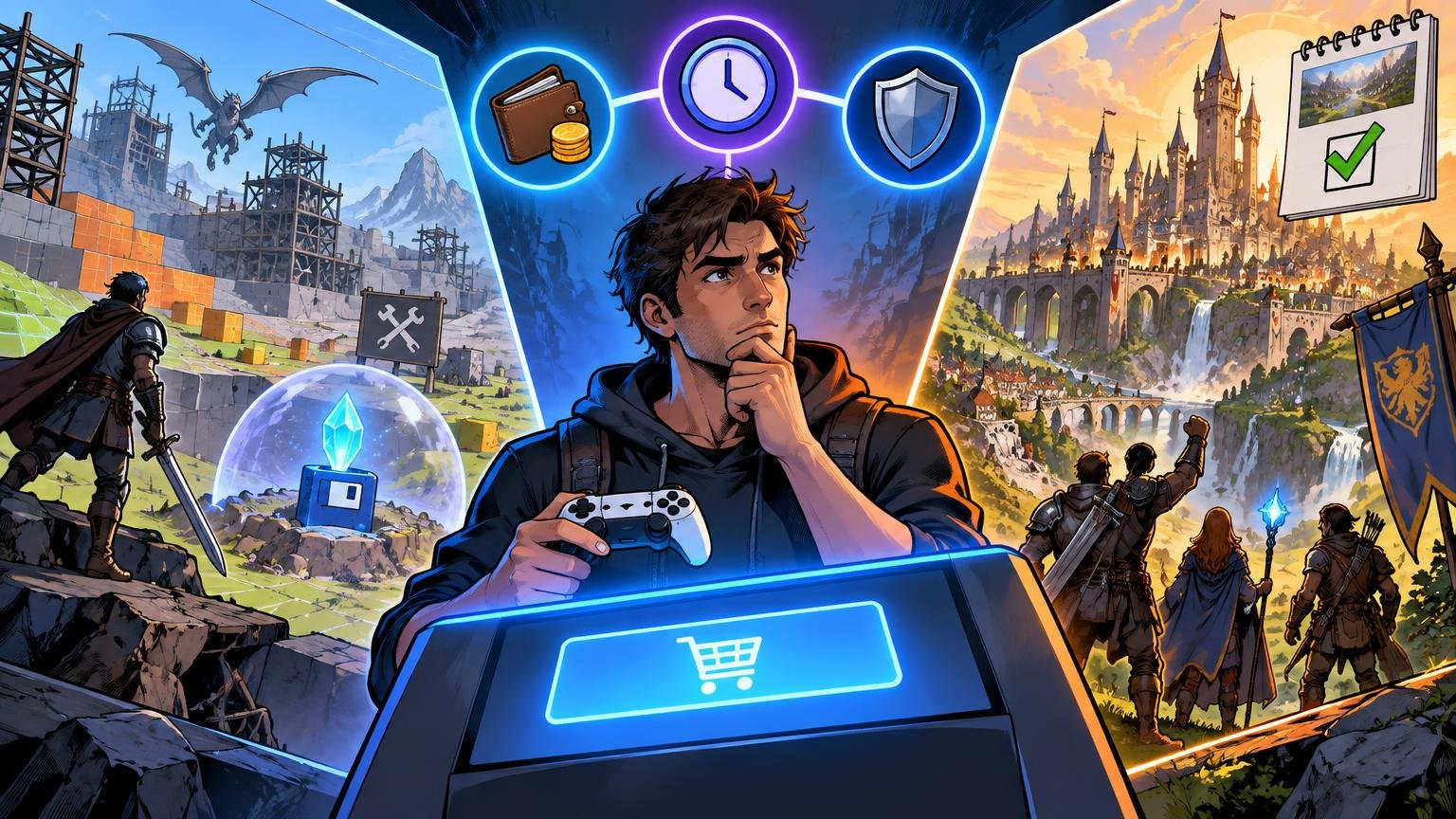
TLDR A big game backlog feels like a good problem until it starts feeling like a second job. You buy a game on sale. Then a subscription adds ten more. Then your friends start a co-op game. Then a new RPG drops. Suddenly your library is full of half-started games, and opening the console feels less relaxing than it should. Learning how to finish more games is not about becoming more disciplined in a miserable way. It is about making games feel playable again. Stop Calling It A Backlog If That Makes It Feel Like Work The word “backlog” is useful, but it can also make games sound like chores. Games are entertainment. They can be art, social spaces, challenge machines and comfort food, but they are still something you choose to do. You do not owe every game a full clear. If your backlog makes you feel guilty, change the label. Call it your library. Call it the shelf. Call it “stuff I might play later.” The point is not to trick yourself. It is to stop treating every unplayed game like unfinished homework. That small shift helps. Pick Three Active Games The best backlog rule is simple: keep only three active games. A good three-game rotation might look like this: For example: Or: This works because different moods need different games. Some nights you want progress. Some nights you want something easy. Some nights you want to talk to friends and barely pay attention to objectives. The mistake is having 12 active games. That is not variety. That is noise. Decide What “Finished” Means Before You Start Not every game needs the same finish line. For some games, finishing means credits. For others, it means one campaign clear, one ranked season, one ending, one build, one world, one route or one good weekend. Before starting a game, pick the level of commitment: This prevents the common trap where every game silently becomes a 100% project. Most games do not need that. Most players do not even want that. They just feel like they are supposed to. Use A Fair Quit Rule Quitting a game is allowed. That should not be controversial, but people get strange about it. They spent money, heard it gets good later or feel like they are “bad at games” if they stop. Use a fair quit rule instead. Try one of these: A fair trial is enough. You do not need to finish a game to respect it. Be Honest About Long Games Long games are not bad. Some of the best games ever made are huge. But long games crowd the calendar. If you are playing a 100-hour RPG, you probably should not start three other 60-hour games at the same time. That is how backlogs turn into fog. When you start a long game, pair it with something short. A puzzle game, arcade game, roguelite run or linear action game can keep your rotation fresh without derailing the main project. Also be careful with massive open-world games from subscriptions. They feel free, but time is still the cost. Sales Are Not Savings If You Never Play The Game A $70 game for $8 looks like a deal. Sometimes it is. But if you never install it, you did not buy entertainment. You bought a digital receipt. The same goes for bundles and subscription catalogs. Cheap access is only useful when it leads to actual play. A good sale rule: do not buy a discounted game unless you can name when you plan to play it. Not a perfect rule. But it stops a lot of random library clutter. Separate Comfort Games From Backlog Games Some games are not meant to be finished. Sports games, multiplayer shooters, roguelikes, MMOs, survival games, cozy sims and live-service games often function as routines. You play them because they feel good, not because you are moving toward credits. That is fine. Just do not let them hide the fact that you also want to finish other games. Give comfort games a place. Maybe Friday night is for multiplayer. Maybe Sunday morning is for a cozy game. Then keep your main single-player game protected during other sessions. This is not rigid scheduling. It is just giving different types of games different jobs. Play Short Games Between Big Ones Short games are the secret weapon. A six-hour game can reset your attention. It gives you a clean start, clear progress and a finish line you can actually reach. Short games also remind you that not every good game needs to take over your life. Some of the most memorable games are small, focused and confident enough to end. If your backlog feels stuck, play something short next. Not because short is better. Because momentum matters. Make A “Not Now” List You do not have to delete games from your life forever. Make a “not now” list for games you still respect but do not want to play yet. This is useful for big RPGs, dense strategy games and games tied to a specific mood. A “not now” list removes pressure without pretending you will never return. It also clears your active list, which is what matters most. The Simple Backlog System Here is the clean version: That is enough. You do not need a productivity app for your hobbies unless you enjoy that sort of thing. Why This Matters The U.S. gaming audience is huge. The Entertainment Software Association reported in 2026 that 212.3 million Americans play video games every week. With more players, more subscriptions, more storefronts and more constant releases, it is easy for games to pile up faster than people can play them. The answer is not to rush through everything. The answer is to choose better, quit cleaner and stop letting your library boss you around. FAQs How many games should I play at once? Two or three active games is a good limit for most players. More than that can make progress feel