April 10, 2026

The Latest

Recent Stories

MTG Beginner Box Vs Starter Collection: Which Should New Players Buy?

MTG Beginner Box vs Starter Collection is one of the most useful product questions a new player can ask right now, mostly because the names sound related but the jobs are different. One product teaches you how to play. The other gives you a bigger pile of cards so you can start building decks. Mix those up, and your first purchase can feel either too shallow or way too messy. For the broader learning path, MTG Beginner Guide 2026: How to Start Playing Without Feeling Behind lays out the big-picture onboarding plan, and Which Magic: The Gathering Format Should You Start With Right Now? helps once you are deciding where to actually play after the rules click. The Beginner Box Is A Teaching Tool First The Beginner Box is built for learning, and Wizards is not subtle about that. It is designed to walk players through early games step by step. That matters because a lot of Magic products are technically playable by beginners, but not actually friendly to beginners. Those are different things. The Beginner Box uses themed Jumpstart-style packs, simple onboarding materials, and a setup that is clearly aimed at getting two people from zero to “okay, i think i get combat now.” It also comes with the kind of practical extras new players actually use right away, like playmats, how-to-play guides, and life counters. That makes it the better product for people in these situations: In other words, the Beginner Box is not trying to be your forever card pool. It is trying to make sure your first few games are not miserable. That is a very good thing. Too many new players buy product as if the first goal is “owning cards.” The first goal is understanding the game. Until that part is real, extra cards mostly create extra confusion. The Starter Collection Is Better Once The Basics Already Make Sense The Starter Collection does a different job. Instead of walking you through the rules, it gives you a larger stack of cards, basic lands, boosters, and a deckbuilding booklet so you can start making your own lists. That makes it more of a bridge product. It sits between “i just learned the game” and “i am ready to build with intention.” That difference is huge. The Starter Collection is stronger for players who already know: It is also better for people who get more excitement from deckbuilding than from tutorial structure. Some players are happiest once they can spread out a card pool on the table and start brewing. The Starter Collection is for that crowd. It also helps that the product is fairly substantial. You are not just getting a tiny sampler. You are getting a real base to start building from, plus some boosters, plus a deckbuilding guide. Wizards has also said Foundations stays in Standard until at least 2029, though some Starter Collection support cards are Commander-focused rather than Standard legal. That gives the product more runway than the average beginner purchase. So yes, there is a real case for it. Just not as the first thing for every single new player. MTG Beginner Box Vs Starter Collection Comes Down To Your Actual Situation This comparison gets much easier once you stop asking which box is “better” in the abstract. The real question is which box matches where you are. Buy the Beginner Box when learning the rules is still the main job. That includes players who have watched some videos, played a tutorial, or know what tapping lands means but still need a clean first paper experience. Buy the Starter Collection when the rules are already stable and the next step is building decks from a bigger pool. That is the cleanest way to split it. I think a lot of disappointment comes from buying the Starter Collection too early. New players open a big stack of cards and assume that means more value. Sometimes it does. But when the rules are not settled yet, more cards can just mean more paralysis. You end up sorting, reading, and guessing instead of playing. The reverse mistake happens too. Some players buy the Beginner Box when what they really want is deckbuilding freedom. In that case, the product can feel a little too guided. Not bad. Just too structured for the stage they are already at. What About Welcome Decks, Arena, And Magic Academy? This is where the product decision gets more interesting. Wizards has more than two lanes for new players now. As of April 2026, new mono-color Welcome Decks tied to Secrets of Strixhaven have been announced for participating WPN stores, and Wizards is also offering 60-card Theme Decks with that release. Magic Academy continues to exist as the official learn-to-play event path. And, of course, MTG Arena is still the cleanest solo learning tool for a lot of players. So the better question may be this: What kind of beginner are you? A totally solo beginner often does well starting on Arena first, then moving into the Beginner Box or an in-store learning path. A player with a friend at home does well with the Beginner Box almost immediately. A player who already understands the rules and just needs cardboard to start building is a better match for the Starter Collection. A local-store learner might not need either one first if Welcome Decks or Magic Academy already cover that first step. That is actually good news. It means there is less pressure to force one product to solve every problem. The Most Common Buying Mistakes The first mistake is skipping learning products and going straight to random boosters. Packs are fun. They are not a plan. New players who start there usually end up with a small pile of cards, a foggy idea of deckbuilding, and no real path from point A to point B. The second mistake is treating card count like the same thing as value. A bigger box is not automatically the better beginner purchase. Sometimes

How To Upgrade A Commander Precon Without Wasting Money

Last updated: April 10, 2026 The fastest way to waste money in Commander is to upgrade a commander precon by buying the loudest cards first. That feels fun for about ten minutes. Then you play the deck, miss land drops, do nothing on turn three, and die with a hand full of expensive “upgrades” that never got cast. A precon does not become better because the singles got pricier. It becomes better because the deck functions more often. For social context, Commander Brackets Explained for Regular Players is worth reading before you tune too hard, and MTG Custom Proxies for Commander: What to Personalize First is a nice follow-up once the deck actually feels like yours. Start By Figuring Out What The Deck Is Supposed To Do This sounds obvious, but it is where a lot of upgrade plans quietly fall apart. A precon usually has one clear center of gravity. Maybe it wants to make tokens. Maybe it wants to recur artifacts. Maybe it wants to pile counters on creatures. Maybe it wants to cast big splashy spells after a ramp-heavy start. Whatever the plan is, your first job is to name it in one sentence. Not three sentences. One. “This deck floods the board with tokens, then wins with anthem effects.”“This deck fills the graveyard and reuses value creatures.”“This deck ramps, copies spells, and closes with big turns.” Once you can say that clearly, cuts get easier. Cards that are merely “fine” but do not serve the plan become obvious cuts. A lot of stock precons include those cards on purpose. They need to be broad enough to play decently out of the box and interesting enough for a range of players. That means some slots are there for flavor, range, or variety, not because they are the most efficient thing possible. That is okay. It also means they are the first cards you should be willing to replace. Fix The Mana Base Before Buying Fancy Toys Nobody likes hearing this because lands are boring and splashy mythics are not. But the mana base is where smart upgrades start. When you upgrade a commander precon, the first real jump in quality usually comes from making the deck cast spells on time. Not from making the spells themselves more dramatic. That means looking at three things: A lot of precons can stand to lose their clunkiest lands first. Lands that always enter tapped and do very little else are common cut candidates. The same goes for cute utility lands that look fun but quietly make your opening hands worse. You do not need an absurdly expensive land package to improve a precon. You just need lands that let the deck play its first few turns without tripping over itself. Even budget-friendly duals, better color balance, and a cleaner count of basics can do real work. And here is the annoying truth. Those changes are not glamorous, but they show up every single game. That matters more than a single shiny finisher you draw once every four matches. Ramp And Card Draw Are Usually The Next Upgrades After mana, the next upgrade tier is almost always the engine package. That means ramp and card draw. Precons often include enough of both to function, but not always enough of the right kind. Some lists lean too hard on clunky four-mana ramp. Others give you card draw that is technically present but awkward, slow, or tied to board states you do not always have. Try to ask two questions: How soon does this deck start accelerating?How often can it refill after the first wave of plays? A good precon upgrade path makes both answers cleaner. For ramp, lower-cost options usually matter more than cute late-game burst. You want to spend early turns getting ahead, not casting a card on turn five that says you should have fixed your mana three turns ago. For card draw, repeatable engines usually beat random one-shot fluff. A deck that sees more cards finds its lands, removal, payoffs, and recovery pieces more consistently. That is how you stop a decent precon from running out of steam after one board wipe. I think this is one of the biggest differences between a stock list and a tuned casual list. Tuned decks do not just have stronger cards. They see more of the cards that matter, more often. Tighten The Removal, Not Just The Threats New Commander players love upgrading threats because threats are easy to notice. Bigger creature. Cooler legend. Nicer art. Cleaner story. Removal feels less exciting, so it gets neglected. That is a mistake. A better precon needs a tighter answer package. That means more cards that can remove the things that actually stop your deck from functioning. You do not need to jam the most ruthless interaction possible. But you do need enough of it, and it needs to be flexible enough to matter. That usually means improving: A precon with good threats and weak answers often feels strong only when it is already winning. A better-tuned list still has game when somebody else sticks the scary permanent first. And that is what real improvement looks like. More live draws, more recoverable games, fewer hands where you stare at the board and mutter, “well, that resolves, i guess.” Protect The Deck’s Actual Plan The next smart place to spend money is protection. Not every deck needs a huge protection suite, but most Commander decks benefit from some mix of protection spells, recursion, indestructible effects, counterplay, or ways to survive a wipe and rebuild. This matters even more when your commander is central to the deck. Some precons are basically commander-delivery systems. Without that card in play, the deck becomes a pile of medium cards pretending to be a strategy. When that is your list, protection is not a luxury upgrade. It is structural. The goal is not to become impossible to interact with. The goal is to stop losing the whole game because your

MTG Mulligan Rules Explained For Beginners And Commander

Last updated: April 10, 2026 MTG mulligan rules sound harsher than they really are. New players hear “go down a card” and assume a mulligan means something went wrong. But a mulligan is just part of starting a real game of Magic instead of pretending a bad opener is “probably fine” and then doing nothing for three turns. That is not courage. That is just losing slowly. For a broader new-player path, MTG Beginner Guide 2026: How to Start Playing Without Feeling Behind is a strong companion piece, and Best MTG Arena Modes for New Players in 2026 helps once you are learning on the client instead of at the kitchen table. How MTG Mulligan Rules Actually Work The current system is the London mulligan. In plain English, every time you mulligan, you draw back up to seven cards, then put a number of cards equal to your mulligans on the bottom of your library. So the first mulligan works like this: You draw seven.You do not like it.You shuffle it away and draw seven again.Then, after you decide to keep, you put one card on the bottom. Take another mulligan and you still draw seven, but now you bottom two after keeping. That keeps the process from feeling hopeless, because every new hand still starts at seven cards. You are choosing from a full opener, not staring at a six-card hand and praying. That matters more than people admit. Old mulligan systems could feel brutal. The London version is cleaner. It lets you look for a functional hand, not a fantasy hand, and that is an important difference. There is also one Commander wrinkle people often hear about in half-correct form. In multiplayer games, the first mulligan does not cost you a card. That means in a normal multiplayer Commander pod, your first mulligan is effectively free. You still reshuffle and redraw, but you do not bottom an extra card for that first one. After that, normal London mulligan math kicks in. That is why Commander mulligans often feel gentler than one-on-one Standard, Modern, or most other two-player games. They are gentler. At least at first. What A Keepable Hand Really Looks Like This is where beginners usually make the game harder than it needs to be. A keepable hand is not “a hand with my best card.” It is not “a hand with something cool.” And it is definitely not “a hand that might work if i topdeck exactly one Plains, one red source, and a miracle.” A keepable hand usually has four things: For a lot of decks, that means two to four lands, at least one early play, and access to your main colors. That is it. Nothing glamorous. Just functional. Here is the trap, though. A hand can have lands and still be bad. Five lands plus two expensive spells is usually not a keep unless your deck is built for that sort of nonsense. One land plus six amazing cards is usually still a mulligan. A hand full of cards you technically can cast, but in the wrong order, can also be a trap. MTG mulligan rules reward honesty. If your hand does not meaningfully function in the first few turns, send it back. Commander Mulligan Tips That Actually Help Commander players get into trouble because the format is slower and splashier. That makes people too forgiving. They keep hands like: “Three lands, but wrong colors.”“One land, but Sol Ring fixes everything.”“Two lands, no ramp, and every spell costs five.”“This hand is bad, but my commander is awesome.” That last one gets a lot of people. In Commander, your opening hand should answer a few boring questions before it gets to be clever: Can i make my first three land drops, or at least reasonably expect to?Can i cast ramp, draw, or setup pieces early?Do i have the colors that matter?Am i doing anything before the table has already pulled ahead? Because your first mulligan in multiplayer is free, you do not need to marry a sketchy seven. Use that rule. That is what it is there for. At the same time, do not abuse it by chasing a perfect opener. Commander players sometimes mulligan like they are trying to assemble a highlight reel. That is a good way to turn a decent hand into a desperate six. You are not looking for the nuts. You are looking for a hand that plays Magic. I think this simple Commander test works well: if your hand gives you mana, colors, and one useful thing to do in the first three turns, it is probably keepable. Not exciting. Keepable. That is enough. One-On-One Mulligans Need A Stricter Eye In two-player Magic, especially Standard or Arena, you usually need to be less sentimental. Games are faster. Punishment is quicker. Missing your second land drop or keeping a clunky hand gets exposed harder because there are fewer players to slow the pace and fewer turns for the table to reset the game for you. That means your one-on-one opener should care more about: A two-land hand can be fine. But it depends on what those lands do and what the rest of the hand asks of you. A two-land hand with cheap spells and a smooth curve is normal. A two-land hand where your third color matters on turn three and your first real spell costs four is not nearly as cute as it looks. This is also why beginners tend to learn good habits faster in formats like Standard. Mulligans, curve, and sequencing all matter in a more obvious way. Bad keeps get punished. Good keeps feel stable. The lesson arrives fast. For that bigger format question, Which Magic: The Gathering Format Should You Start With Right Now? helps sort out where those mulligan decisions matter most. The Biggest Mulligan Mistakes New Players Make The first mistake is keeping a bad seven because going to six feels scary. That fear is understandable. It is also wrong

Trending

Most Popular Stories

Xbox Game Pass Vs PlayStation Plus: Which Subscription Fits Casual Players?

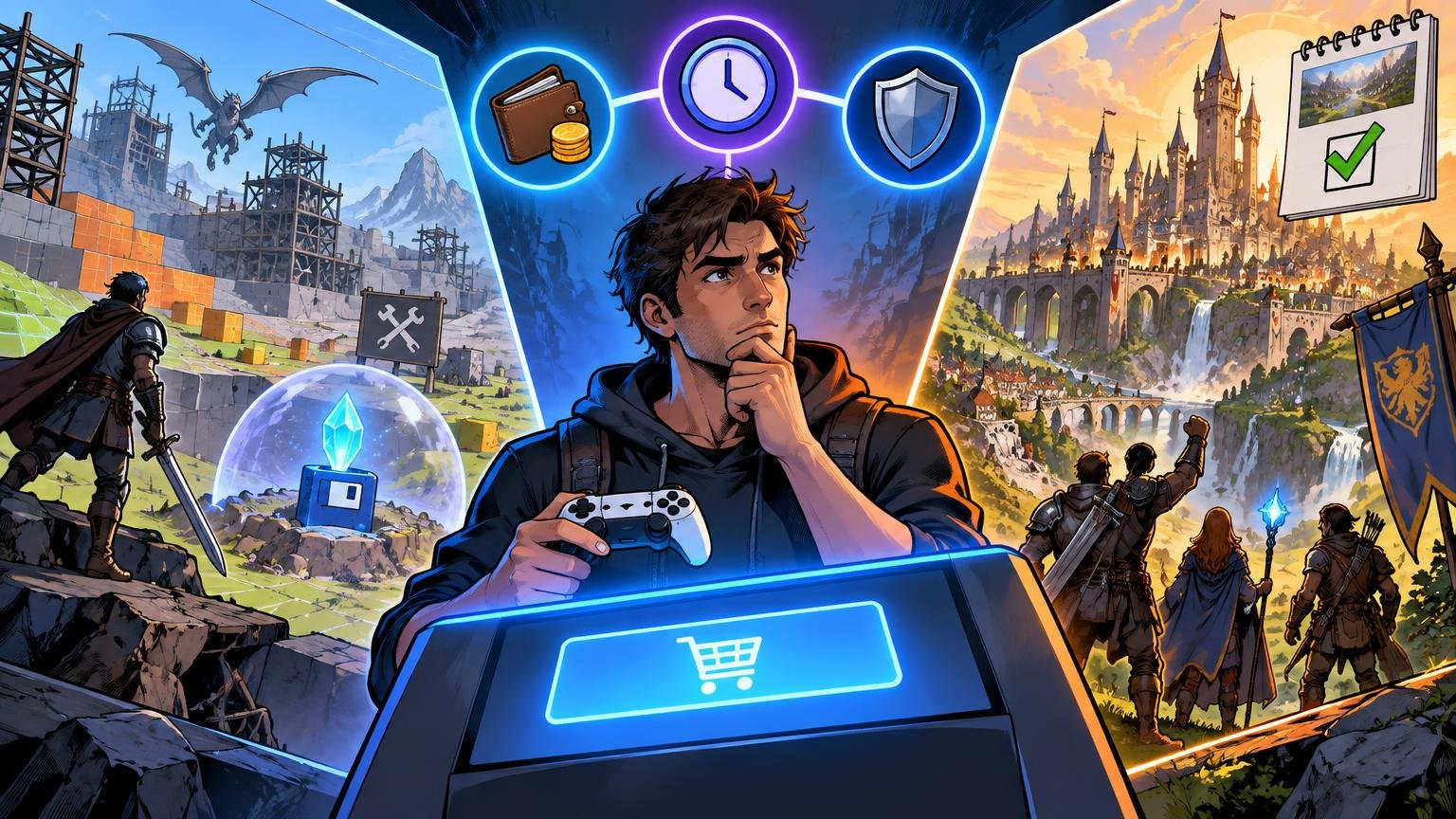
TLDR Game subscriptions sound cheaper than buying games. Sometimes they are. Sometimes they quietly become another monthly bill you forget to cancel. That is the real issue with Xbox Game Pass vs PlayStation Plus. The question is not which service has the louder marketing. It is which one actually fits the way you play. If you finish several games a month, a subscription can be great. If you play one sports game, one shooter and the same RPG for six months, buying games may still be smarter. Start With Your Main Platform This is the boring answer, but it is usually the right one. If you mainly play on Xbox or PC, start with Xbox Game Pass. If you mainly play on PS5, start with PlayStation Plus. Switching ecosystems just for a subscription rarely makes sense. You also need the hardware, friends list, controller preference, save files and game library to line up. Casual players usually get the best value when the subscription supports what they already do. Xbox Game Pass In Plain English Xbox Game Pass has become more layered over time. Microsoft’s current plans vary by platform, price and access to new releases. As of June 2026, Microsoft says Game Pass Ultimate is $22.99 per month and PC Game Pass is $13.99 per month. Microsoft also says day-one games are included only with Game Pass Ultimate and PC Game Pass, while they are not included with Essential or Premium. That detail matters. A lot of people say “Game Pass has day-one games,” but that is not equally true across every tier. If day-one access is the reason you are subscribing, check the plan before paying. Game Pass is strongest for: It is weaker if you only play one or two games regularly. PlayStation Plus In Plain English PlayStation Plus has three main tiers: Essential, Extra and Premium. Essential covers online multiplayer, monthly games, discounts, cloud storage and other basic benefits. Extra adds the Game Catalog. Premium adds classics, trials and cloud streaming features. For many PS5 owners, Extra is the most interesting middle tier because it adds a large catalog without pushing all the way to Premium. Essential is enough if you mostly need online multiplayer. Premium makes sense if you care about classic games, trials or cloud streaming. If you do not use those features, it is easy to overpay. PlayStation Plus is strongest for: It is weaker if you mostly play on PC or want day-one first-party releases as the main selling point. Casual Players Should Watch The Monthly Math A subscription feels cheap because it is split into monthly payments. That does not mean it stays cheap. At $22.99 per month, Game Pass Ultimate costs about $275.88 over a full year if paid monthly. PlayStation Plus pricing depends on tier and billing cycle, but annual plans often cost less per month than monthly plans. The question is simple: will you play enough games to justify that? Here is a practical test: Your Play Style Best Move You finish 1 game every few months Buy games on sale You try many games but rarely finish them Subscription can work You play online on PS5 PS Plus Essential may be enough You play on Xbox and PC Game Pass is more appealing You want classic PlayStation games PS Plus Premium may fit You only play one live-service game Skip the higher tiers Subscriptions reward variety. They do not always reward focus. Library Rotation Is The Hidden Tradeoff Game libraries change. Microsoft and Sony both warn that game titles, features and availability vary over time. That is normal, but it matters. If you buy a game, you own access to that copy under the store’s rules. If you subscribe, you rent access to a changing library. That can be fine. It just means you should not treat the catalog like a permanent shelf. This is especially important for long RPGs. If you start a 90-hour game through a subscription, make sure you have enough time to finish it or are comfortable buying it later. Which Service Has Better Value? There is no universal winner. Xbox Game Pass is better if you use PC, care about day-one access through the correct plan or like sampling a lot of games. PlayStation Plus is better if you are already committed to PS5, need online multiplayer and want a catalog that sits inside Sony’s ecosystem. Casual players should usually start lower. Upgrade only when you can name the feature you need. That is the key. Do not buy Premium or Ultimate because it sounds complete. Buy it because you will actually use what it includes. The Best Strategy: Subscribe In Bursts For many casual players, the best move is not staying subscribed all year. Subscribe for one or two months when there are several games you want to play. Cancel when you drift back to one main game. Resubscribe later. This works especially well for people with uneven gaming time. Maybe you play a lot in winter. Maybe summer gets busy. Maybe you only finish games during holiday breaks. A subscription should match your life, not become another background charge. Final Recommendation Pick Xbox Game Pass if you play on Xbox and PC, want access to a large rotating library and care about day-one games through Ultimate or PC Game Pass. Pick PlayStation Plus if you mainly play on PS5, need online multiplayer and want a PlayStation-friendly catalog. Skip both higher tiers if you mostly play one or two games. Buy those games on sale instead. That is not the most exciting answer. It is probably the one that saves the most money. FAQs Is Xbox Game Pass better than PlayStation Plus? It depends on your platform. Xbox Game Pass is usually better for Xbox and PC players. PlayStation Plus is usually better for PS5 players. Does every Xbox Game Pass tier include day-one games? No. Microsoft says day-one games are included with Game Pass Ultimate and PC Game Pass, not

Nintendo Switch 2 Vs Steam Deck OLED: Which Handheld Should You Buy?

TLDR Gaming handhelds used to be simple. You bought the Nintendo one, maybe the PlayStation one, and that was the conversation. Now the category is crowded, expensive and much harder to sort through. That is why Nintendo Switch 2 vs Steam Deck OLED is the main comparison for most players. One is a polished hybrid console built around Nintendo games. The other is a portable PC built around Steam. They both play games on the couch, in bed and on trips, but they are not really trying to serve the same person. The Quick Difference Nintendo Switch 2 is a console first. Steam Deck OLED is a PC handheld first. That one sentence explains most of the buying decision. The Switch 2 is made for simple play. You buy a game, download or insert it, and play. It docks to a TV. The controllers detach. Nintendo’s first-party library is the point. Steam Deck OLED is made for people who want their PC library in a handheld format. It is still much easier to use than many Windows handhelds, but it has more menus, compatibility questions and settings to think about. Neither approach is wrong. They just solve different problems. Choose Nintendo Switch 2 If You Want The Easiest Handheld The Switch 2 is the better pick if you care most about convenience. It is the handheld I would recommend to a family, a casual player or someone who does not want to troubleshoot graphics settings. It is also the better choice if you want Nintendo games at launch and local multiplayer without much setup. Nintendo’s biggest advantage is still its own software. Mario, Zelda, Pokémon, Donkey Kong, Smash, Mario Kart and Animal Crossing-style games are the reason people buy Nintendo hardware. PC handhelds can do a lot. They do not replace that library. The Switch 2 also has the better living-room identity. It is not just handheld. It is a console you can dock, hand controllers to friends and use like a normal Nintendo system. That matters more than specs for many players. Choose Steam Deck OLED If You Already Have A Steam Library The Steam Deck OLED makes the most sense if you already buy games on Steam. Your library comes with you. Your cloud saves often come with you. Steam sales matter more because your purchases are not locked to one console generation in the same way. For PC players, that is a big deal. The OLED screen is also a real strength. Valve lists the Steam Deck OLED with a 7.4-inch HDR OLED display, up to a 90Hz refresh rate and Wi-Fi 6E support. That makes it feel much more polished than the original LCD model. The tradeoff is that not every PC game behaves the same way. Some games are Steam Deck Verified. Some are playable with caveats. Some need settings changes. Some do not work well at all. If that sounds annoying, buy the Switch 2. If that sounds normal, the Steam Deck OLED may fit you better. Price Makes The Decision Harder Price is no longer a small footnote. Nintendo launched the Switch 2 in the U.S. at $449.99, though Nintendo has announced that the U.S. MSRP will rise to $499.99 on September 1, 2026. Valve’s official Steam Hardware announcement from May 2026 lists the Steam Deck OLED 512GB at $789 and the 1TB model at $949. That changes the comparison. The Steam Deck OLED is more flexible, but it is also more expensive. The Switch 2 is less open, but it is cheaper and simpler. A rough way to think about it: Player Type Better Pick Nintendo fan Switch 2 Steam library owner Steam Deck OLED Family with kids Switch 2 PC tinkerer Steam Deck OLED Local multiplayer player Switch 2 Indie game buyer Steam Deck OLED Plug-and-play player Switch 2 Mod-friendly player Steam Deck OLED What About ROG Xbox Ally And Lenovo Legion Go? The ROG Xbox Ally and Lenovo Legion Go lines sit in a different category: Windows handhelds. They can be powerful and flexible, especially if you want Xbox Game Pass, Epic Games Store, Battle.net or other PC launchers. Microsoft lists the ROG Xbox Ally with a 7-inch 1080p 120Hz display, Windows 11, and pricing that starts below the Ally X model. Lenovo’s Legion Go and Legion Go Gen 2 focus on larger displays, detachable controllers and higher-end handheld PC performance. The problem is that Windows handhelds still feel more like small PCs than consoles. That can be good. It can also be messy. If you like tweaking settings and installing launchers, they are worth a look. If you want the cleanest handheld experience, Switch 2 or Steam Deck OLED are easier starting points. The Game Library Question This is where the comparison gets personal. Switch 2 wins if the games you want are Nintendo-first. You are buying the system for Nintendo’s ecosystem, not because it has the biggest third-party library. Steam Deck OLED wins if you care about PC indies, older games, deep discounts and a larger library that follows you across devices. Also think about what you actually finish. A massive Steam library is only useful if you play it. A smaller Nintendo library can feel better if the games are more likely to get used. There is no trophy for owning 400 games you never open. Unfortunately. Travel And Battery Expectations Both systems are portable, but “portable” can mean different things. The Switch 2 is easier to pack and explain. It is the better airport, family trip and hotel-room device. The Steam Deck OLED is more capable, but it is larger and more like carrying a compact PC. Battery life depends heavily on the game. Smaller 2D games are easier on both devices. Big 3D games drain faster. That is true across almost every handheld. If travel is your main use case, comfort and simplicity matter more than theoretical performance. Which One Should You Buy? Buy the Nintendo Switch 2 if you want a simple hybrid

How Much Room Do You Need for a Pinball Machine at Home?

TLDR The short answer is that a real pinball machine does not need a massive room, but it does need more space than its cabinet dimensions suggest. If you are asking how much room do you need for a pinball machine, the safe home answer is simple: plan for about 3 feet of width and 7 feet of depth per machine. That gives the game enough room to sit, enough room for the player to stand naturally, and enough clearance for the machine to be serviced without turning every minor adjustment into a furniture-moving project. Why The Cabinet Measurement Is Not Enough A pinball machine looks narrow from the front. That is the trap. Most modern full-size machines are only a little over two feet wide. On paper, that sounds easy. You might look at a basement wall, office corner, spare bedroom, garage, or theater room and think, “That will fit.” Maybe it will. But pinball is not like sliding a bookcase into a corner. A machine has to be played, nudged, opened, leveled, cleaned, repaired, and occasionally moved. It has a backbox. It has a lockdown bar. It has legs that need space. It has a glass sheet that slides out the front. It has a coin door, buttons, side rails, power cord, and sometimes wall-sensitive topper or backbox clearance. The machine’s listed dimensions tell you whether the object fits. They do not tell you whether the room works. That is the difference this guide is really about. The Practical Home Footprint For One Pinball Machine For one full-size pinball machine, use this planning rule: Minimum workable space: 36 inches wide by 80 inches deep Comfortable space: 42 inches wide by 84 inches deep Ideal space: 48 inches wide by 90 inches deep The machine itself may only be around 27 to 29 inches wide, but giving it at least 36 inches of width makes the room easier to use. That extra side clearance helps with nudging, cleaning, leveling, and avoiding scratches against walls or other machines. Depth is even more important. A typical machine cabinet may be around 55 inches deep, but the player needs space behind the lockdown bar. If the game is crammed into a 60-inch-deep nook, technically it may fit, but nobody will enjoy playing it. A realistic setup needs space for: That is why about 7 feet of room depth is the number that keeps coming up in real home setups. How Much Room Do You Need For A Pinball Machine If It Is Against A Wall? If the machine is going against a wall, plan for a little breathing room behind it. You do not need a giant gap. Pinball machines are designed to sit near walls in arcades and game rooms. But you also do not want the backbox jammed hard against drywall, trim, curtains, shelves, or acoustic panels. A good home setup leaves enough space to: For most home rooms, leaving 2 to 4 inches behind the machine is enough. If you have a topper, wall shelf, low ceiling, mounted TV, framed poster, or slanted ceiling, measure more carefully. The danger is not usually the machine body. The danger is the upper area around the backbox, topper, ceiling, and wall décor. Do You Need Side Clearance? Yes, but not always as much as people think. A single machine can sit fairly close to a wall on one side. Many home owners do that. But if you are choosing the best spot in the room, leave a few inches of side clearance when possible. Side clearance helps with: If you only have one machine, try to leave 3 to 6 inches on each side if the room allows it. If you are placing machines side by side, the spacing can be tighter. In a dedicated pinball row, machines often sit close together. Still, leaving a little space between cabinets makes the row easier to live with. It also reduces the chance of side art damage when someone moves, cleans, or services a game. How Much Space Do You Need For Two Pinball Machines? For two full-size pinball machines side by side, the absolute machine width may be only about 54 to 58 inches total. But a comfortable home row needs more than that. Use this rule: Tight two-machine setup: about 5.5 feet wide Comfortable two-machine setup: about 6 to 6.5 feet wide Ideal two-machine setup: 7 feet wide or more The wider number gives you breathing room between machines and side clearance at the ends. It also makes the row look intentional instead of wedged into a leftover wall. Depth stays about the same as one machine. You still want roughly 7 feet of usable depth from the wall to the standing area. A two-machine row works especially well in: It works less well in narrow rooms where the player blocks the entire walkway. A pinball machine can technically fit in a hallway-style room, but if every game forces people to squeeze past the player, the room will feel annoying fast. How Much Space Do You Need For Three Or More Pinball Machines? Once you get to three machines, think in terms of a real row. For three full-size machines, plan for at least 9 feet of wall width if you want the setup to feel comfortable. You may be able to do it tighter, but 9 feet gives you a much better result. For four machines, plan for roughly 12 feet or more. For five machines, plan for roughly 15 feet or more. These are not hard engineering numbers. They are practical room-planning numbers. They assume a full-size game, some side clearance, and a room that still feels usable. The bigger issue becomes the player zone. Three people can stand at three machines at once. Four people can gather behind them. Suddenly your “pinball wall” is not just furniture. It is a social area. That means you should also think about: A single pinball machine is a piece of entertainment

What Pinball Machine Should You Rent First If You Like Godzilla’s Deep Code?

TLDR The best first pinball rental for someone who likes Godzilla’s deep code is usually Jaws Premium. It has meaningful progression, clear goals, strong modern Stern design, and enough depth to test whether you want a long-term home game without jumping straight into the most punishing options. Why Godzilla Creates A Very Specific Problem Some pinball machines are fun for ten games. Others make you feel like you are slowly learning a world. That is what Godzilla does well. Players who connect with it often are not just responding to the theme, the toys, or the shots. They are responding to the feeling that almost everything matters. A shot might help with a city objective, kaiju battle, multiball, ally, destruction bonus, or late-game progress. Even when a ball does not become a monster score, it usually feels like something moved forward. That creates a tricky rental question: what pinball machine should you rent first if you want that same deep, useful-shot feeling, but you do not want to bring home something that frustrates everyone else in the house? The answer is not simply “rent the highest-rated game available.” Some great machines are demanding. Some deep machines are hard to explain. Some approachable machines are fun but smaller in scope. The right first rental should test three things at once: For that specific test, Jaws Premium is the best starting point. The Main Thing To Look For: Useful-Shot Density The long-tail question is not really “what is the best pinball machine?” It is more specific: What machine feels like Godzilla, where almost every shot seems to build progress? A useful way to think about that is useful-shot density. A game has high useful-shot density when ordinary shots keep feeding bigger systems. You are not just collecting points. You are moving toward modes, multiballs, perks, equipment, rescues, battles, wizard modes, or long-term objectives. A low useful-shot-density game can still be fun. It might be fast, funny, brutal, simple, or satisfying in short bursts. But if you are chasing the Godzilla feeling, you want more than a single mode ladder. You want parallel progress. That is why the best first rentals are not always the deepest games on paper. They are the games where depth, clarity, and shot friendliness meet. Best First Rental: Jaws Premium Jaws Premium is the best first rental if you want a modern machine that feels substantial without becoming homework. The appeal is easy to understand. You are hunting the shark, saving beachgoers, collecting gear, building toward bigger moments, and working through a structure that makes sense even if someone has not studied a rulesheet. That matters for a rental. You do not want to spend the first two days explaining why the game is fun. The machine needs to make a case for itself while people are actually playing it. Jaws also gives you a strong read on what kind of home pinball player you are. If your household enjoys Jaws, you probably like modern Stern depth, cinematic goals, and a game that asks for skill without feeling totally closed off. If your household finds it too fast or too aggressive, that tells you something useful before you spend purchase-level money. The tradeoff is that Jaws can feel sharper than Godzilla. It is not the softest, friendliest modern Stern. Some shots carry real risk. The scoring can come in large chunks, and better players will separate themselves quickly. But as a first rental, that is not a deal-breaker. It is actually helpful. You are testing the upper edge of what your household enjoys. If Jaws feels exciting rather than exhausting, it belongs on the serious buy list. Rent Jaws First If Be Careful If Best Campaign-Style Rental: Dungeons & Dragons: The Tyrant’s Eye If Jaws is the best first all-around test, Dungeons & Dragons: The Tyrant’s Eye is the best test for a long-form owner game. This is the machine to rent if you are drawn to character selection, classes, saved progress, equipment, inventory, choices, dungeon structure, and the sense that the game can keep unfolding over many plays. It is not just “start a mode, finish a mode, start another mode.” It is trying to make pinball feel like an ongoing campaign. That makes it very interesting for a home environment. A game like this can reward repeated play in a different way than a simpler shooter. You can keep learning how its systems connect. You can build familiarity with classes and strategies. You can start thinking beyond “what shot is lit?” and into “what kind of run am I building?” The concern is not mainly that the shots are brutally unfair. The bigger issue is mental load. Some players will love the structure. Others may feel like the game is asking them to understand too much before they can fully enjoy it. That is why it is a smart rental. You do not need to guess. Put it in the house for a month and watch what happens. Do people come back because the campaign hooks them, or do they wander back to simpler machines? Rent Dungeons & Dragons First If Be Careful If Best If You Can Find One: Batman ’66 Batman ’66 belongs in this conversation because it has real home-game depth without feeling as punishing as some modern machines. The problem is availability. It is an older Stern title, and finding a clean one to rent or buy can be harder than finding current-production games. But if a local rental company has one, it is absolutely worth testing. The structure gives players a lot to chew on. Major villains, minor villains, gadgets, mode progress, playfield features, and long-term objectives keep the game feeling large. It has that “there is always something else moving” quality that Godzilla fans often want. It also has a different rhythm. Batman ’66 can feel more deliberate and stop-start than Godzilla. That is not automatically bad. For a home game, a slightly more deliberate machine can be easier