April 23, 2023

The Latest

Recent Stories

Interstellar: Physics Breakdown

Science fiction movies have always captured the imagination of audiences around the world. However, some films stand out for their unique approach to science and technology. The concept of “Hard Sci-Fi” refers to movies that use existing or theoretical scientific principles and concepts to tell a story. One example of this is the movie “Interstellar.” Directed by Christopher Nolan and released in 2014, the movie showcases theoretical physics, space travel, and the mysteries of the universe in a way that has captivated audiences. “Interstellar” is a movie that tells the story of a group of astronauts traveling through a wormhole in search of a new home for humanity. Set in the not-so-distant future, the movie is a thrilling exploration of science, technology, and the human spirit. In this article, we will discuss the science behind the movie, exploring the theoretical physics, space travel, black holes, and the science of time showcased in the film. The purpose of this article is to break down the science behind this cinematic masterpiece and examine how accurate it is in its presentation of scientific concepts. Theoretical Physics in “Interstellar” Science fiction movies often incorporate theoretical physics concepts to spice up their stories. “Interstellar” is a prime example of a movie that intertwined complicated physics concepts seamlessly into its plot. In this section, we will explore the theoretical physics concepts used in the movie and how they contributed to the storyline. Theoretical physics is a branch of physics that aims to explain the nature of the universe and its various phenomena. The theory of relativity, proposed by Albert Einstein, is one of the most fundamental concepts in theoretical physics. It posits that the laws of physics are the same for all non-accelerating observers and that the speed of light is constant. “Interstellar” utilized the theory of relativity superbly to explain the time dilation effects of traveling at relativistic speeds. In one part of the movie, the crew of the spaceship Endurance visits a planet that is near a black hole. The planet is located close to the intense gravitational field and, as a result, experiences time much slower than the rest of the universe. This time dilation concept is essential to the storyline, as it adds a significant plot element to the movie. Wormholes are theoretical constructs that allow for a hypothetical shortcut between two separate points in spacetime. These are crucial to “Interstellar’s” storyline, as they provide the means for space travel between different galaxies. The movie portrayed wormholes as a naturally occurring phenomenon that could be harnessed to shorten the vast distances between galaxies. In conclusion, “Interstellar” brilliantly integrated the concepts of theoretical physics into its plot. The movie effectively used the theory of relativity to explain its plot and wormholes to provide a natural method for intergalactic space travel. These concepts added a sense of scientific credibility to the movie’s storyline, making it more appealing to fans of hard science fiction. Space Travel Space travel is one of the most challenging tasks for scientists due to the harshness of space. In order to travel in space, various types of propulsion systems are used. There are two primary propulsion systems, chemical rockets, and electric propulsion. Chemical propulsion systems are powered by rocket engines, which burn fuel and chemicals to create a powerful force that propels a spacecraft to its desired destination. Electric propulsion systems are based on plasma and ionic plumes and are used for long-term missions. “Interstellar” depicts the journey of a group of astronauts who travel through space to search for a new planet suitable for human settlement. The film portrays space travel in a realistic manner, depicting the challenges that astronauts face, such as the need for radiation shielding, food, water, and oxygen. The spacecraft in the movie use a combination of chemical and electric propulsion systems. For example, the spacecraft “Endurance” uses a rotating space habitat for creating artificial gravity, which eliminates the need for traditional rocket engines and allows the craft to spin around on its axis and orbit the black hole Gargantua. The accuracy of the portrayal of space travel in the movie is impressive. “Interstellar” showcases the incredible feat of space travel in a realistic manner, highlighting the challenges and dangers of this scientific endeavor. With advanced technology and increased knowledge, space travel is becoming more commonplace, and with accurate depictions in movies and TV shows, it invokes a sense of awe in viewers. “Interstellar” accurately showcases the challenge of space travel and its importance for the future of humanity. The Interstellar Black Hole Black holes are one of the most mysterious objects in the universe. They are characterized by their immense gravitational pull, which is so strong that even light cannot escape it. In the movie “Interstellar,” the black hole is a key element that plays a significant role in the plot. In the movie, the black hole Gargantua is visually striking, depicted as a swirling ring of light surrounding a dark void. This representation is based on scientific simulations, and the filmmakers worked closely with astrophysicist Kip Thorne to create a believable and accurate visualization of a black hole. The black hole in “Interstellar” is crucial to the plot because it enables the characters to travel through time and space. By passing through the black hole’s event horizon, they are transported to another part of the galaxy and ultimately, to a higher dimension. The science of black holes and their ability to warp spacetime is a critical component of the story. Overall, the black hole in “Interstellar” is not just a visually stunning element of the film, but an integral part of the plot. Its unique characteristics and significance in the scientific community make it a fascinating area of study that continues to intrigue researchers. The Science of Time Time is one of the fundamental concepts in our universe. While it is a human construct, it exists in various forms and can influence the world around us. “Interstellar” explores the concept of time
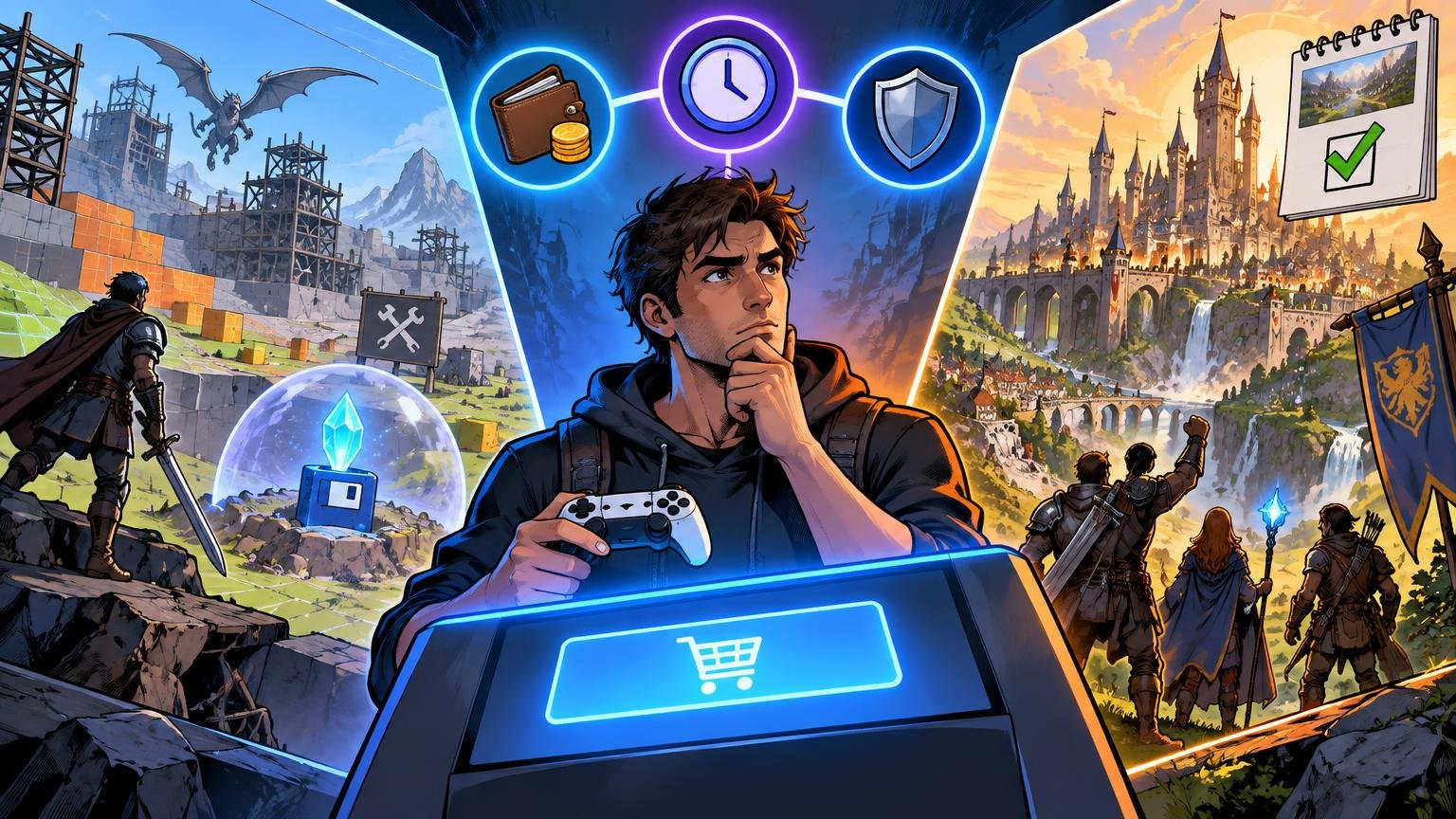
Darkstone | Sony Retro Video Review

Welcome to our Darkstone – Sony Retro Video Game Overview, History, and Review. In this article, we are going to dive into the world of Darkstone, a classic video game that was developed and published by Delphine Software. In today’s age of high-end graphics and intense gameplay, it’s always a pleasure to revisit retro games. Darkstone is an action RPG that was released in 1999, bringing players an immersive gaming experience like no other. The game features eight distinct character classes, allowing you to choose your hero and prepare for the adventure ahead. Join us as we explore the depths of Darkstone, evaluate its impact on the gaming industry, and provide a review score based on various gameplay elements. History of Darkstone Darkstone is a retro video game that was initially released in 1999. Developed by Delphine Software International, the game was published by Electronic Arts and Sony Computer Entertainment. The game is a hack and slash action role-playing game set in a medieval fantasy world. The game was released on the PlayStation and PC platforms and received generally positive reviews upon release. The game’s concept was well received, and fans praised the game’s graphics and sound design. The game received a reputation for being an action-packed game with excellent replayability. Going down memory lane, Darkstone is a true cult classic, and it had a significant impact on the video game industry when it was first released. It was among the few video games that managed to combine arcade-style action with role-playing mechanics. It was also among the first to feature randomized dungeons in gameplay, which pushed the boundaries of immersive gameplay. Today, Darkstone has an enthusiastic fan base, but it is mostly looked back upon as a trailblazer in video-game history – paving the way for new games that attempted to bring similar experiences to gamers. Darkstone Gameplay Darkstone is a retro-style action role-playing game set in a fantasy world. It was originally developed by French studio Delphine Software International and later published by Infogrames. The gameplay of Darkstone is centered around dungeon crawling, questing, and character development. In this section, we will provide an overview of the game mechanics, character selection and customization, dungeon crawling, and questing. Overview of game mechanics: In Darkstone, the player selects a character class and embarks on a journey to save the kingdom of Uma from the evil Draak. The game is played from an isometric perspective, and the player can control either a single character or a party of up to four characters. The game has various gameplay elements that include combat, magic, and puzzles. Character selection and customization: Darkstone has four character classes, which are the Fighter, Cleric, Thief, and Mage. Each class has a unique set of skills and abilities that players can choose from. The game also offers players the option to customize their chosen character by selecting different stats to increase, such as strength, dexterity, intelligence, and so on. Dungeon crawling and questing: The primary gameplay mechanic in Darkstone is dungeon crawling and questing, which involves exploring a variety of areas filled with enemies and traps. The player must navigate these areas to complete quests that advance the story and gain experience points and loot. There are around 35 different areas to explore, each with its unique challenges and obstacles. Overall, Darkstone is well regarded for its challenging gameplay, character customization, and dungeon-crawling mechanics. If you are a fan of retro-style action RPGs, then Darkstone is a game you should definitely check out. Graphics and Sound Design When Darkstone was released back in 1999, it was widely praised for its stunning graphics and gameplay. Even today, it continues to be a visually striking game and is a testament to the design skills of the developer and publisher. The first and foremost primary feature of the game is its visual aesthetic, which brings a fantastic world with meaningful and small in-game details. Detailed environments and characters controlled by Sprites in the game offer entertaining gameplay while highlighting unique game design elements. Another noticeable visual feature of the game is the use of isometric graphics. This isometric perspective provides players with an almost bird’s eye view of the game world, allowing for an overview of the area and easy navigation. In addition to these visuals, the visual effects concerning the enchanted objects, fireballs, and changing weather better the overall visuals. Sound design also plays an essential role in video games, and Darkstone is no exception to this. The game has a highly enjoyable score and soundtrack that helps to increase the tension in the game’s various scenes. Sound played a crucial role in bringing out the unique characteristics and depth of the game. The game had voices that discussed player skills and helped in understanding how to play the game better. While solid graphics and convincing sound design alone won’t make a video game, their contribution towards an immersive experience can’t be overstated. It’s the visuals and sound that draw the players into the world and enhance the gameplay experience. In Darkstone, excellent graphics and sound design work together to create a memorable and immersive experience for players of all playing levels. Darkstone Game Overview: Story and Narrative Darkstone is a 1999 action RPG that offers a modest plot with with twists and turns to keep gamers enticed. The game’s story follows two characters, a sorcerer and a warrior, as they embark on a journey to save the world from an evil sorcerer named Draak. As the game progresses, the pair of heroes must explore a vast game world filled with treasures, dangerous beasts, and various other challenges to find the eight crystals that will help them defeat Draak and bring peace to the realm. The game’s story is rooted in fantasy elements, allowing players to travel through worlds that resemble castles, forests, dungeons, and temples. The intriguing narrative is accomplished by weaving a web of deceit and betrayal to keep players engaged. The game’s narrative is quite simplistic,

Trending

Most Popular Stories

What Pinball Machine Should You Rent First If You Like Godzilla’s Deep Code?

TLDR The best first pinball rental for someone who likes Godzilla’s deep code is usually Jaws Premium. It has meaningful progression, clear goals, strong modern Stern design, and enough depth to test whether you want a long-term home game without jumping straight into the most punishing options. Why Godzilla Creates A Very Specific Problem Some pinball machines are fun for ten games. Others make you feel like you are slowly learning a world. That is what Godzilla does well. Players who connect with it often are not just responding to the theme, the toys, or the shots. They are responding to the feeling that almost everything matters. A shot might help with a city objective, kaiju battle, multiball, ally, destruction bonus, or late-game progress. Even when a ball does not become a monster score, it usually feels like something moved forward. That creates a tricky rental question: what pinball machine should you rent first if you want that same deep, useful-shot feeling, but you do not want to bring home something that frustrates everyone else in the house? The answer is not simply “rent the highest-rated game available.” Some great machines are demanding. Some deep machines are hard to explain. Some approachable machines are fun but smaller in scope. The right first rental should test three things at once: For that specific test, Jaws Premium is the best starting point. The Main Thing To Look For: Useful-Shot Density The long-tail question is not really “what is the best pinball machine?” It is more specific: What machine feels like Godzilla, where almost every shot seems to build progress? A useful way to think about that is useful-shot density. A game has high useful-shot density when ordinary shots keep feeding bigger systems. You are not just collecting points. You are moving toward modes, multiballs, perks, equipment, rescues, battles, wizard modes, or long-term objectives. A low useful-shot-density game can still be fun. It might be fast, funny, brutal, simple, or satisfying in short bursts. But if you are chasing the Godzilla feeling, you want more than a single mode ladder. You want parallel progress. That is why the best first rentals are not always the deepest games on paper. They are the games where depth, clarity, and shot friendliness meet. Best First Rental: Jaws Premium Jaws Premium is the best first rental if you want a modern machine that feels substantial without becoming homework. The appeal is easy to understand. You are hunting the shark, saving beachgoers, collecting gear, building toward bigger moments, and working through a structure that makes sense even if someone has not studied a rulesheet. That matters for a rental. You do not want to spend the first two days explaining why the game is fun. The machine needs to make a case for itself while people are actually playing it. Jaws also gives you a strong read on what kind of home pinball player you are. If your household enjoys Jaws, you probably like modern Stern depth, cinematic goals, and a game that asks for skill without feeling totally closed off. If your household finds it too fast or too aggressive, that tells you something useful before you spend purchase-level money. The tradeoff is that Jaws can feel sharper than Godzilla. It is not the softest, friendliest modern Stern. Some shots carry real risk. The scoring can come in large chunks, and better players will separate themselves quickly. But as a first rental, that is not a deal-breaker. It is actually helpful. You are testing the upper edge of what your household enjoys. If Jaws feels exciting rather than exhausting, it belongs on the serious buy list. Rent Jaws First If Be Careful If Best Campaign-Style Rental: Dungeons & Dragons: The Tyrant’s Eye If Jaws is the best first all-around test, Dungeons & Dragons: The Tyrant’s Eye is the best test for a long-form owner game. This is the machine to rent if you are drawn to character selection, classes, saved progress, equipment, inventory, choices, dungeon structure, and the sense that the game can keep unfolding over many plays. It is not just “start a mode, finish a mode, start another mode.” It is trying to make pinball feel like an ongoing campaign. That makes it very interesting for a home environment. A game like this can reward repeated play in a different way than a simpler shooter. You can keep learning how its systems connect. You can build familiarity with classes and strategies. You can start thinking beyond “what shot is lit?” and into “what kind of run am I building?” The concern is not mainly that the shots are brutally unfair. The bigger issue is mental load. Some players will love the structure. Others may feel like the game is asking them to understand too much before they can fully enjoy it. That is why it is a smart rental. You do not need to guess. Put it in the house for a month and watch what happens. Do people come back because the campaign hooks them, or do they wander back to simpler machines? Rent Dungeons & Dragons First If Be Careful If Best If You Can Find One: Batman ’66 Batman ’66 belongs in this conversation because it has real home-game depth without feeling as punishing as some modern machines. The problem is availability. It is an older Stern title, and finding a clean one to rent or buy can be harder than finding current-production games. But if a local rental company has one, it is absolutely worth testing. The structure gives players a lot to chew on. Major villains, minor villains, gadgets, mode progress, playfield features, and long-term objectives keep the game feeling large. It has that “there is always something else moving” quality that Godzilla fans often want. It also has a different rhythm. Batman ’66 can feel more deliberate and stop-start than Godzilla. That is not automatically bad. For a home game, a slightly more deliberate machine can be easier

Why The American Fork Police Response Looks Like Retaliatory Policing

TLDR The part that should bother people most is not that police got called. Police get called to tense civil disputes all the time. The problem is what allegedly happened after they arrived. The American Fork Police response looks like retaliatory policing because the reported enforcement pattern appears aimed at the people criticizing, filming, serving papers, raising legal funds and trying to recover property. That does not mean every officer involved acted unlawfully. It does mean the public deserves records, timelines and answers. Retaliatory policing is not just “police did something I disliked.” It is the use, or apparent use, of police power to punish protected activity. That can include public criticism. It can include filming. It can include lawful process service. It can include raising money for legal fees. It can include using the courts instead of quietly going away. That is why this story matters beyond the original business dispute. You do not need to care about LEGO to care about the American Fork Police response. The core issue is simpler: when a private dispute becomes embarrassing for powerful or connected people, did local police stay neutral, or did they help turn pressure back onto the critics? A Civil Dispute Should Not Become A Police Shield A civil dispute belongs in civil court. That sounds basic, but it matters here. A fight over consigned property, inventory, ownership, contracts, business control or financial loss is normally handled through lawyers, lawsuits, discovery and court orders. Police may get involved if there is violence, trespass, theft, threats or some other independent crime. But police are not supposed to become the enforcement arm for one side’s version of a private dispute. That distinction is the whole ballgame. If one side says, “This is our property,” and the other side says, “No, this was consigned and never transferred,” police should be careful. If there is no clear criminal act happening in front of them, the safest role is usually narrow: prevent violence, document the contact and tell the parties to handle ownership through court. The danger comes when police start treating one side’s legal theory as fact. That is how a civil dispute turns into a police shield. The business or person with possession calls law enforcement. The people trying to recover property are labeled disruptive. The people filming are treated as troublemakers. The people serving papers are treated as harassers. The people raising legal funds are treated as a threat. And suddenly the police presence is not neutral anymore. A police department does not have to formally say, “We are taking sides,” for the effect to be the same. If enforcement only flows toward one side, the message is clear enough. The Pattern Matters More Than Any Single Stop One police call can be ordinary. A tense business dispute can justify a civil standby. A store owner can call police if people refuse to leave private property. Officers can separate people, preserve safety and write reports. None of that automatically proves misconduct. But the American Fork Police response raises a different question because the alleged conduct is not one isolated response. It is a pattern. The reported pattern includes: Any one of those events might have an explanation. Together, they look much harder to brush off. That is why records matter. Public discussion should not have to run on rumors, clips, screenshots and edited video segments forever. If American Fork Police acted properly, the records should help show that. If they did not, the records should show that too. The public should not be asked to accept a vague “trust us” answer when the allegation is that government power may have been used to intimidate private citizens during a public dispute. The Difference Between Keeping Peace And Taking Sides Police have a real job in tense conflicts. They are allowed to keep the peace. They are allowed to prevent fights. They are allowed to enforce valid laws. But keeping peace is not the same as taking sides. Keeping Peace Taking Sides Separating people who are arguing Repeating one private party’s legal theory as if it is settled fact Enforcing a clear trespass warning Treating criticism or filming as criminal behavior Documenting both parties’ claims Escalating only against the people challenging the business Preserving safety during process service Blocking or discouraging lawful service because the recipient dislikes it Telling both sides to use court Using arrest, search or pressure to make one side stop speaking The line is not always clean in the moment. Officers make fast decisions. People are emotional. Businesses have property rights. Private premises matter. But that is exactly why neutrality matters. A police officer at a civil dispute should not act like a private security guard. A badge carries state power. A search, stop or arrest is not a customer-service tool. It is not a reputational management tool. It is not a way to make public criticism less inconvenient. When police use power, the reason needs to be lawful, specific and documented. “People are making a business look bad” is not enough. Why Process Service Matters Process service is not a stunt. It is how lawsuits begin, move forward and become real. That matters because one of the most troubling pieces of the alleged pattern is interference with service of legal papers. If someone is trying to serve a summons, complaint, subpoena or other legal document, the law gives that act special importance. It is the bridge between public conflict and court process. A person being served may dislike it. That is common. Most people are not thrilled to receive legal papers. But not liking service is not a reason for police to block it. If service is being done lawfully, police should not turn the server into the problem. Their role should be limited: keep people safe, prevent threats and avoid escalating a lawful court process into a police encounter. That is especially true in a dispute where one side is saying, in effect, “Take this to

Is PPF Better Than Vinyl Wrap? A Buyer Decision Guide

TLDR PPF is better than vinyl wrap if your main goal is paint protection. It is built to absorb road debris, resist chips and help protect high-impact areas. Vinyl wrap is better if your main goal is changing the look of your vehicle. It offers more color, texture and graphic options at a lower cost than full-body PPF. The best choice depends on your priority: protection, appearance, budget or a mix of all three. A small rock chip on a fresh bumper feels personal. It is tiny, but once you see it, you keep seeing it. That is why so many buyers ask the same practical question before spending money on their vehicle: is PPF better than vinyl wrap? The honest answer is yes for protection, no for pure customization and maybe if you are comparing newer colored PPF against traditional vinyl wrap. Paint protection film, often called PPF or clear bra, is usually a clear urethane film made to protect factory paint from rock chips, scratches, bug damage, road grime and harsh weather. Vinyl wrap is usually a thinner color-change or graphics film made to change how a vehicle looks. Those two products can look similar once installed, but they solve different problems. 3M describes its paint protection film as protection against scratches, chips and weathering, while its wrap film is positioned for full color vehicle wraps, accents and partial decoration wraps. XPEL also describes PPF as a self-healing film that protects against rock chips, scuffs and light scratches. So the better question is not “which one is better?” It is “which one is better for what I care about?” PPF Vs Vinyl Wrap: The Main Difference The main difference between PPF and vinyl wrap is purpose. PPF is a protection product. It is normally thicker, more impact-resistant and often has a self-healing top layer that can reduce the appearance of small swirl marks or light surface scratches. It is most common on bumpers, hoods, mirrors, fenders, rocker panels and other high-impact areas. Vinyl wrap is a customization product. It lets you change your car’s color, add graphics, create a matte finish, cover chrome trim, add racing stripes or brand a fleet vehicle. It can provide some light surface protection, but it is not built to absorb road debris in the same way as PPF. A simple way to think about it: Buyer Goal Better Fit Stop rock chips PPF Change car color Vinyl wrap Protect a new car’s factory paint PPF Add custom graphics Vinyl wrap Get a matte or satin look Vinyl wrap or matte PPF Maximum protection with a new color Colored PPF Lower upfront cost Usually vinyl wrap Best high-impact front-end coverage PPF Is PPF Better Than Vinyl Wrap For Paint Protection? Yes. PPF is better than vinyl wrap for paint protection. That is the clearest part of the decision. PPF is designed for impact resistance. It helps protect paint from rock chips, light scratches, bug splatter, road tar, salt, stains and UV exposure. Modern PPF products are also commonly self-healing, which means light marks can soften or disappear with heat. 3M’s PPF materials describe protection from stone chips, scratches, bug damage, road tar, stains, automotive fluid stains and outdoor weathering. Vinyl wrap can still protect the paint underneath from sun exposure, light abrasions and everyday dirt. But if a rock flies off a truck tire at highway speed, vinyl wrap is not the product you want to rely on. This matters most for: If protection is the reason you are shopping, PPF should be the first option you price. Is Vinyl Wrap Better For Changing The Look? Yes. Vinyl wrap is usually better for changing the look of a vehicle. Vinyl wrap comes in a wide range of colors, textures and finishes. Gloss, satin, matte, chrome, brushed metal, carbon fiber, color-shift and printed graphics are all common wrap options. Avery Dennison describes its Supreme Wrapping Film as a cast film for color change and graphic applications, with many color and finish combinations. That makes vinyl wrap a strong choice if you want your car to look different without repainting it. Vinyl wrap is especially useful for: It is also easier to justify if you know you will want a different look in a few years. A high-quality vinyl wrap can often be removed professionally without damaging properly maintained factory paint, assuming it was installed, cared for and removed within the product’s recommended window. 3M says its 2080 wrap films should not damage OEM paint when used, applied, maintained and removed according to instructions within the warranty period. What About Colored PPF? Colored PPF is the middle ground. It gives you the style change of a wrap with the protection benefits of paint protection film. This category has grown because buyers want both: a new color and real paint protection. Instead of applying vinyl wrap and then adding clear PPF on top, colored PPF uses a protective urethane-style film with color built in. 3M’s Protection Wrap Film Color Series is described as combining vehicle customization with durable protection against chips, scratches and stains. XPEL also offers color paint protection film positioned as a self-healing urethane film with color finishes. The tradeoff is cost and selection. Colored PPF usually costs more than traditional vinyl wrap, and the color library may be smaller. But for someone buying a new performance car, luxury SUV or daily driver they plan to keep, colored PPF can make sense. It is best for buyers who want: It may be overkill if you only want a temporary style change. Cost: PPF Usually Costs More PPF usually costs more than vinyl wrap because the material is more protective, the installation can be more demanding and many jobs focus on precise panel coverage. A full-front PPF package is often priced differently than a full-car wrap. That can make the comparison confusing. You might pay less for front-end PPF than a full vinyl wrap, but full-body PPF is usually one of the most expensive

100 Stickers in Bulk: The Best Options for Small Orders

TLDR The best option for most people buying 100 stickers in bulk is a dedicated custom vinyl sticker printer, not a random marketplace listing with suspiciously cheerful pricing. CustomStickers.com is the strongest overall pick for a standard 100-sticker order because it offers a specific 100-count 3-inch vinyl sticker option, laminated material, free U.S. economy shipping, and a simple proofing setup. YouStickers.com is also a strong choice for flexible small custom orders. StickerApp is better if you want specialty finishes. StickerGiant and UPrinting make more sense if the stickers are really product labels. MakeStickers and Sticker Mule are good simple-order alternatives when speed and ease matter more than squeezing every penny. Buying 100 Stickers in Bulk Is a Weird Quantity Buying 100 stickers in bulk sounds simple until you start comparing websites. Then suddenly every printer has a different size, material, cut style, shipping rule, proofing process, and mysterious “starting at” price. It is the sticker version of buying airline tickets, except somehow with more laminate options. The good news: 100 stickers is a great starter quantity. It is enough for a small business giveaway, product launch, artist merch test, packaging run, wedding favor, school event, or local promo. It is not quite “true wholesale,” but it is enough volume that you should expect better pricing than a tiny sample order. The trick is not just finding the lowest price. It is finding the best match for how the stickers will be used. What Makes a Good 100-Sticker Order? For a 100-count order, compare these details before you care too much about the headline price: Material matters first. Vinyl is usually the best choice for laptops, water bottles, packaging, outdoor use, merch, and giveaways. Paper stickers are fine for short-term indoor use, but they are not ideal if the sticker needs to survive water, handling, or sunlight. Size changes everything. A 2-inch sticker and a 4-inch sticker are not close to the same product. Many cheap listings look cheap because the sticker is smaller than you pictured. Cut style matters. Die-cut stickers are cut around the shape of the design and work well for logos, art, mascots, and merch. Kiss-cut stickers stay on a backing sheet and are easier to peel. Roll labels are better for product packaging and repeated hand application. Proofing is worth caring about. A free online proof helps catch weird cropping, awkward borders, and cutline problems before the order prints. Without proofing, you are basically sending your artwork into the void and hoping the void has good prepress standards. Shipping can ruin a “cheap” order. A $19 sticker order with slow shipping, no proof, and unclear material may not beat a $29 to $40 order that arrives faster and looks better. Best Overall for 100 Stickers in Bulk: CustomStickers.com For most people buying 100 stickers in bulk, CustomStickers.com is the best place to start. It has a dedicated 100-count 3-inch custom sticker option, which is exactly the kind of straightforward product page you want when you are not trying to build a spreadsheet just to buy stickers. The main reason it works well is that it checks the boring but important boxes: full-color printing, white vinyl, a laminate coating, die-cut shape, matte or gloss options, free economy shipping in the U.S., and a proofing process. That is the practical combination most buyers need. CustomStickers.com is a particularly good fit for: Small business logo stickers Event giveaways Artist and creator merch Laptop and water bottle stickers Packaging inserts Brand launch promos Local marketing handouts The biggest tradeoff is that the 100-count promo is best for a standard small-batch order. If you need five different designs, unusual materials, retail sticker packs, or a complicated packaging workflow, you may need a different product or a custom quote. Still, for a clean 100-sticker order, this is the easiest recommendation. It is affordable without feeling like you are buying something from the “we found vinyl once” section of the internet. Best Flexible Small-Order Option: YouStickers.com YouStickers.com is another strong option, especially if you want a simple custom sticker order with flexible sizing, custom shapes, durable vinyl, free proofs, and no minimums. It is a good fit for personal projects, small businesses, creators, schools, clubs, and casual brand stickers. The site has a more playful feel than some of the bigger print platforms, but the ordering logic is practical: upload artwork, choose the sticker setup, review a proof, and print. YouStickers.com is especially useful if you are not completely sure what quantity or size you need yet. A no-minimum model makes it easier to test before committing to a bigger order. For 100 stickers, that flexibility is helpful because you may be using the order as a first real-world test. Choose YouStickers.com if you want: A friendly small-order experience Durable vinyl stickers Free proofing Custom shapes and sizes A simple upload-and-order flow A good option for testing a design before scaling up Best for Specialty Materials: StickerApp StickerApp is a better choice if your main goal is a special look rather than the lowest practical price. Think holographic, glitter, mirror, clear, or other eye-catching materials. This is the right lane for artists, bands, creators, boutiques, or brands that want the sticker itself to feel like part of the product. If a plain white vinyl sticker feels too normal, StickerApp gives you more ways to make the sticker visually unusual. The tradeoff is simple: specialty materials tend to cost more, and the more unusual the finish, the more important it is to check the proof carefully. A holographic sticker can look great. It can also make small text harder to read if the design was not built for that material. Choose StickerApp if you want: Holographic or glitter stickers Clear or mirror-style effects Artist merch Stickers that feel more collectible A finish that stands out more than standard vinyl Best for Product Labels: StickerGiant or UPrinting If your “stickers” are actually product labels, your best option may not be individually cut stickers at