April 20, 2023

The Latest

Recent Stories

Scarlet and Violet 1.3.0 Update for Switch

Pokemon Scarlet and Pokemon Violet Update: What You Need to Know Introduction: In exciting news for Pokemon fans, a new update has been released for Pokemon Scarlet and Pokemon Violet on the Nintendo Switch. This update brings several enhancements and bug fixes to improve the gaming experience. In this article, we’ll provide you with all the details you need to know about updating your games and the new features you can expect. Read on to stay up-to-date with the latest updates for Pokemon Scarlet and Pokemon Violet! Applies to: – Nintendo Switch Family – Nintendo Switch – Nintendo Switch Lite – Nintendo Switch – OLED Model How to Update Pokemon Scarlet and Pokemon Violet: To ensure you have the best gaming experience, it’s important to update your Pokemon Scarlet and Pokemon Violet games. Follow these simple steps to update your games: Step 1: Connect to the internet Make sure your Nintendo Switch console is connected to the internet. This is essential for downloading and installing the update. Step 2: Access the software update option From the HOME Menu, select the icon for the Pokemon Scarlet or Pokemon Violet software you wish to update. It’s important to note that you should do this without starting the game or application. Step 3: Initiate the software update Once you’ve selected the software, press the + or – Button on your controller. This will bring up a menu of options. Choose “Software Update” and then select “Via the Internet.” This will initiate the update download. Step 4: Confirm the update After the update is downloaded and installed, the newest version number will be displayed on the title screen. Important Information about the Update: Before you update your Pokemon Scarlet and Pokemon Violet games, there are a few important things you need to know: Available memory: Ensure that approximately 1GB of memory is available on your Nintendo Switch system’s memory or on your microSD card to download the update. If you don’t have enough system memory or microSD card storage, you’ll need to free up some space before proceeding with the update. Internet connection: To download the update, your Nintendo Switch console must be connected to the internet. If your console is not connected, you won’t be able to download the update. Auto-Update Software setting: If the Auto-Update Software setting is enabled on your Nintendo Switch system, the update will download and install automatically when your console is connected to the internet. However, if there’s not enough memory space available, you’ll have to expand or free up memory space manually before the update can be installed. Compatibility with other players: To play together with other players, it’s crucial that all players have the same version of the software. Make sure you and your friends have the same update version to avoid compatibility issues. Update History: Here’s a quick overview of the previous updates for Pokemon Scarlet and Pokemon Violet: Ver. 1.3.0 (Released April 19, 2023): This latest update, released on April 19, 2023, brings several exciting changes to Pokemon Scarlet and Pokemon Violet. Let’s take a closer look at the key features: Support for Trainers Who Caught an Egg Instead of Walking Wake or Iron Leaves in Tera Raid Battles Trainers who encountered a bug in the previous version were unable to catch certain Pokemon. This bug affected those who caught an Egg instead of Walking Wake or Iron Leaves in a Tera Raid Battle. However, in the Ver. 1.3.0 update, this bug has been fixed, allowing affected Trainers to catch the Pokemon they missed out on. Additionally, the Tera Raid Battle events for these two Pokemon will be reintroduced alongside the game update. Feature Adjustments The deadline for entries in Friendly Competitions, which can be found in the Online Competitions section of the Battle Stadium, has been adjusted. Previously, entries were allowed until the Friendly Competition began. With the latest update, entries will be allowed until the Friendly Competition ends. This change gives Trainers more flexibility and a better chance to participate in these exciting competitions. Bug Fixes The Ver. 1.3.0 update also includes several bug fixes to improve the overall gameplay experience. Here are some of the key bug fixes: – Link Battles: A bug in Link Battles that caused selected Pokemon not to switch in and affected battle behavior has been resolved. Additionally, the display of remaining time in Link Battles has been fixed, ensuring accurate timing during battles. – Battles: Several bug fixes have been made to improve battles. The Cud Chew Ability bug, which triggered more frequently than intended, has been resolved. Another bug related to Zoroark’s Illusion Ability, where its type was incorrectly displayed, has been fixed. Additionally, a bug that caused stat changes to happen twice during Double Battles with specific moves has been addressed. – Pokemon GO Connectivity: The Ver. 1.3.0 update addresses a crash issue that occurred when pairing with a Pokemon GO account, ensuring a smoother gaming experience. – Other: The update includes various other bug fixes to enhance gameplay and improve overall performance. Frequently Asked Questions (FAQs): Q: Do I need a Nintendo Switch Online membership to use the online features in Pokemon Scarlet and Pokemon Violet? A: Yes, a Nintendo Switch Online membership is required to access the game’s online features. Make sure you have an active membership to fully enjoy the online gameplay options. Q: Will my save data be affected after downloading the update for Pokemon Scarlet and Pokemon Violet? A: No, your save data will still be available and can be used after downloading the update. You won’t lose any progress or information related to your gameplay. Q: What if I don’t have enough memory space on my Nintendo Switch system? A: If you don’t have sufficient memory space, you’ll need to free up some space on your system or microSD card before downloading and installing the update. Refer to the Nintendo Switch system’s memory management instructions for guidance on managing your data. Q: How can I play together

Digital Transformation: Tech in Business

Digital technologies have revolutionized almost every aspect of our lives, offering easier and faster ways of accomplishing tasks. The rapid evolution of technology has also brought about a significant change in the way businesses operate. As we move towards a highly digitized world, companies must embrace a comprehensive digital transformation strategy to remain competitive and relevant. Digital transformation can be defined as the process of using digital technologies to significantly enhance business operations and create new value for customers. It involves the transformation of traditional business models, processes, and workflow into a more aligned, agile, and efficient digital model. The shift towards digital transformation can be observed throughout history, with numerous technological advancements such as the introduction of the internet, cloud computing, smartphones, and online platforms. Each of these advancements has drastically changed how businesses operate and interact with their customers. In the coming sections, we will delve deeper into the benefits and challenges of digital transformation, as well as its impact on the job market, and how it has transformed the business landscape. Benefits of Digital Transformation In today’s ever-changing business landscape, organizations that don’t embrace digital transformation risk becoming obsolete. Digital transformation refers to the process of utilizing new and emerging technologies to streamline business operations and enhance the customer experience. Companies that undergo digital transformation reap several benefits, including improved productivity and efficiency, seamless communication and collaboration, enhanced customer experience, and increased revenue and business growth. The following outlines some of the primary benefits of digital transformation in more detail. Improved productivity and efficiency By incorporating technology into various tasks and processes, businesses can automate mundane and repetitive tasks, saving time and resources and allowing employees to focus on value-adding activities. Seamless communication and collaboration Digital transformation enables team members to collaborate more efficiently, regardless of their location. Cloud-based collaboration tools, video conferencing, and instant messaging are just a few examples of the technologies that companies can use to streamline communication. Enhanced customer experience Digital transformation can provide customers with a more personalized and seamless experience. By leveraging customer data, businesses can gain insights into their needs, preferences, and behaviors, allowing them to tailor their offerings and improve customer satisfaction. Increased revenue and business growth By improving productivity and efficiency, streamlining communication and collaboration, and enhancing the customer experience, businesses can increase revenue and achieve significant business growth. Overall, it’s clear that digital transformation is critical for businesses that want to remain competitive in today’s rapidly evolving landscape. By embracing new technologies and processes, businesses can unlock numerous benefits, including improved productivity, seamless communication, enhanced customer experience, and increased revenue and growth potential. The Role of Artificial Intelligence in Digital Transformation Artificial Intelligence (AI) has become a buzzword in the business world, and for good reason. AI is playing a significant role in digital transformation by enabling businesses to become more agile, efficient, and responsive to their customers’ needs. Let’s take a closer look at the role of AI in digital transformation: Overview of AI and its integration in businesses AI is the simulation of human intelligence processes by computer systems. It involves the development of algorithms and systems that can process information, learn from it, and make decisions. Many businesses are integrating AI into their operations to improve decision-making, automate tasks, and enhance customer experience. Use cases of AI in transforming industries AI is transforming various industries in countless ways, from healthcare to finance to retail. One example of AI in action is the use of chatbots in customer service. Chatbots allow businesses to provide 24/7 customer support, answer frequently asked questions, and handle simple tasks such as booking appointments or processing payments. Another example is the use of predictive analytics to improve inventory management in retail, allowing businesses to optimize product availability and reduce waste. Advantages and challenges of AI adoption There are many advantages to adopting AI, including increased productivity, improved decision-making, and enhanced customer experience. However, there are also challenges to consider, such as the cost of implementation and potential job displacement. Businesses must carefully evaluate the benefits and risks of AI adoption and develop a comprehensive strategy that aligns with their goals. The Impact of Digital Transformation on Job Market The introduction of new technologies and digital transformations have greatly impacted the job market. Some jobs have been replaced by automation, while others require new skills and upskilling. Automation and the loss of certain jobs: As businesses embrace digitalization, it has led to the replacement of certain roles that are easily automated. For instance, automation software can easily replace activities like data entry, inventory management, and customer service. In many industries, manual work is being replaced by technological advancements. The emergence of new job roles and industries: While certain job roles are being replaced, new roles and industries are also emerging. This is because digitalization has led to new ways of doing business and new industries altogether. Big data analytics, for example, has created new job roles like data scientists, analysts, and statisticians in the IT industry. Similarly, emerging technologies like blockchain have created opportunities for developers and market analysts in the finance industry. The need for upskilling and reskilling: Since technology is constantly evolving, businesses require employees with the latest skills to remain competitive. This means that it is necessary for employees to continuously upskill or reskill to remain relevant in their respective fields. The job market has shifted to favor individuals who are adaptable, have diverse skillsets, and are agile in their approach. The impact of digital transformation on the job market can be both positive and negative. While some jobs are being replaced by automation, new opportunities are arising in emerging industries. It is essential for individuals to remain competitive by upskilling or reskilling, and for businesses to provide this training to their employees to maintain their competitive edge. Challenges to Digital Transformation Digital transformation can bring a plethora of benefits to businesses, but it also has its own set of challenges. Overcoming these challenges is crucial to

Prisoner of War | Xbox Retro Video Review

Video game enthusiasts with a passion for the classics will undoubtedly recognize the Xbox Retro Platform. One of the standout games from this retro platform is ‘Prisoner of War’, a game set during World War II that puts players in the shoes of a captured allied pilot. Developed by Wide Games and released in 2002, this game made an impact on the gaming world with its unique concept and gameplay style. In this article, we will delve into the world of ‘Prisoner of War,’ providing an overview of its history and gameplay mechanics. We will also review various aspects of the game, including its graphics, sound design, storyline, and replayability. Finally, we will give our overall thoughts and score on this classic Xbox Retro game. Gameplay Overview Prisoner of War is a captivating video game that will transport you back to World War II and put you in the shoes of an American pilot who is captured and sent to a German POW camp. As a player, your primary objective is to escape with your fellow prisoners, but you must also collect important intelligence along the way. The game is divided into several levels, each with its own unique objectives and challenges. To successfully complete each level, you must navigate the intricate levels and use your problem-solving skills to find hidden objects, talk to other prisoners, and execute daring escape attempts. The game’s controls are easy to understand and well-designed, making it easy for players to jump in and begin playing immediately. Prisoner of War features several different modes, with each mode providing different challenges and experiences. The game’s campaign mode is the primary mode and will take you through the entire game’s story. Other modes, such as the sandbox mode, allow you to explore the game’s environment and experiment with different strategies. The game’s level of difficulty is well-balanced, posing a considerable challenge while still being enjoyable to play. It is neither too easy nor too hard, and players of all skill levels should be able to enjoy it fully. The fact that the game’s levels require a considerable amount of problem-solving skills adds to the challenge and makes the game more interesting. Graphics and Visual Design Prisoner of War’s graphics and visual design elements were a significant highlight of the game. This was a generation that was yet to witness the beauty of ultra-high definition animations and impeccable graphics. The game provided a unique visual style that revolutionized the era of gaming. Character design was a standout feature. Every character had their unique look that made them recognizable and distinct. It was easy for players to get emotionally connected to the characters and their stories. The game’s animation quality was top-notch, making every action look realistic and immersive. The game truly set the standard for visual design in its time. Compared to other games of that era, Prisoner of War truly stood out. The character designs, settings, and animation quality were ahead of any other game in the same era. The visuals added to the game’s immersive qualities, making it a truly enjoyable experience. Storyline and Narration Prisoner of War is a captivating video game that features an intriguing storyline and plot centered around a prisoner-of-war camp. The game’s setting is during World War II and takes place in camp Stalag Luft during the 1940s Nazi occupation. B. Introduction of main characters, antagonists, and supporting roles Players take on the role of the protagonist, Captain Stone, a British pilot who is captured and forced to live in a prisoner-of-war camp. Throughout the game, players are immersed in an environment full of authentic characters, including British and American wartime prisoners, prison guards, and even the camp’s Kommandant. Additionally, the game features an array of captivating antagonists, including Sergeant Steiner, a prison guard notorious for his cruel treatment of prisoners, and Fritz, a fellow prisoner who is constantly accommodating the camp guards. The supporting characters are just as interesting, providing valuable insights into the game’s character development and story progression. C. Analysis of the storytelling and narrative techniques used in the game. One of Prisoner of War’s best aspects is its unique storytelling and the narrative techniques used to maintain the game’s immersive atmosphere. The game’s premise revolves around the player’s mission to uncover the primary antagonist’s identity responsible for sabotaging the British air force. As the player embarks on the journey, they must navigate through a variety of obstacles and puzzles aided by the game’s unique mechanics. The game’s dialogues, animations, and interactions make for a unique experience in which players are entirely immersed in the game’s world. Overall, the game’s storyline and narration make it a compelling experience for players seeking a strong story-driven game. It is no surprise that Prisoner of War ranks high among video games from its era, with an unforgettable story and immersive world. Sound Design and Audio As with the other aspects of Prisoner of War, the sound design and audio are a significant component of the game’s overall quality. The musical score and sound effects contribute to the gameplay experience and enhance the player’s immersion in the world of the game. The musical score is minimalistic and subtle, creating a sense of tension and danger in the game’s environment. The audio design is also well executed, with sound effects that are well crafted and unique. The sounds of footsteps, weapons being reloaded, and explosions all sound authentic and realistic. The sound effects do not detract from the game’s overall experience, but it also doesn’t reach the level of audio design seen in other games of that era, like Halo or Half-Life. However, the sound design and audio quality in Prisoner of War are appropriate for its genre and time. In summary, the sound design and audio aspects of Prisoner of War are above average, and they increase the immersive gameplay experience. While the quality of the audio may not match up to other games of that era, it still delivers a

Social Media

New From Game-Revolution

Get The Latest Updates

Subscribe To Our Weekly Newsletter

No spam, notifications only about new products, updates.

Categories

Trending

Most Popular Stories

MTG Beginner Box Vs Starter Collection: Which Should New Players Buy?

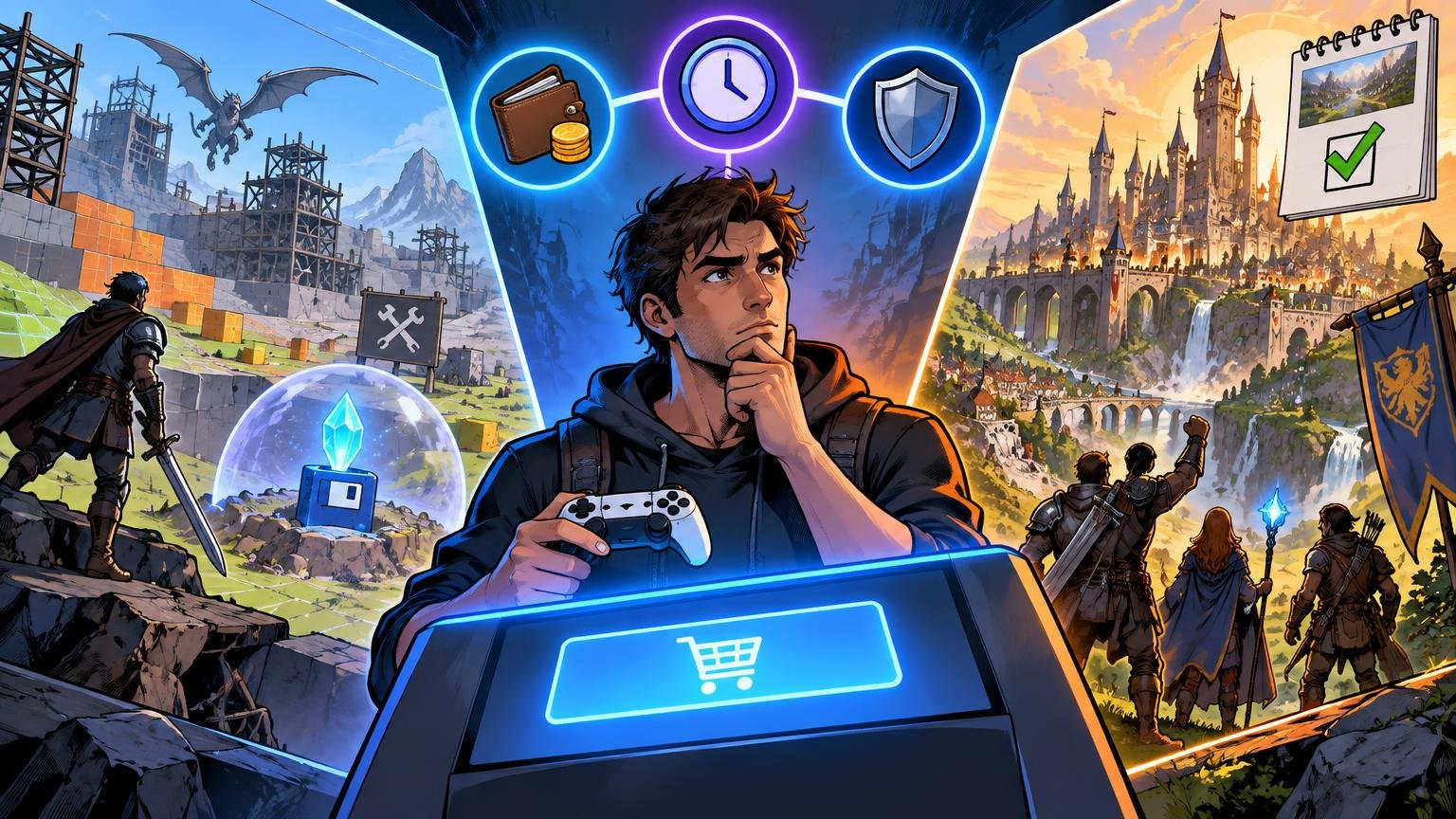
MTG Beginner Box vs Starter Collection is one of the most useful product questions a new player can ask right now, mostly because the names sound related but the jobs are different. One product teaches you how to play. The other gives you a bigger pile of cards so you can start building decks. Mix those up, and your first purchase can feel either too shallow or way too messy. For the broader learning path, MTG Beginner Guide 2026: How to Start Playing Without Feeling Behind lays out the big-picture onboarding plan, and Which Magic: The Gathering Format Should You Start With Right Now? helps once you are deciding where to actually play after the rules click. The Beginner Box Is A Teaching Tool First The Beginner Box is built for learning, and Wizards is not subtle about that. It is designed to walk players through early games step by step. That matters because a lot of Magic products are technically playable by beginners, but not actually friendly to beginners. Those are different things. The Beginner Box uses themed Jumpstart-style packs, simple onboarding materials, and a setup that is clearly aimed at getting two people from zero to “okay, i think i get combat now.” It also comes with the kind of practical extras new players actually use right away, like playmats, how-to-play guides, and life counters. That makes it the better product for people in these situations: In other words, the Beginner Box is not trying to be your forever card pool. It is trying to make sure your first few games are not miserable. That is a very good thing. Too many new players buy product as if the first goal is “owning cards.” The first goal is understanding the game. Until that part is real, extra cards mostly create extra confusion. The Starter Collection Is Better Once The Basics Already Make Sense The Starter Collection does a different job. Instead of walking you through the rules, it gives you a larger stack of cards, basic lands, boosters, and a deckbuilding booklet so you can start making your own lists. That makes it more of a bridge product. It sits between “i just learned the game” and “i am ready to build with intention.” That difference is huge. The Starter Collection is stronger for players who already know: It is also better for people who get more excitement from deckbuilding than from tutorial structure. Some players are happiest once they can spread out a card pool on the table and start brewing. The Starter Collection is for that crowd. It also helps that the product is fairly substantial. You are not just getting a tiny sampler. You are getting a real base to start building from, plus some boosters, plus a deckbuilding guide. Wizards has also said Foundations stays in Standard until at least 2029, though some Starter Collection support cards are Commander-focused rather than Standard legal. That gives the product more runway than the average beginner purchase. So yes, there is a real case for it. Just not as the first thing for every single new player. MTG Beginner Box Vs Starter Collection Comes Down To Your Actual Situation This comparison gets much easier once you stop asking which box is “better” in the abstract. The real question is which box matches where you are. Buy the Beginner Box when learning the rules is still the main job. That includes players who have watched some videos, played a tutorial, or know what tapping lands means but still need a clean first paper experience. Buy the Starter Collection when the rules are already stable and the next step is building decks from a bigger pool. That is the cleanest way to split it. I think a lot of disappointment comes from buying the Starter Collection too early. New players open a big stack of cards and assume that means more value. Sometimes it does. But when the rules are not settled yet, more cards can just mean more paralysis. You end up sorting, reading, and guessing instead of playing. The reverse mistake happens too. Some players buy the Beginner Box when what they really want is deckbuilding freedom. In that case, the product can feel a little too guided. Not bad. Just too structured for the stage they are already at. What About Welcome Decks, Arena, And Magic Academy? This is where the product decision gets more interesting. Wizards has more than two lanes for new players now. As of April 2026, new mono-color Welcome Decks tied to Secrets of Strixhaven have been announced for participating WPN stores, and Wizards is also offering 60-card Theme Decks with that release. Magic Academy continues to exist as the official learn-to-play event path. And, of course, MTG Arena is still the cleanest solo learning tool for a lot of players. So the better question may be this: What kind of beginner are you? A totally solo beginner often does well starting on Arena first, then moving into the Beginner Box or an in-store learning path. A player with a friend at home does well with the Beginner Box almost immediately. A player who already understands the rules and just needs cardboard to start building is a better match for the Starter Collection. A local-store learner might not need either one first if Welcome Decks or Magic Academy already cover that first step. That is actually good news. It means there is less pressure to force one product to solve every problem. The Most Common Buying Mistakes The first mistake is skipping learning products and going straight to random boosters. Packs are fun. They are not a plan. New players who start there usually end up with a small pile of cards, a foggy idea of deckbuilding, and no real path from point A to point B. The second mistake is treating card count like the same thing as value. A bigger box is not automatically the better beginner purchase. Sometimes

How To Upgrade A Commander Precon Without Wasting Money

Last updated: April 10, 2026 The fastest way to waste money in Commander is to upgrade a commander precon by buying the loudest cards first. That feels fun for about ten minutes. Then you play the deck, miss land drops, do nothing on turn three, and die with a hand full of expensive “upgrades” that never got cast. A precon does not become better because the singles got pricier. It becomes better because the deck functions more often. For social context, Commander Brackets Explained for Regular Players is worth reading before you tune too hard, and MTG Custom Proxies for Commander: What to Personalize First is a nice follow-up once the deck actually feels like yours. Start By Figuring Out What The Deck Is Supposed To Do This sounds obvious, but it is where a lot of upgrade plans quietly fall apart. A precon usually has one clear center of gravity. Maybe it wants to make tokens. Maybe it wants to recur artifacts. Maybe it wants to pile counters on creatures. Maybe it wants to cast big splashy spells after a ramp-heavy start. Whatever the plan is, your first job is to name it in one sentence. Not three sentences. One. “This deck floods the board with tokens, then wins with anthem effects.”“This deck fills the graveyard and reuses value creatures.”“This deck ramps, copies spells, and closes with big turns.” Once you can say that clearly, cuts get easier. Cards that are merely “fine” but do not serve the plan become obvious cuts. A lot of stock precons include those cards on purpose. They need to be broad enough to play decently out of the box and interesting enough for a range of players. That means some slots are there for flavor, range, or variety, not because they are the most efficient thing possible. That is okay. It also means they are the first cards you should be willing to replace. Fix The Mana Base Before Buying Fancy Toys Nobody likes hearing this because lands are boring and splashy mythics are not. But the mana base is where smart upgrades start. When you upgrade a commander precon, the first real jump in quality usually comes from making the deck cast spells on time. Not from making the spells themselves more dramatic. That means looking at three things: A lot of precons can stand to lose their clunkiest lands first. Lands that always enter tapped and do very little else are common cut candidates. The same goes for cute utility lands that look fun but quietly make your opening hands worse. You do not need an absurdly expensive land package to improve a precon. You just need lands that let the deck play its first few turns without tripping over itself. Even budget-friendly duals, better color balance, and a cleaner count of basics can do real work. And here is the annoying truth. Those changes are not glamorous, but they show up every single game. That matters more than a single shiny finisher you draw once every four matches. Ramp And Card Draw Are Usually The Next Upgrades After mana, the next upgrade tier is almost always the engine package. That means ramp and card draw. Precons often include enough of both to function, but not always enough of the right kind. Some lists lean too hard on clunky four-mana ramp. Others give you card draw that is technically present but awkward, slow, or tied to board states you do not always have. Try to ask two questions: How soon does this deck start accelerating?How often can it refill after the first wave of plays? A good precon upgrade path makes both answers cleaner. For ramp, lower-cost options usually matter more than cute late-game burst. You want to spend early turns getting ahead, not casting a card on turn five that says you should have fixed your mana three turns ago. For card draw, repeatable engines usually beat random one-shot fluff. A deck that sees more cards finds its lands, removal, payoffs, and recovery pieces more consistently. That is how you stop a decent precon from running out of steam after one board wipe. I think this is one of the biggest differences between a stock list and a tuned casual list. Tuned decks do not just have stronger cards. They see more of the cards that matter, more often. Tighten The Removal, Not Just The Threats New Commander players love upgrading threats because threats are easy to notice. Bigger creature. Cooler legend. Nicer art. Cleaner story. Removal feels less exciting, so it gets neglected. That is a mistake. A better precon needs a tighter answer package. That means more cards that can remove the things that actually stop your deck from functioning. You do not need to jam the most ruthless interaction possible. But you do need enough of it, and it needs to be flexible enough to matter. That usually means improving: A precon with good threats and weak answers often feels strong only when it is already winning. A better-tuned list still has game when somebody else sticks the scary permanent first. And that is what real improvement looks like. More live draws, more recoverable games, fewer hands where you stare at the board and mutter, “well, that resolves, i guess.” Protect The Deck’s Actual Plan The next smart place to spend money is protection. Not every deck needs a huge protection suite, but most Commander decks benefit from some mix of protection spells, recursion, indestructible effects, counterplay, or ways to survive a wipe and rebuild. This matters even more when your commander is central to the deck. Some precons are basically commander-delivery systems. Without that card in play, the deck becomes a pile of medium cards pretending to be a strategy. When that is your list, protection is not a luxury upgrade. It is structural. The goal is not to become impossible to interact with. The goal is to stop losing the whole game because your

MTG Mulligan Rules Explained For Beginners And Commander

Last updated: April 10, 2026 MTG mulligan rules sound harsher than they really are. New players hear “go down a card” and assume a mulligan means something went wrong. But a mulligan is just part of starting a real game of Magic instead of pretending a bad opener is “probably fine” and then doing nothing for three turns. That is not courage. That is just losing slowly. For a broader new-player path, MTG Beginner Guide 2026: How to Start Playing Without Feeling Behind is a strong companion piece, and Best MTG Arena Modes for New Players in 2026 helps once you are learning on the client instead of at the kitchen table. How MTG Mulligan Rules Actually Work The current system is the London mulligan. In plain English, every time you mulligan, you draw back up to seven cards, then put a number of cards equal to your mulligans on the bottom of your library. So the first mulligan works like this: You draw seven.You do not like it.You shuffle it away and draw seven again.Then, after you decide to keep, you put one card on the bottom. Take another mulligan and you still draw seven, but now you bottom two after keeping. That keeps the process from feeling hopeless, because every new hand still starts at seven cards. You are choosing from a full opener, not staring at a six-card hand and praying. That matters more than people admit. Old mulligan systems could feel brutal. The London version is cleaner. It lets you look for a functional hand, not a fantasy hand, and that is an important difference. There is also one Commander wrinkle people often hear about in half-correct form. In multiplayer games, the first mulligan does not cost you a card. That means in a normal multiplayer Commander pod, your first mulligan is effectively free. You still reshuffle and redraw, but you do not bottom an extra card for that first one. After that, normal London mulligan math kicks in. That is why Commander mulligans often feel gentler than one-on-one Standard, Modern, or most other two-player games. They are gentler. At least at first. What A Keepable Hand Really Looks Like This is where beginners usually make the game harder than it needs to be. A keepable hand is not “a hand with my best card.” It is not “a hand with something cool.” And it is definitely not “a hand that might work if i topdeck exactly one Plains, one red source, and a miracle.” A keepable hand usually has four things: For a lot of decks, that means two to four lands, at least one early play, and access to your main colors. That is it. Nothing glamorous. Just functional. Here is the trap, though. A hand can have lands and still be bad. Five lands plus two expensive spells is usually not a keep unless your deck is built for that sort of nonsense. One land plus six amazing cards is usually still a mulligan. A hand full of cards you technically can cast, but in the wrong order, can also be a trap. MTG mulligan rules reward honesty. If your hand does not meaningfully function in the first few turns, send it back. Commander Mulligan Tips That Actually Help Commander players get into trouble because the format is slower and splashier. That makes people too forgiving. They keep hands like: “Three lands, but wrong colors.”“One land, but Sol Ring fixes everything.”“Two lands, no ramp, and every spell costs five.”“This hand is bad, but my commander is awesome.” That last one gets a lot of people. In Commander, your opening hand should answer a few boring questions before it gets to be clever: Can i make my first three land drops, or at least reasonably expect to?Can i cast ramp, draw, or setup pieces early?Do i have the colors that matter?Am i doing anything before the table has already pulled ahead? Because your first mulligan in multiplayer is free, you do not need to marry a sketchy seven. Use that rule. That is what it is there for. At the same time, do not abuse it by chasing a perfect opener. Commander players sometimes mulligan like they are trying to assemble a highlight reel. That is a good way to turn a decent hand into a desperate six. You are not looking for the nuts. You are looking for a hand that plays Magic. I think this simple Commander test works well: if your hand gives you mana, colors, and one useful thing to do in the first three turns, it is probably keepable. Not exciting. Keepable. That is enough. One-On-One Mulligans Need A Stricter Eye In two-player Magic, especially Standard or Arena, you usually need to be less sentimental. Games are faster. Punishment is quicker. Missing your second land drop or keeping a clunky hand gets exposed harder because there are fewer players to slow the pace and fewer turns for the table to reset the game for you. That means your one-on-one opener should care more about: A two-land hand can be fine. But it depends on what those lands do and what the rest of the hand asks of you. A two-land hand with cheap spells and a smooth curve is normal. A two-land hand where your third color matters on turn three and your first real spell costs four is not nearly as cute as it looks. This is also why beginners tend to learn good habits faster in formats like Standard. Mulligans, curve, and sequencing all matter in a more obvious way. Bad keeps get punished. Good keeps feel stable. The lesson arrives fast. For that bigger format question, Which Magic: The Gathering Format Should You Start With Right Now? helps sort out where those mulligan decisions matter most. The Biggest Mulligan Mistakes New Players Make The first mistake is keeping a bad seven because going to six feels scary. That fear is understandable. It is also wrong

Commander Brackets Explained for Regular Players

Commander brackets explained in plain English is something a lot of regular players needed way sooner than they got it. For years, pregame power conversations in Commander were built on vibes, optimism, and the famous “this is probably like a seven” line, which usually meant absolutely nothing. Then the game starts, one player is casting a goofy tribal deck, another player is tutoring on turn two, and now everybody is pretending they are still having a good time. That is the problem Commander brackets are trying to fix. Not rules confusion. Not deck legality in the usual banned-list sense. Just the very human problem of four people sitting down with wildly different expectations and calling it a match anyway. The short version is that the system is meant to give regular players better language. Not perfect language. Better language. And honestly, that already makes it more useful than the old 1-to-10 power scale. What Commander Brackets Are Actually Trying to Do If you strip away the rollout drama, Commander brackets are a matchmaking tool for expectations. That matters because Commander has always had a weird identity problem. It is casual, but people tune their decks hard. It is social, but people still want to win. It is full of splashy nonsense, but some nonsense is fun and some nonsense means three players stop participating while one player takes a five-minute turn. The bracket system gives that mess some shared vocabulary. Wizards has been pretty direct that this is not supposed to replace Rule Zero. It is supposed to make Rule Zero conversations less useless. That is a big difference. The brackets are not a judge call, and they are not a magic lie detector. If somebody wants to mislabel a deck, the system cannot stop them. But for regular players trying in good faith to find a fair pod, the brackets are a real improvement. And as of the February 2026 update, Wizards said adoption keeps growing in actual pregame conversations. That tracks with what a lot of players are seeing. Even if people do not remember every detail, they at least now have a more useful way to say, “this deck is basically a precon plus upgrades” or “this thing is not cEDH, but it is still coming for your throat.” The Five Brackets in Plain English Here is the version regular players actually need. Exhibition This is the super casual lane. Theme decks, flavor decks, goofy deckbuilding restrictions, and games where the point is more “look what i built” than “watch me assemble the cleanest win line.” If your deck is trying to tell a story more than optimize every slot, you are probably here. Core Core is the average modern precon neighborhood. This is where a lot of regular Commander lives. Decks function, have a plan, produce big turns, and absolutely try to win, but they are not built like a machine looking for the shortest route to the table’s misery. Upgraded This is where a lot of people actually sit, even if they do not love admitting it. These decks are stronger than average precons, more tuned, and more intentional. Your mana is better. Your card quality is tighter. Your deck is doing the thing on purpose. But you are not fully in no-restraints territory. Optimized Now we are in high-power Commander. Faster starts, stronger tutors, cheap combos, and much less patience for clunky pet cards. If your deck is built to fire on all cylinders and you are not really making sentimental cuts anymore, this is probably your lane. cEDH This is not just “very strong Commander.” It is Commander with a competitive mindset. The metagame matters. Card choices are ruthlessly defended. The game is being approached like an actual competitive environment, not just a spicy casual pod. That last distinction matters more than people think. One of the best things the system did was admit that “high power” and “cEDH” are not automatically the same thing. cEDH is a great place to use mtg proxies by the way. What Game Changers Actually Mean Game Changers are the part people obsess over because they are easy to count. The idea is simple. Some cards have such a strong effect on the shape of a Commander game that they deserve special attention even if they are not banned. These are not just “good cards.” They are cards that warp expectations, accelerate too hard, tutor too cleanly, or create play patterns a lot of casual tables actively do not enjoy. That is why the list matters. In practice, the easiest way to think about it is this: Brackets 1 and 2 do not want them. Bracket 3 can include a small number of them. Brackets 4 and 5 are where they stop being a special warning and start being part of the furniture. What catches people off guard is that Game Changers are not the whole system. You cannot just count them and call it a day. Wizards was explicit about that. A deck with zero Game Changers can still belong in a higher bracket if the deck is obviously built to run hot. And a weird theme deck with one unusual card might still belong lower if the table is fine with it and the intent is casual. That is why the brackets work best as language, not math homework. How to Use Commander Brackets at a Real Table This is the part that matters most, because regular players are not writing policy documents. They are trying to start a game. A good bracket conversation does not need to be long. It just needs to be honest. “This is Core, basically a precon with a cleaner mana base.” “This is Upgraded, no fast combo but definitely stronger than a stock precon.” “This is Optimized, lots of tutors, game can end fast.” That is already more useful than “it is like a seven, maybe a seven-and-a-half if i draw well.” You also do not need to